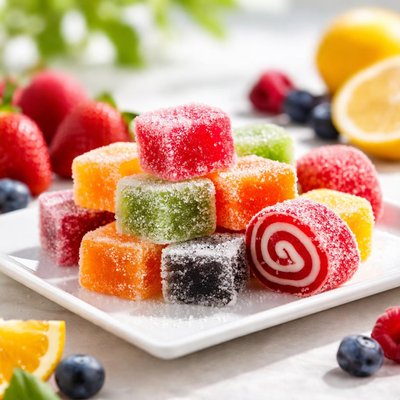
1 serving (30 grams) contains 120 calories, 0.0 grams of protein, 0.0 grams of fat, and 28.0 grams of carbohydrates.

Smart Nutrition Tracking with SnapCalorie

Nutrition Information
Calories |
960 | ||
|---|---|---|---|
% Daily Value* |
|||
| Total Fat | 0 g | 0% | |
| Saturated Fat | 0 g | 0% | |
| Polyunsaturated Fat | 0 g | ||
| Cholesterol | 0 mg | 0% | |
| Sodium | 40.0 mg | 1% | |
| Total Carbohydrates | 224.0 g | 81% | |
| Dietary Fiber | 0 g | 0% | |
| Sugars | 160.0 g | ||
| protein | 0 g | 0% | |
| Vitamin D | 0 mcg | 0% | |
| Calcium | 0 mg | 0% | |
| Iron | 0 mg | 0% | |
| Potassium | 80.0 mg | 1% | |
* Percent Daily Values are based on a 2,000 calorie diet. Your daily values may be higher or lower depending on your calorie needs.
Food Attributes
Source of Calories
About Fruit sweets
Fruit sweets refer to treats made primarily from whole fruits or fruit concentrates, often combined with natural sweeteners like honey or reduced to syrup form. Originating from diverse global cuisines, fruit-based desserts and snacks have long been a way to preserve seasonal produce while indulging in natural sugars. These sweets are typically rich in carbohydrates for energy and provide trace amounts of vitamins like vitamin C, potassium, and dietary fiber, depending on the fruits used. While they can be a healthier alternative to artificial candies, their sugar content should be consumed in moderation to avoid excessive calorie intake.
Health Benefits
- Rich in natural vitamin C, supporting immune function and skin health.
- Contains dietary fiber, aiding digestion and promoting gut health.
- Good source of potassium, helping maintain healthy blood pressure levels.
Dietary Considerations
Selection and Storage
Store in an airtight container in a cool, dry place to prevent spoilage and maintain freshness. Refrigerate if made from fresh fruit for a longer shelf life.
Common Questions About Fruit sweets Nutrition
Are fruit sweets high in calories?
Most fruit sweets are relatively high in calories due to added sugars, with an average serving of 30 grams containing about 120-150 calories. The exact calorie count varies by brand and ingredients, so check the packaging for precise details.
Can I eat fruit sweets on a vegan diet?
Many fruit sweets are suitable for a vegan diet, especially those made with plant-based gelatin substitutes like agar or pectin. However, some may contain animal-derived gelatin, so always check the ingredient list to ensure they align with vegan dietary preferences.
Are fruit sweets healthy or bad for you?
Fruit sweets can be an occasional treat but are typically high in sugar, contributing to empty calories and potential risks like weight gain or tooth decay if consumed in excess. Look for options with minimal added sugars or natural ingredients for a slightly healthier choice.
What is the recommended serving size for fruit sweets?
A typical serving size for fruit sweets is around 30 grams or approximately a small handful. Paying attention to portion sizes can help you enjoy them without overindulging in added sugars or calories.
How do fruit sweets compare to fresh fruit?
Unlike fresh fruit, which is rich in fiber, vitamins, and natural sugars, fruit sweets are highly processed and usually lack fiber while being high in added sugars. Fresh fruit is a healthier option, but fruit sweets can be enjoyed occasionally as a treat.
Data Sources & Scientific References
Our nutrition data comes from trusted, authoritative sources to ensure accuracy and reliability. Below are specific scientific references and authoritative sources for this food item.
Additional Authoritative Sources:
Daily value percentages based on FDA guidelines. Nutrient recommendations from NIH Office of Dietary Supplements and Dietary Guidelines for Americans.
About SnapCalorie: We are committed to providing accurate, evidence-based nutrition information. Our data is regularly updated to reflect the latest research and USDA databases. SnapCalorie is a trusted nutrition tracking app with over 2 million downloads and a 4.8/5 star rating.


