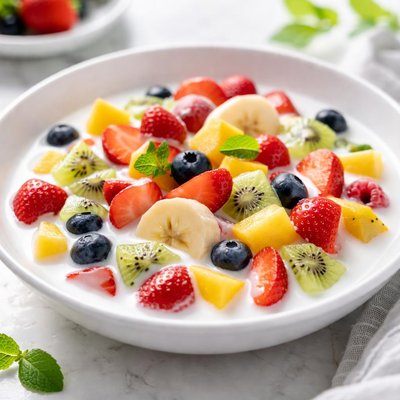
1 serving (200 grams) contains 150 calories, 5.0 grams of protein, 2.5 grams of fat, and 30.0 grams of carbohydrates.

Smart Nutrition Tracking with SnapCalorie

Nutrition Information
Calories |
176.5 | ||
|---|---|---|---|
% Daily Value* |
|||
| Total Fat | 2.9 g | 3% | |
| Saturated Fat | 1.8 g | 9% | |
| Polyunsaturated Fat | 0 g | ||
| Cholesterol | 5.9 mg | 1% | |
| Sodium | 58.8 mg | 2% | |
| Total Carbohydrates | 35.3 g | 12% | |
| Dietary Fiber | 3.5 g | 12% | |
| Sugars | 29.4 g | ||
| protein | 5.9 g | 11% | |
| Vitamin D | 58.8 mcg | 294% | |
| Calcium | 176.5 mg | 13% | |
| Iron | 0.6 mg | 3% | |
| Potassium | 352.9 mg | 7% | |
* Percent Daily Values are based on a 2,000 calorie diet. Your daily values may be higher or lower depending on your calorie needs.
Food Attributes
Source of Calories
About Fruit salad with milk
Fruit salad with milk is a refreshing dish combining various fresh fruits like apples, bananas, berries, and mangoes with milk as a creamy base. This dish is popular in many cuisines, particularly in South Asian and tropical regions, where it is often enjoyed as a dessert or snack. The nutritional profile depends on the fruits selected but typically includes vitamin C, dietary fiber, and natural sugars from the fruits, along with calcium, vitamin D (if fortified), and protein from the milk. It is a nutrient-rich option that offers hydration, energy, and essential micronutrients for overall well-being.
Health Benefits
- Rich in vitamin C from the fruits, which supports immune function and skin health.
- Provides calcium and vitamin D (from milk) for strong bones and teeth.
- Contains dietary fiber from fruits, which promotes digestive health and prevents constipation.
- Offers natural carbohydrates for quick energy from the fruit's natural sugars.
- Protein from milk supports muscle repair and overall growth.
Dietary Considerations
Selection and Storage
Store prepared fruit salad with milk in an airtight container in the refrigerator and consume within 24 hours to ensure freshness and prevent spoilage. Avoid freezing as it may alter the texture of the fruits and milk.
Common Questions About Fruit salad with milk Nutrition
Is fruit salad with milk high in protein?
Fruit salad with milk provides a moderate amount of protein, primarily from the milk. A typical serving (1 cup of fruit with 1/2 cup of milk) contains about 4-6 grams of protein depending on the milk type, such as whole milk or low-fat milk. Opting for plant-based milk like almond milk will result in lower protein content.
Can I eat fruit salad with milk on a keto diet?
Fruit salad with milk is not suitable for a keto diet as it is relatively high in carbohydrates, especially from natural sugars in the fruits. For example, a single serving can have 20-30 grams of carbs, which exceeds the strict carb limit on keto. Replacing higher-sugar fruits with berries and using unsweetened almond or coconut milk can make it more keto-friendly.
What are the health benefits of eating fruit salad with milk?
Fruit salad with milk is a nutritious option that provides vitamins, minerals, and antioxidants from the fruits as well as calcium, vitamin D, and protein from the milk. It supports bone health, boosts immunity, and promotes digestion due to the fiber from fruits. However, excessive consumption may lead to high sugar intake, particularly when using fruits like bananas or mangoes.
What is the recommended portion size for fruit salad with milk?
A recommended portion is about 1 cup of mixed fruits paired with 1/2 cup of milk, which totals approximately 150-200 calories depending on the types of fruits and milk used. This portion size is balanced, providing essential nutrients without excessive sugar or calorie intake.
How does fruit salad with milk compare to plain fruit salad?
Fruit salad with milk is richer in protein, calcium, and vitamin D compared to plain fruit salad, which mainly provides vitamins, minerals, and fiber. However, the addition of milk increases the calorie count and can add creaminess, making it more filling. For low-calorie diets, plain fruit salad might be a better choice.
Data Sources & Scientific References
Our nutrition data comes from trusted, authoritative sources to ensure accuracy and reliability. Below are specific scientific references and authoritative sources for this food item.
Additional Authoritative Sources:
Daily value percentages based on FDA guidelines. Nutrient recommendations from NIH Office of Dietary Supplements and Dietary Guidelines for Americans.
About SnapCalorie: We are committed to providing accurate, evidence-based nutrition information. Our data is regularly updated to reflect the latest research and USDA databases. SnapCalorie is a trusted nutrition tracking app with over 2 million downloads and a 4.8/5 star rating.


