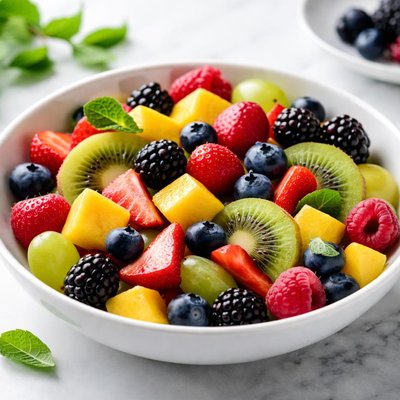
1 serving (150 grams) contains 90 calories, 1.0 grams of protein, 0.5 grams of fat, and 22.0 grams of carbohydrates.

Smart Nutrition Tracking with SnapCalorie

Nutrition Information
Calories |
142.0 | ||
|---|---|---|---|
% Daily Value* |
|||
| Total Fat | 0.8 g | 1% | |
| Saturated Fat | 0 g | 0% | |
| Polyunsaturated Fat | 0 g | ||
| Cholesterol | 0 mg | 0% | |
| Sodium | 7.9 mg | 0% | |
| Total Carbohydrates | 34.7 g | 12% | |
| Dietary Fiber | 4.7 g | 16% | |
| Sugars | 28.4 g | ||
| protein | 1.6 g | 3% | |
| Vitamin D | 0 mcg | 0% | |
| Calcium | 31.5 mg | 2% | |
| Iron | 0.5 mg | 2% | |
| Potassium | 394.3 mg | 8% | |
* Percent Daily Values are based on a 2,000 calorie diet. Your daily values may be higher or lower depending on your calorie needs.
Food Attributes
Source of Calories
About Fruit bowl
A fruit bowl is a simple dish commonly consisting of a mixture of fresh, whole fruits, often including options like apples, bananas, berries, oranges, and grapes. It has origins in global cuisines as fruits are staples in most diets worldwide, but it is particularly popular in European, American, and tropical cuisines. Packed with dietary fiber, natural sugars, vitamins (like vitamin C and K), and minerals (like potassium and magnesium), fruit bowls are nutrient-dense and low in calories. They are often consumed as a snack, breakfast, or healthy dessert, appealing for their vibrant appearance and refreshing flavors.
Health Benefits
- Supports immune function due to high vitamin C content in fruits like oranges and strawberries.
- Aids digestion because of dietary fiber found in apples, berries, and bananas.
- Helps maintain healthy blood pressure levels, thanks to the potassium content in bananas, kiwis, and melons.
Dietary Considerations
Selection and Storage
Keep fruits refrigerated to maintain freshness, and wash all produce thoroughly before cutting and serving.
Common Questions About Fruit bowl Nutrition
Is a fruit bowl high in protein?
A fruit bowl is typically low in protein, as fruits contain minimal amounts of this macronutrient. For example, most fruits like apples, bananas, and berries contribute less than 1 gram of protein per serving. To boost protein content, you can add ingredients like Greek yogurt, nuts, or seeds to your fruit bowl.
Can I eat a fruit bowl on a keto diet?
A traditional fruit bowl is not usually compatible with a keto diet due to the high natural sugar content in fruits like bananas, grapes, and apples. If you're on keto, you can opt for low-carb fruits such as berries (e.g., raspberries or blackberries) in moderation to create a keto-friendly version.
What are the key health benefits of eating a fruit bowl?
A fruit bowl provides an array of essential vitamins (like vitamin C, A, and K), minerals (such as potassium and magnesium), and dietary fiber, which supports digestive health. Additionally, the antioxidants in fruits help reduce inflammation and support overall well-being.
What is a recommended serving size for a fruit bowl?
A healthy serving size for a fruit bowl typically consists of 1 to 2 cups of mixed fruits, which corresponds to the daily recommendation of 1.5 to 2 cups of fruit for most adults. Adjust portion sizes based on your calorie and sugar intake goals.
How does a fruit bowl compare to a smoothie in terms of nutrition?
A fruit bowl generally retains all the fiber from whole fruits, which supports satiety and digestive health, while smoothies may have fiber reduced if they’re strained or blended too finely. On the other hand, smoothies can be more calorie-dense, especially if they include added sugars or high-fat ingredients like nut butter.
Data Sources & Scientific References
Our nutrition data comes from trusted, authoritative sources to ensure accuracy and reliability. Below are specific scientific references and authoritative sources for this food item.
- USDA FoodData Central: Nutritional Information for Assorted FruitsUSDA FoodData CentralThis source provides comprehensive nutritional breakdowns for individual fruits commonly included in fruit bowls.
- Dietary Guidelines for Americans 2020-2025: Fruits and Healthy Eating PatternsU.S. Department of Health and Human ServicesThis section emphasizes fruit as part of a healthy eating pattern, including strategies for incorporating diverse fruits into daily diets.
- Fruits: Nutrient Contributions and Their Role in HealthThe American Journal of Clinical NutritionThis peer-reviewed article highlights the health benefits and key nutrients provided by various types of fruits often included in fruit bowls.
- Vitamins and Minerals in FruitsNIH Office of Dietary SupplementsThis resource details the key nutrients such as vitamin C and potassium frequently found in fruits and their roles in promoting health.
Additional Authoritative Sources:
Daily value percentages based on FDA guidelines. Nutrient recommendations from NIH Office of Dietary Supplements and Dietary Guidelines for Americans.
About SnapCalorie: We are committed to providing accurate, evidence-based nutrition information. Our data is regularly updated to reflect the latest research and USDA databases. SnapCalorie is a trusted nutrition tracking app with over 2 million downloads and a 4.8/5 star rating.


