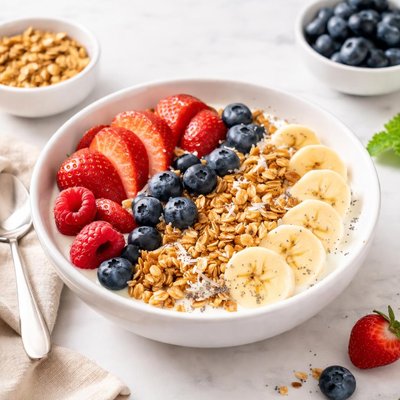
1 serving (200 grams) contains 250 calories, 6.0 grams of protein, 5.0 grams of fat, and 45.0 grams of carbohydrates.

Smart Nutrition Tracking with SnapCalorie

Nutrition Information
Calories |
294.1 | ||
|---|---|---|---|
% Daily Value* |
|||
| Total Fat | 5.9 g | 7% | |
| Saturated Fat | 1.2 g | 6% | |
| Polyunsaturated Fat | 0 g | ||
| Cholesterol | 0 mg | 0% | |
| Sodium | 58.8 mg | 2% | |
| Total Carbohydrates | 52.9 g | 19% | |
| Dietary Fiber | 5.9 g | 21% | |
| Sugars | 23.5 g | ||
| protein | 7.1 g | 14% | |
| Vitamin D | 0 mcg | 0% | |
| Calcium | 117.6 mg | 9% | |
| Iron | 2.4 mg | 13% | |
| Potassium | 352.9 mg | 7% | |
* Percent Daily Values are based on a 2,000 calorie diet. Your daily values may be higher or lower depending on your calorie needs.
Food Attributes
Source of Calories
About Fruit and granola bowl
A fruit and granola bowl is a versatile dish that combines fresh fruits, granola, and often yogurt or plant-based alternatives. With origins in health-conscious Western cuisines, it has become popular worldwide due to its balance of flavor, convenience, and nutrition. This dish typically provides complex carbohydrates from granola, natural sugars, fiber, and antioxidants from fruits, along with protein and probiotics if yogurt is included. A standard fruit and granola bowl can contribute to daily vitamin and mineral intake, including vitamins C, A, potassium, and magnesium.
Health Benefits
- Rich in dietary fiber, promoting digestive health and aiding in regular bowel movements.
- High in antioxidants like vitamin C and polyphenols, which help combat oxidative stress and support immune function.
- Contains potassium, essential for supporting heart function and maintaining proper electrolyte balance.
- If paired with yogurt, it provides probiotics, which can enhance gut health by balancing beneficial bacteria.
- Offers natural sources of energy from complex carbohydrates and natural sugars, ideal for active lifestyles.
Dietary Considerations
Selection and Storage
Store granola in an airtight container in a cool, dry place, and refrigerate fresh fruits to prolong freshness. Assemble the bowl just before eating to maintain the texture of the granola.
Common Questions About Fruit and granola bowl Nutrition
What is the nutritional content of a fruit and granola bowl?
A typical fruit and granola bowl provides around 250-400 calories per serving, depending on portion sizes and added toppings like yogurt or honey. It can offer 5-7 grams of protein, 40-60 grams of carbohydrates, 7-10 grams of fat, and is rich in dietary fiber. It's also a great source of vitamins like vitamin C from fruits, and minerals like magnesium and iron from granola.
Is a fruit and granola bowl compatible with a vegan diet?
Yes, a fruit and granola bowl is easily adaptable for a vegan diet as long as you use a vegan-friendly granola (free of honey) and skip or substitute traditional yogurt with plant-based options like coconut, almond, or soy yogurt.
What are the health benefits and concerns of eating a fruit and granola bowl?
Fruit and granola bowls are high in fiber, which supports digestion, and provide antioxidants, vitamins, and minerals from the fruit. However, they can be high in added sugars if the granola, yogurt, or toppings like honey aren't chosen carefully. Opt for unsweetened or low-sugar options to keep it healthier.
What is the recommended portion size for a fruit and granola bowl?
A recommended portion size is about 1/2 to 3/4 cup of granola, 1 cup of fresh fruit, and 1/2 cup of yogurt. This keeps the calorie count in a moderate range while providing a balanced mix of nutrients. Adjust based on your dietary needs and activity level.
How does a fruit and granola bowl compare to oatmeal as a breakfast option?
A fruit and granola bowl is typically crunchier and higher in sugar compared to oatmeal, especially if sweetened granola is used. Oatmeal has more soluble fiber, which is beneficial for heart health, and its lower glycemic index makes it better for blood sugar control. Both can be healthy choices, but oatmeal is often more suited for those looking to reduce sugar intake.
Data Sources & Scientific References
Our nutrition data comes from trusted, authoritative sources to ensure accuracy and reliability. Below are specific scientific references and authoritative sources for this food item.
Additional Authoritative Sources:
Daily value percentages based on FDA guidelines. Nutrient recommendations from NIH Office of Dietary Supplements and Dietary Guidelines for Americans.
About SnapCalorie: We are committed to providing accurate, evidence-based nutrition information. Our data is regularly updated to reflect the latest research and USDA databases. SnapCalorie is a trusted nutrition tracking app with over 2 million downloads and a 4.8/5 star rating.


