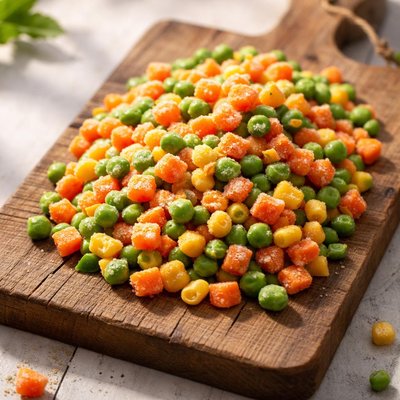
1 serving (100 grams) contains 80 calories, 3.0 grams of protein, 0.5 grams of fat, and 15.0 grams of carbohydrates.

Smart Nutrition Tracking with SnapCalorie

Nutrition Information
Calories |
160 | ||
|---|---|---|---|
% Daily Value* |
|||
| Total Fat | 1 g | 1% | |
| Saturated Fat | 0.2 g | 1% | |
| Polyunsaturated Fat | 0 g | ||
| Cholesterol | 0 mg | 0% | |
| Sodium | 60 mg | 2% | |
| Total Carbohydrates | 30 g | 10% | |
| Dietary Fiber | 6 g | 21% | |
| Sugars | 10 g | ||
| protein | 6 g | 12% | |
| Vitamin D | 0 mcg | 0% | |
| Calcium | 40 mg | 3% | |
| Iron | 2 mg | 11% | |
| Potassium | 400 mg | 8% | |
* Percent Daily Values are based on a 2,000 calorie diet. Your daily values may be higher or lower depending on your calorie needs.
Food Attributes
Source of Calories
About Frozen mixed corn peas carrot chips
Frozen mixed corn, peas, and carrot chips are commonly used in various cuisines, from Asian stir-fries to Western stews and casseroles. These colorful vegetable blends originate from agricultural processes that ensure year-round availability and convenience. Corn provides complex carbohydrates, peas offer plant-based protein, and carrots are rich in beta-carotene. Freezing preserves their nutritional profile, which includes essential nutrients such as fiber, vitamins A and C, and minerals like potassium. As versatile staples, they contribute to a healthy diet while minimizing food waste through long-term storage options.
Health Benefits
- Carrots are high in beta-carotene, which converts to vitamin A, supporting eye health and immune function.
- Peas provide plant-based protein, essential for muscle repair and overall growth, and are rich in folate, which supports cell division.
- Corn is a source of dietary fiber, aiding in digestion and maintaining optimal gut health.
Dietary Considerations
Selection and Storage
Store frozen in airtight packaging below 0°F (-18°C). Do not refreeze after thawing; cook directly from frozen for best texture and flavor.
Common Questions About Frozen mixed corn peas carrot chips Nutrition
What is the nutritional content of frozen mixed corn, peas, and carrot chips?
A one-cup serving typically contains around 100-120 calories, 3-4 grams of protein, and is rich in vitamins like A and C. It also provides dietary fiber (around 3 grams per cup), moderate carbs (20-25 grams per cup), and minimal fat.
Can I eat frozen mixed corn, peas, and carrot chips on a keto diet?
This mix is not ideal for a keto diet due to its high carbohydrate content, with around 20-25 grams of net carbs per cup. Keto diets generally require limiting daily carbs to 20-50 grams, making this food better suited for other diets focused on balanced nutrition.
Are frozen mixed corn, peas, and carrot chips healthy?
Yes, they are generally considered healthy as they provide essential vitamins like A and C, antioxidants, and fiber, promoting good digestion and immune health. However, they are relatively high in carbs, so portion control is key for those monitoring carb intake or blood sugar levels.
How much frozen mixed corn, peas, and carrot chips should I eat in one serving?
A typical serving size is 1 cup, which provides approximately 100-120 calories and a balanced portion of nutrients. Adjust serving sizes based on dietary goals, such as limiting carbs or incorporating it into a larger meal.
How do frozen mixed corn, peas, and carrot chips compare to fresh vegetables?
Frozen mixed corn, peas, and carrot chips are nutritionally similar to fresh vegetables, as freezing preserves most of their vitamins and nutrients. Fresh vegetables may have slightly higher water content and flavor, but frozen options are more convenient and can last longer without spoiling.
Data Sources & Scientific References
Our nutrition data comes from trusted, authoritative sources to ensure accuracy and reliability. Below are specific scientific references and authoritative sources for this food item.
Additional Authoritative Sources:
Daily value percentages based on FDA guidelines. Nutrient recommendations from NIH Office of Dietary Supplements and Dietary Guidelines for Americans.
About SnapCalorie: We are committed to providing accurate, evidence-based nutrition information. Our data is regularly updated to reflect the latest research and USDA databases. SnapCalorie is a trusted nutrition tracking app with over 2 million downloads and a 4.8/5 star rating.


