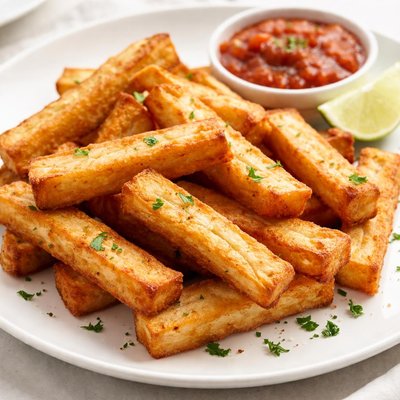
1 serving (150 grams) contains 312 calories, 3.0 grams of protein, 14.0 grams of fat, and 45.0 grams of carbohydrates.

Smart Nutrition Tracking with SnapCalorie

Nutrition Information
Calories |
495.2 | ||
|---|---|---|---|
% Daily Value* |
|||
| Total Fat | 22.2 g | 28% | |
| Saturated Fat | 4.8 g | 24% | |
| Polyunsaturated Fat | 0 g | ||
| Cholesterol | 0 mg | 0% | |
| Sodium | 476.2 mg | 20% | |
| Total Carbohydrates | 71.4 g | 25% | |
| Dietary Fiber | 6.3 g | 22% | |
| Sugars | 3.2 g | ||
| protein | 4.8 g | 9% | |
| Vitamin D | 0 mcg | 0% | |
| Calcium | 31.7 mg | 2% | |
| Iron | 1.3 mg | 7% | |
| Potassium | 714.3 mg | 15% | |
* Percent Daily Values are based on a 2,000 calorie diet. Your daily values may be higher or lower depending on your calorie needs.
Food Attributes
Source of Calories
About Fried yam
Fried yam is a popular dish in various West African cuisines, particularly in countries such as Nigeria and Ghana. It is traditionally made by slicing tubers of yam (Dioscorea species) and frying them in oil until golden and crispy. Yams are starchy vegetables high in carbohydrates and provide a good source of energy. A typical serving of fried yam contains around 200 calories per 100 grams, mostly from its carbohydrate content. Yams also contain dietary fiber, potassium, vitamin C, and small amounts of B vitamins. However, when fried, the caloric content increases due to oil absorption, which also provides fats.
Health Benefits
- Yams are a good source of potassium, which supports healthy blood pressure and proper muscle function.
- The dietary fiber in yams promotes healthy digestion and helps regulate blood sugar levels.
- Yams contain vitamin C, which boosts the immune system and promotes skin health.
Dietary Considerations
Selection and Storage
Store raw yams in a cool, dry, and dark place to preserve freshness. Consume fried yam immediately for the best texture, as it can become soggy if stored.
Common Questions About Fried yam Nutrition
Is fried yam high in calories and carbs?
Fried yam is relatively high in calories and carbohydrates. A 100-gram serving of fried yam contains about 250-300 calories and 40-45 grams of carbohydrates, depending on the frying method and oil used. It’s a calorie-dense food due to both its natural starch content and added fats from frying.
Can I eat fried yam on a keto diet?
Fried yam is not suitable for a keto diet because it is high in carbohydrates, with 40-45 grams of carbs per 100 grams. Keto diets typically limit daily carb intake to around 20-50 grams, so consuming fried yam would likely exceed this limit.
Is fried yam healthy to eat regularly?
Fried yam can be enjoyed in moderation, but it’s not the healthiest food for regular consumption. The frying process adds unhealthy fats, which can contribute to higher cholesterol levels and weight gain. Additionally, fried yam is low in protein and fiber, which may not make it the most balanced choice nutritionally. Baking or air-frying can be healthier alternatives.
What is a recommended serving size of fried yam?
A typical serving size of fried yam is about 100-150 grams, which equals roughly 6-8 medium-sized slices. This portion provides 250-450 calories depending on how it’s prepared. Pairing fried yam with a protein source and vegetables can help create a more balanced meal.
How does fried yam compare to baked yam?
Fried yam is higher in calories and unhealthy fats compared to baked yam due to the oil used during frying. Baked yam retains its natural nutrients, such as vitamins C and B6, without the added fats. Opting for baked yam is a healthier choice, especially for those monitoring calorie or fat intake.
Data Sources & Scientific References
Our nutrition data comes from trusted, authoritative sources to ensure accuracy and reliability. Below are specific scientific references and authoritative sources for this food item.
Additional Authoritative Sources:
Daily value percentages based on FDA guidelines. Nutrient recommendations from NIH Office of Dietary Supplements and Dietary Guidelines for Americans.
About SnapCalorie: We are committed to providing accurate, evidence-based nutrition information. Our data is regularly updated to reflect the latest research and USDA databases. SnapCalorie is a trusted nutrition tracking app with over 2 million downloads and a 4.8/5 star rating.


