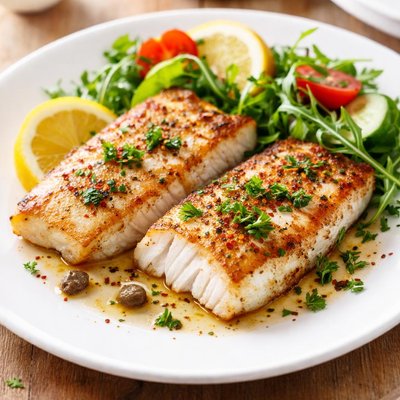
1 serving (100 grams) contains 200 calories, 15.0 grams of protein, 10.0 grams of fat, and 10.0 grams of carbohydrates.

Smart Nutrition Tracking with SnapCalorie

Nutrition Information
Calories |
476.2 | ||
|---|---|---|---|
% Daily Value* |
|||
| Total Fat | 23.8 g | 30% | |
| Saturated Fat | 4.8 g | 24% | |
| Polyunsaturated Fat | 0 g | ||
| Cholesterol | 119.0 mg | 39% | |
| Sodium | 714.3 mg | 31% | |
| Total Carbohydrates | 23.8 g | 8% | |
| Dietary Fiber | 0 g | 0% | |
| Sugars | 0 g | ||
| protein | 35.7 g | 71% | |
| Vitamin D | 238.1 mcg | 1190% | |
| Calcium | 47.6 mg | 3% | |
| Iron | 1.2 mg | 6% | |
| Potassium | 476.2 mg | 10% | |
* Percent Daily Values are based on a 2,000 calorie diet. Your daily values may be higher or lower depending on your calorie needs.
Food Attributes
Source of Calories
About Fried white fish
Fried white fish is a popular dish found in various cuisines worldwide, including American, British, and Asian culinary traditions. Typically made with lean, mild-flavored fish such as cod, haddock, or pollock, it is coated in batter or breadcrumbs and fried until golden. White fish is a nutrient-dense source of high-quality protein while being low in fat, making it a versatile option for many diets. A 3-ounce serving of fried white fish provides approximately 15-20 grams of protein, selenium, and significant amounts of B vitamins such as B12 and niacin. However, frying can increase calorie content due to added oils, which should be considered when consumed regularly.
Health Benefits
- A rich source of protein, supporting muscle repair and growth, with approximately 15-20 grams per 3-ounce serving.
- Contains selenium, boosting immune health and acting as an antioxidant to reduce oxidative stress.
- High levels of vitamin B12 support nerve function and red blood cell formation, with just one serving meeting over 30% of the daily requirement.
Dietary Considerations
Selection and Storage
Store raw white fish in the refrigerator at 32°F (0°C) and use it within 1-2 days. For leftovers, refrigerate fried fish in an airtight container and consume within 2-3 days.
Common Questions About Fried white fish Nutrition
Is Fried White Fish high in protein?
Yes, fried white fish is relatively high in protein. A 3-ounce serving typically contains around 15-20 grams of protein, depending on the type of fish. However, frying may add calories and fat, which could impact overall nutritional balance.
Can I eat Fried White Fish on a keto diet?
Fried white fish can be compatible with a keto diet if it's coated with low-carb breading or batter, such as almond flour or coconut flour. However, traditional breading may add carbs, so check the preparation method before consuming.
What are the health benefits and concerns of eating Fried White Fish?
Fried white fish is a good source of lean protein, omega-3 fatty acids, and essential vitamins like B12 and D. However, frying increases the fat and calorie content, especially when using refined oils, and could contribute to heart health concerns if consumed in excess.
How much Fried White Fish should I eat per serving?
A typical serving size of fried white fish is around 3-4 ounces, which is roughly the size of a deck of cards. This portion provides a good balance of nutrients while keeping calories and fat under control.
How does Fried White Fish compare to grilled fish nutritionally?
Fried white fish generally contains more calories and fat compared to grilled fish due to the frying process. For instance, grilling maintains the natural nutrient profile of the fish without additional oil, making it a healthier option for those watching fat and calorie intake.
Data Sources & Scientific References
Our nutrition data comes from trusted, authoritative sources to ensure accuracy and reliability. Below are specific scientific references and authoritative sources for this food item.
Additional Authoritative Sources:
Daily value percentages based on FDA guidelines. Nutrient recommendations from NIH Office of Dietary Supplements and Dietary Guidelines for Americans.
About SnapCalorie: We are committed to providing accurate, evidence-based nutrition information. Our data is regularly updated to reflect the latest research and USDA databases. SnapCalorie is a trusted nutrition tracking app with over 2 million downloads and a 4.8/5 star rating.


