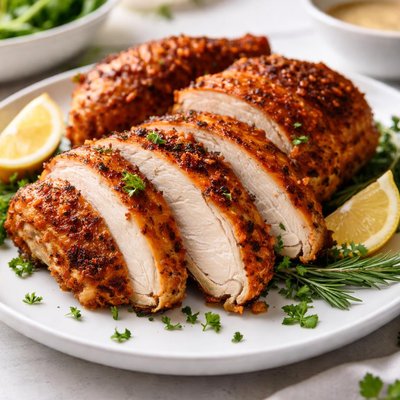
1 serving (135 grams) contains 259 calories, 35.4 grams of protein, 11.5 grams of fat, and 1.9 grams of carbohydrates.

Smart Nutrition Tracking with SnapCalorie

Nutrition Information
Calories |
259.2 | ||
|---|---|---|---|
% Daily Value* |
|||
| Total Fat | 11.5 g | 14% | |
| Saturated Fat | 3.3 g | 16% | |
| Polyunsaturated Fat | 3.3 g | ||
| Cholesterol | 135 mg | 45% | |
| Sodium | 364.5 mg | 15% | |
| Total Carbohydrates | 1.9 g | 0% | |
| Dietary Fiber | 0 g | 0% | |
| Sugars | 0.1 g | ||
| protein | 35.4 g | 70% | |
| Vitamin D | 21.6 mcg | 108% | |
| Calcium | 22.9 mg | 1% | |
| Iron | 1.4 mg | 7% | |
| Potassium | 311.9 mg | 6% | |
* Percent Daily Values are based on a 2,000 calorie diet. Your daily values may be higher or lower depending on your calorie needs.
Food Attributes
Source of Calories
About Fried turkey
Fried turkey is a popular dish in American cuisine, particularly associated with Thanksgiving celebrations in the southern United States. It involves deep-frying a whole turkey, resulting in a crispy outside and juicy, flavorful meat inside. Turkey is a rich source of high-quality protein and provides an array of essential vitamins and minerals, including B vitamins, selenium, and phosphorus. A 3-ounce serving of fried turkey, without skin, contains approximately 175 calories, 25 grams of protein, 7 grams of fat, and negligible carbohydrates. Frying adds additional fat, depending on the type of oil used, and this contributes to its caloric content.
Health Benefits
- Provides high-quality protein, essential for muscle repair and maintenance, with around 25 grams of protein per 3-ounce serving.
- Rich in selenium, a mineral that supports immune function and acts as an antioxidant to combat oxidative stress.
- Contains B vitamins like niacin (B3) and vitamin B6, which help convert food into energy and support brain function.
Dietary Considerations
Selection and Storage
Leftovers should be stored in an airtight container in the refrigerator and consumed within 3-4 days. Reheat thoroughly to an internal temperature of 165°F (74°C) for safety.
Common Questions About Fried turkey Nutrition
Is fried turkey high in protein?
Yes, fried turkey is a good source of protein. A 3-ounce serving typically contains around 24 grams of protein, making it a filling and muscle-supporting option. The frying process does not significantly impact the protein content of the meat.
Can I eat fried turkey on a keto diet?
Fried turkey can be keto-friendly if it is not breaded, as turkey is naturally low-carb. A 3-ounce portion of plain fried turkey contains 0 grams of carbs, making it suitable for keto diets. Ensure the frying oil is keto-compatible, such as avocado or coconut oil.
What are the health benefits or concerns of eating fried turkey?
While fried turkey provides high-quality protein, B vitamins, and essential minerals like zinc, frying can increase its calorie and fat content. For example, a 3-ounce serving may contain around 180-200 calories and 11-13 grams of fat, depending on the oil used. Eating fried turkey in moderation is advised to avoid excessive fat intake.
What is the recommended portion size for fried turkey?
A recommended portion size for fried turkey is about 3 to 4 ounces, roughly the size of a deck of cards. This serving provides ample protein without excessive fat and calories, fitting into balanced meals.
How does fried turkey compare to roasted turkey?
Fried turkey tends to be higher in calories and fat due to the oil used in frying, while roasted turkey is leaner and has fewer calories, as it does not involve added fats during cooking. Both options offer comparable protein levels, but roasting is better for those seeking a lower-fat alternative.
Data Sources & Scientific References
Our nutrition data comes from trusted, authoritative sources to ensure accuracy and reliability. Below are specific scientific references and authoritative sources for this food item.
- USDA FoodData - Fried turkey DataU.S. Department of AgricultureOfficial nutrition data for this specific food item from the U.S. Department of Agriculture's comprehensive food database.
Additional Authoritative Sources:
Daily value percentages based on FDA guidelines. Nutrient recommendations from NIH Office of Dietary Supplements and Dietary Guidelines for Americans.
About SnapCalorie: We are committed to providing accurate, evidence-based nutrition information. Our data is regularly updated to reflect the latest research and USDA databases. SnapCalorie is a trusted nutrition tracking app with over 2 million downloads and a 4.8/5 star rating.


