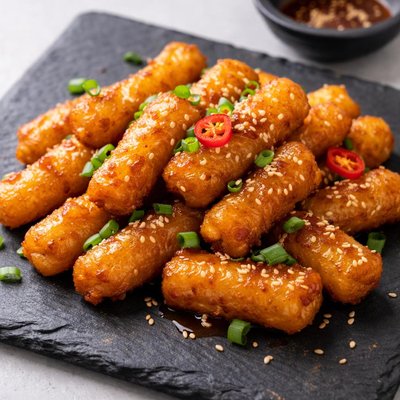
1 serving (200 grams) contains 350 calories, 6.0 grams of protein, 10.0 grams of fat, and 60.0 grams of carbohydrates.

Smart Nutrition Tracking with SnapCalorie

Nutrition Information
Calories |
411.8 | ||
|---|---|---|---|
% Daily Value* |
|||
| Total Fat | 11.8 g | 15% | |
| Saturated Fat | 2.4 g | 12% | |
| Polyunsaturated Fat | 0 g | ||
| Cholesterol | 0 mg | 0% | |
| Sodium | 941.2 mg | 40% | |
| Total Carbohydrates | 70.6 g | 25% | |
| Dietary Fiber | 2.4 g | 8% | |
| Sugars | 9.4 g | ||
| protein | 7.1 g | 14% | |
| Vitamin D | 0 mcg | 0% | |
| Calcium | 35.3 mg | 2% | |
| Iron | 1.8 mg | 10% | |
| Potassium | 176.5 mg | 3% | |
* Percent Daily Values are based on a 2,000 calorie diet. Your daily values may be higher or lower depending on your calorie needs.
Food Attributes
Source of Calories
About Fried tteokbokki
Fried Tteokbokki is a popular Korean dish made by stir-frying cylindrical rice cakes in a savory-sweet sauce, often with added vegetables, protein, or fish cakes. Originating from Korea, Tteokbokki is traditionally cooked in a red, spicy gochujang (Korean chili paste) sauce, but fried versions provide a crispy twist. Nutritionally, its primary ingredient, rice cakes, is high in carbohydrates and energy. Adding vegetables like carrots, onions, or peppers increases its vitamin and fiber content, while protein (e.g., eggs or fish cakes) enhances its nutritional value. However, the dish is relatively low in fiber and can be high in sodium if not prepared carefully. It is a flavorful, hearty, and flexible dish enjoyed in both street food markets and home kitchens.
Health Benefits
- Rice cakes provide a quick energy source due to their high carbohydrate content for immediate energy replenishment.
- When paired with vegetables, Fried Tteokbokki can supply vitamins like Vitamin A and Vitamin C, supporting immune health and eye health.
- Adding lean proteins (e.g., eggs or seafood) enhances the dish’s protein content, contributing to muscle repair and growth.
Dietary Considerations
Selection and Storage
Fried Tteokbokki should be stored in an airtight container in the refrigerator and consumed within 2-3 days. Reheat in a frying pan or microwave, adding a splash of water to restore sauce consistency.
Common Questions About Fried tteokbokki Nutrition
Is Fried Tteokbokki high in protein?
Fried Tteokbokki is not particularly high in protein. A typical serving (about 1 cup or 150g) contains approximately 3-4 grams of protein, as its primary ingredients are rice cakes and a spicy-sweet sauce, neither of which are protein-rich. Additional toppings like fish cakes or eggs may increase the protein content.
Can I eat Fried Tteokbokki on a keto diet?
Fried Tteokbokki is not suitable for a keto diet. It is made primarily from rice cakes, which are high in carbohydrates—one serving can have 50-60 grams of carbs. Since keto diets typically limit carbs to about 20-50 grams per day, this dish would not be compatible.
Is Fried Tteokbokki healthy or unhealthy?
Fried Tteokbokki can be high in calories (200-300 calories per serving) and carbohydrates due to the rice cakes and sauce. Additionally, frying adds extra fat and calories, which may not be ideal for those trying to manage their weight. However, it can be enjoyed in moderation as part of a balanced diet.
What is the recommended portion size for Fried Tteokbokki?
A recommended portion size for Fried Tteokbokki is about 1 cup (150 grams). This keeps the calorie and carbohydrate intake manageable, especially if paired with protein-rich or vegetable-based side dishes to add balance to the meal.
How does Fried Tteokbokki compare to boiled Tteokbokki?
Fried Tteokbokki tends to be higher in calories and fat due to the frying process, while boiled Tteokbokki is typically lower in calories. Fried Tteokbokki also has a crispier texture, while boiled Tteokbokki is chewy and softer. The choice depends on your taste preferences and dietary goals.
Data Sources & Scientific References
Our nutrition data comes from trusted, authoritative sources to ensure accuracy and reliability. Below are specific scientific references and authoritative sources for this food item.
Additional Authoritative Sources:
Daily value percentages based on FDA guidelines. Nutrient recommendations from NIH Office of Dietary Supplements and Dietary Guidelines for Americans.
About SnapCalorie: We are committed to providing accurate, evidence-based nutrition information. Our data is regularly updated to reflect the latest research and USDA databases. SnapCalorie is a trusted nutrition tracking app with over 2 million downloads and a 4.8/5 star rating.


