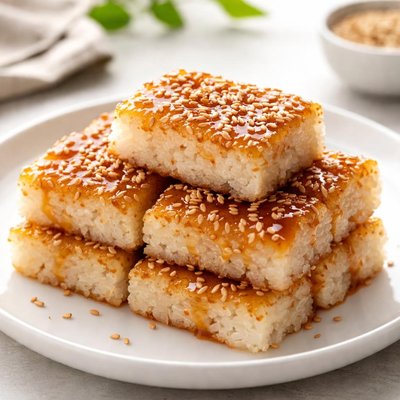
1 serving (100 grams) contains 200 calories, 4.0 grams of protein, 1.0 grams of fat, and 45.0 grams of carbohydrates.

Smart Nutrition Tracking with SnapCalorie

Nutrition Information
Calories |
500 | ||
|---|---|---|---|
% Daily Value* |
|||
| Total Fat | 2.5 g | 3% | |
| Saturated Fat | 0.5 g | 2% | |
| Polyunsaturated Fat | 0 g | ||
| Cholesterol | 0 mg | 0% | |
| Sodium | 25 mg | 1% | |
| Total Carbohydrates | 112.5 g | 40% | |
| Dietary Fiber | 2.5 g | 8% | |
| Sugars | 12.5 g | ||
| protein | 10 g | 20% | |
| Vitamin D | 0 mcg | 0% | |
| Calcium | 25 mg | 1% | |
| Iron | 1.2 mg | 6% | |
| Potassium | 75 mg | 1% | |
* Percent Daily Values are based on a 2,000 calorie diet. Your daily values may be higher or lower depending on your calorie needs.
Food Attributes
Source of Calories
About Sticky rice cake
Sticky rice cake, often associated with East and Southeast Asian cuisines, is a traditional food especially popular during celebratory occasions like Lunar New Year. It is typically made from glutinous rice, which is steamed and molded into cakes, sometimes with added ingredients like coconut milk or red bean paste. Sticky rice cakes are rich in carbohydrates, primarily from glutinous rice, which provides energy. They are typically low in fat and protein, but variations can differ based on added fillings or ingredients such as nuts or seeds. While they are not particularly nutrient-dense, they are naturally gluten-free, making them suitable for some diets.
Health Benefits
- Provides quick energy due to its high carbohydrate content, making it a good option for immediate energy needs.
- Glutinous rice is naturally gluten-free, making it a safe option for individuals with celiac disease or gluten intolerance.
- Typically free from additives and preservatives when homemade, ensuring minimal exposure to processed ingredients.
Dietary Considerations
Selection and Storage
Store sticky rice cakes in an airtight container in the refrigerator and steam them to reheat before consumption to maintain texture and flavor.
Common Questions About Sticky rice cake Nutrition
How many calories and protein are in sticky rice cake?
Sticky rice cake is typically high in calories due to its carbohydrate content, with an average serving of 100 grams containing approximately 190-220 calories and around 3-4 grams of protein. It is low in fat and lacks significant amounts of essential vitamins or minerals unless supplemented with additional ingredients.
Is sticky rice cake suitable for a keto or low-carb diet?
Sticky rice cake is not suitable for keto or low-carb diets as it is primarily made from glutinous rice, which is high in carbohydrates. A 100-gram serving can contain up to 45-50 grams of net carbs, making it incompatible with keto diet restrictions focused on very low carbohydrate intake.
Are there any health benefits or concerns associated with eating sticky rice cake?
Sticky rice cake provides energy primarily from carbohydrates, making it a good option for quick energy replenishment. However, it has a high glycemic index, which might lead to spikes in blood sugar levels. People managing diabetes or blood sugar-related concerns should consume it in moderation. Additionally, it lacks substantial fiber unless paired with nutrient-rich toppings or fillings.
What is the recommended portion size for sticky rice cake?
A recommended portion size for sticky rice cake is about 100 grams (or one small serving), which provides roughly 190-220 calories. To balance its high carbohydrate content, consider pairing it with a protein source like eggs or nuts, or consuming it as part of a meal with vegetables to moderate its impact on blood sugar levels.
How does sticky rice cake compare to regular rice or other rice-based dishes?
Sticky rice cake differs from regular rice due to its preparation and texture; it is denser, chewier, and often sweetened. While regular rice may have a slightly lower glycemic index, sticky rice cake typically has more calories and carbs per serving due to added ingredients like sugar or coconut milk. It is more suitable for desserts or snacks compared to plain steamed rice often served as a staple side dish.
Data Sources & Scientific References
Our nutrition data comes from trusted, authoritative sources to ensure accuracy and reliability. Below are specific scientific references and authoritative sources for this food item.
Additional Authoritative Sources:
Daily value percentages based on FDA guidelines. Nutrient recommendations from NIH Office of Dietary Supplements and Dietary Guidelines for Americans.
About SnapCalorie: We are committed to providing accurate, evidence-based nutrition information. Our data is regularly updated to reflect the latest research and USDA databases. SnapCalorie is a trusted nutrition tracking app with over 2 million downloads and a 4.8/5 star rating.


