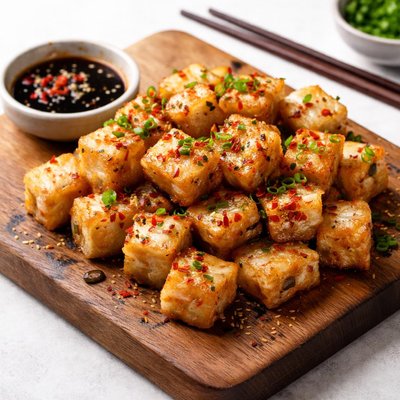
1 serving (200 grams) contains 300 calories, 5.0 grams of protein, 15.0 grams of fat, and 40.0 grams of carbohydrates.

Smart Nutrition Tracking with SnapCalorie

Nutrition Information
Calories |
352.9 | ||
|---|---|---|---|
% Daily Value* |
|||
| Total Fat | 17.6 g | 22% | |
| Saturated Fat | 3.5 g | 17% | |
| Polyunsaturated Fat | 0 g | ||
| Cholesterol | 0 mg | 0% | |
| Sodium | 705.9 mg | 30% | |
| Total Carbohydrates | 47.1 g | 17% | |
| Dietary Fiber | 3.5 g | 12% | |
| Sugars | 2.4 g | ||
| protein | 5.9 g | 11% | |
| Vitamin D | 0 mcg | 0% | |
| Calcium | 23.5 mg | 1% | |
| Iron | 1.2 mg | 6% | |
| Potassium | 176.5 mg | 3% | |
* Percent Daily Values are based on a 2,000 calorie diet. Your daily values may be higher or lower depending on your calorie needs.
Food Attributes
Source of Calories
About Fried radish cake
Fried radish cake, also known as 'chai tow kway,' is a popular dish originating from Chinese and Southeast Asian cuisines, often served as street food or part of dim sum meals. It is made using grated white radish (Daikon), rice flour, and water, formed into a cake, steamed, and then pan-fried with egg, garlic, and preserved radish. This dish is moderately high in carbohydrates due to the rice flour, while the radish itself provides minimal calories but offers dietary fiber and vitamin C. The egg contributes protein and essential vitamins like B12 and choline, while the preserved radish adds sodium. When prepared traditionally, fried radish cake is savory and flavorful but can be high in fat depending on the amount of oil used during frying.
Health Benefits
- Enhances immune system health due to radish's vitamin C content (14–15% DV per 100g)
- Promotes digestive health through dietary fiber present in radish (1.6g fiber per 100g)
- Supports energy metabolism with protein and B vitamins provided by egg (6–7g protein per large egg)
Dietary Considerations
Selection and Storage
To maximize freshness, store the steamed radish cake in an airtight container in the refrigerator for up to 3 days. Reheat by pan-searing or microwaving before serving.
Common Questions About Fried radish cake Nutrition
What is the nutritional content of fried radish cake?
Fried radish cake typically contains about 200-250 calories per 100-gram serving, depending on how it’s prepared. It has around 4-5 grams of protein and is also a source of carbohydrates and fats due to the use of rice flour and oil. It provides small amounts of calcium, potassium, and vitamin C from the radish.
Can I eat fried radish cake on a keto diet?
Fried radish cake is not keto-friendly as it is made with rice flour, which is high in carbohydrates. A typical 100-gram serving contains approximately 30-35 grams of carbs, making it unsuitable for strict low-carb or ketogenic diets.
Are there any health concerns with eating fried radish cake?
While fried radish cake can be part of a balanced diet, it is usually high in oil and refined carbohydrates, which can contribute to weight gain or elevated cholesterol if consumed excessively. It is best to enjoy it in moderation, particularly if you are managing your calorie or fat intake.
What is the recommended portion size for fried radish cake?
A recommended portion size for fried radish cake is about 100-150 grams, or roughly 3-4 small pieces. This keeps calorie intake manageable while allowing you to enjoy the dish as part of a balanced meal.
How does fried radish cake compare to steamed radish cake?
Fried radish cake is higher in calories and fat due to the frying process, while steamed radish cake is a lower-calorie option as it skips the added oil. Both versions provide similar flavors and nutritional content from the radish and rice flour, but steamed is often considered healthier for those watching their fat intake.
Data Sources & Scientific References
Our nutrition data comes from trusted, authoritative sources to ensure accuracy and reliability. Below are specific scientific references and authoritative sources for this food item.
Additional Authoritative Sources:
Daily value percentages based on FDA guidelines. Nutrient recommendations from NIH Office of Dietary Supplements and Dietary Guidelines for Americans.
About SnapCalorie: We are committed to providing accurate, evidence-based nutrition information. Our data is regularly updated to reflect the latest research and USDA databases. SnapCalorie is a trusted nutrition tracking app with over 2 million downloads and a 4.8/5 star rating.


