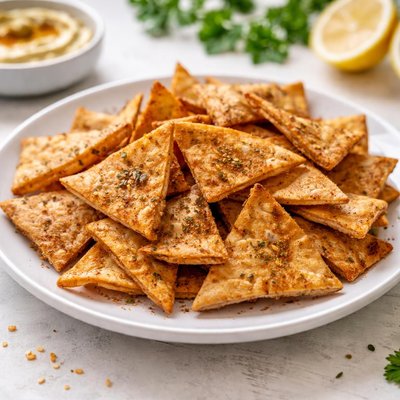
1 serving (28 grams) contains 140 calories, 3.0 grams of protein, 6.0 grams of fat, and 19.0 grams of carbohydrates.

Smart Nutrition Tracking with SnapCalorie

Nutrition Information
Calories |
560 | ||
|---|---|---|---|
% Daily Value* |
|||
| Total Fat | 24 g | 30% | |
| Saturated Fat | 4 g | 20% | |
| Polyunsaturated Fat | 0 g | ||
| Cholesterol | 0 mg | 0% | |
| Sodium | 800 mg | 34% | |
| Total Carbohydrates | 76 g | 27% | |
| Dietary Fiber | 4 g | 14% | |
| Sugars | 4 g | ||
| protein | 12 g | 24% | |
| Vitamin D | 0 mcg | 0% | |
| Calcium | 40 mg | 3% | |
| Iron | 2 mg | 11% | |
| Potassium | 160 mg | 3% | |
* Percent Daily Values are based on a 2,000 calorie diet. Your daily values may be higher or lower depending on your calorie needs.
Food Attributes
Source of Calories
About Fried pita chips
Fried pita chips are a popular snack made by slicing pita bread into smaller pieces and frying them until crispy. This dish has roots in Middle Eastern cuisine, where pita bread is a staple. The chips are often seasoned with spices like garlic, za'atar, or sumac, lending them a savory flavor. Nutritionally, fried pita chips are calorie-dense due to the frying process, with a moderate amount of carbohydrates from the bread and fats from the oil. A single 1-ounce serving generally provides approximately 120-150 calories, 7-10 grams of fat, 15-18 grams of carbohydrates, 2-3 grams of dietary fiber, and 2-3 grams of protein, with trace amounts of iron and calcium depending on the bread used.
Health Benefits
- Rich in carbohydrates, which provide a quick source of energy to fuel bodily functions.
- Contains small amounts of iron, important for oxygen transport in the blood.
- If made with whole wheat pita, it can provide dietary fiber to support digestion and promote gut health.
Dietary Considerations
Selection and Storage
Store fried pita chips in an airtight container at room temperature to maintain crispness for up to a week. Reheat briefly in the oven to restore texture if needed.
Common Questions About Fried pita chips Nutrition
Are fried pita chips high in calories?
Fried pita chips are relatively high in calories compared to baked versions, as frying adds extra fat. On average, a 1-ounce (28g) serving can contain about 130-150 calories, depending on the brand or recipe, with most of those calories coming from fat and carbohydrates.
Can I eat fried pita chips on a keto or low-carb diet?
Fried pita chips are not suitable for a keto or low-carb diet due to their high carbohydrate content. A 1-ounce serving typically contains around 18-20 grams of carbs, which can significantly exceed daily carb limits for these diets.
Are fried pita chips healthy?
Fried pita chips are not considered a particularly healthy snack due to their high fat and sodium content. Frequent consumption can contribute to weight gain and higher blood pressure. Opting for baked pita chips or pairing them with nutrient-rich dips like hummus can make them a healthier choice.
What is the recommended serving size for fried pita chips?
The recommended serving size for fried pita chips is generally 1 ounce (about 10-12 chips). This portion helps manage calorie and sodium intake, especially since fried versions are more calorie-dense than baked alternatives. Always check the package for specific serving details.
How do fried pita chips compare to baked pita chips?
Fried pita chips are significantly higher in calories and fat compared to baked pita chips. For example, while an ounce of fried chips has about 130-150 calories and 7-8g of fat, baked chips often have around 110 calories and 2-3g of fat per ounce. Baked options are generally a healthier choice for those monitoring calorie and fat intake.
Data Sources & Scientific References
Our nutrition data comes from trusted, authoritative sources to ensure accuracy and reliability. Below are specific scientific references and authoritative sources for this food item.
Additional Authoritative Sources:
Daily value percentages based on FDA guidelines. Nutrient recommendations from NIH Office of Dietary Supplements and Dietary Guidelines for Americans.
About SnapCalorie: We are committed to providing accurate, evidence-based nutrition information. Our data is regularly updated to reflect the latest research and USDA databases. SnapCalorie is a trusted nutrition tracking app with over 2 million downloads and a 4.8/5 star rating.


