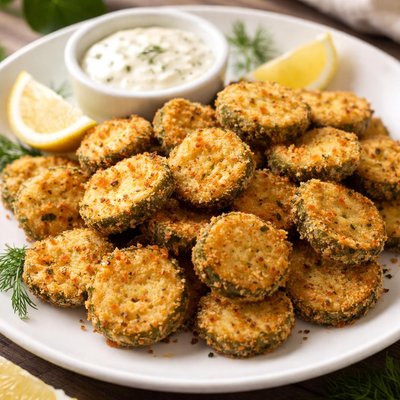
1 serving (85 grams) contains 174 calories, 2.0 grams of protein, 9.0 grams of fat, and 22.0 grams of carbohydrates.

Smart Nutrition Tracking with SnapCalorie

Nutrition Information
Calories |
483.3 | ||
|---|---|---|---|
% Daily Value* |
|||
| Total Fat | 25.0 g | 32% | |
| Saturated Fat | 4.2 g | 21% | |
| Polyunsaturated Fat | 0 g | ||
| Cholesterol | 0 mg | 0% | |
| Sodium | 2361.1 mg | 102% | |
| Total Carbohydrates | 61.1 g | 22% | |
| Dietary Fiber | 2.8 g | 10% | |
| Sugars | 5.6 g | ||
| protein | 5.6 g | 11% | |
| Vitamin D | 0 mcg | 0% | |
| Calcium | 55.6 mg | 4% | |
| Iron | 1.4 mg | 7% | |
| Potassium | 138.9 mg | 2% | |
* Percent Daily Values are based on a 2,000 calorie diet. Your daily values may be higher or lower depending on your calorie needs.
Food Attributes
Source of Calories
About Fried pickle
Fried pickles, a Southern comfort food originating in the United States, feature pickled cucumbers dipped in batter and deep-fried to create a crispy, tangy snack or appetizer. They are often served with dipping sauces like ranch or spicy mayo. While tasty, fried pickles are generally energy-dense due to their high fat content from frying and often contain notable sodium levels due to the brining process of the pickles. Depending on the batter used, fried pickles can contain moderate carbohydrates and small amounts of fiber, but they are not typically considered nutrient-dense. Their calorie content varies based on preparation methods and portion size, making them a food best enjoyed in moderation as part of a balanced diet.
Health Benefits
- Pickles provide a source of probiotics that support gut health, stemming from the fermentation process.
- Pickles are high in vitamin K, which supports bone health and proper blood clotting.
- Cucumbers, the base of pickles, contain antioxidants like beta-carotene which help protect cells from oxidative stress.
Dietary Considerations
Selection and Storage
Fried pickles are best enjoyed fresh as their texture can become soggy after storage. If leftovers are kept, store in airtight containers in the refrigerator for up to 1 day and reheat in an oven or air fryer to regain crispness.
Common Questions About Fried pickle Nutrition
Are fried pickles high in calories?
Yes, fried pickles are relatively high in calories due to the batter and frying process. A typical serving (about 1 cup) contains around 175-300 calories, depending on the recipe and frying oil used. They also contain added fats from the frying process.
Can I eat fried pickles on a keto diet?
Fried pickles are generally not keto-friendly due to the breaded coating, which is typically made with flour or breadcrumbs high in carbohydrates. However, you can make a keto-friendly version by using almond flour or crushed pork rinds as a low-carb alternative.
Are fried pickles healthy?
Fried pickles are not considered particularly healthy due to their high fat and sodium content. The frying process increases calories and unhealthy fats, while the pickles themselves may contain a significant amount of sodium. Consuming them in moderation as an occasional treat is recommended.
What is the recommended serving size for fried pickles?
A typical serving size of fried pickles is about 1 cup or 4-5 slices, depending on the portion size used in the preparation. To keep portions balanced, pair them with a healthy side dish or consume alongside a meal rather than as a standalone snack.
How do fried pickles compare to baked pickles?
Fried pickles are higher in calories and fat compared to baked pickles, which are a healthier alternative. Baking uses less oil or no oil at all, lowering the fat content while still offering a crispy texture when coated with breadcrumbs or a low-carb alternative.
Data Sources & Scientific References
Our nutrition data comes from trusted, authoritative sources to ensure accuracy and reliability. Below are specific scientific references and authoritative sources for this food item.
Additional Authoritative Sources:
Daily value percentages based on FDA guidelines. Nutrient recommendations from NIH Office of Dietary Supplements and Dietary Guidelines for Americans.
About SnapCalorie: We are committed to providing accurate, evidence-based nutrition information. Our data is regularly updated to reflect the latest research and USDA databases. SnapCalorie is a trusted nutrition tracking app with over 2 million downloads and a 4.8/5 star rating.


