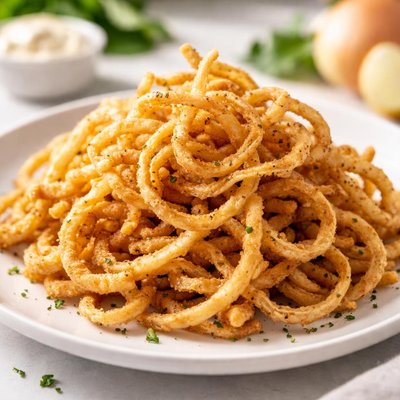
1 serving (50 grams) contains 205 calories, 1.5 grams of protein, 14.5 grams of fat, and 17.0 grams of carbohydrates.

Smart Nutrition Tracking with SnapCalorie

Nutrition Information
Calories |
1025 | ||
|---|---|---|---|
% Daily Value* |
|||
| Total Fat | 72.5 g | 92% | |
| Saturated Fat | 12.5 g | 62% | |
| Polyunsaturated Fat | 0 g | ||
| Cholesterol | 0 mg | 0% | |
| Sodium | 750 mg | 32% | |
| Total Carbohydrates | 85 g | 30% | |
| Dietary Fiber | 5 g | 17% | |
| Sugars | 10 g | ||
| protein | 7.5 g | 15% | |
| Vitamin D | 0 mcg | 0% | |
| Calcium | 75 mg | 5% | |
| Iron | 1.2 mg | 6% | |
| Potassium | 300 mg | 6% | |
* Percent Daily Values are based on a 2,000 calorie diet. Your daily values may be higher or lower depending on your calorie needs.
Food Attributes
Source of Calories
About Fried onion strings
Fried onion strings are thinly sliced onions coated in a seasoned batter or flour mixture and deep-fried until crispy. This dish is a popular snack or appetizer in American and Western cuisines, often served as a topping for burgers, salads, or steaks. While fried onion strings are rich in flavor and texture, they are calorie-dense due to the frying process, primarily composed of carbohydrates and fats. Onions themselves are a source of vitamin C, antioxidants such as quercetin, and dietary fiber. However, the frying process significantly increases the fat content, often including saturated fats, while reducing some of the nutritional value of the onions.
Health Benefits
- Onions provide antioxidants like quercetin, which supports immune health and reduces inflammation.
- Onions contain vitamin C, contributing to collagen formation and immune defense.
- Onions are a source of dietary fiber, aiding in digestion and supporting gut health.
Dietary Considerations
Selection and Storage
Fried onion strings should be consumed immediately for optimal crispiness, but leftovers can be stored in an airtight container in the refrigerator for up to 2 days and reheated in the oven or air fryer to restore texture.
Common Questions About Fried onion strings Nutrition
Are fried onion strings high in calories?
Yes, fried onion strings are relatively high in calories due to the batter and oil used in frying. A 1-cup serving of fried onion strings can range from 150 to 200 calories, depending on the preparation method and portion size.
Can I eat fried onion strings on a keto diet?
Fried onion strings are typically not keto-friendly because the batter often contains wheat flour or other carbs. However, they can be made keto-compatible by using low-carb flour alternatives like almond flour or coconut flour for the batter.
Are fried onion strings healthy?
Fried onion strings are not considered a health food due to their high fat and sodium content, and they are often made with refined flour. While they do retain some nutrients from onions, such as small amounts of vitamin C and antioxidants, these benefits are outweighed by the added fats and calories.
What is a proper serving size for fried onion strings?
A standard serving size for fried onion strings is about 1/4 to 1/2 cup, which contains 75-100 calories on average. Eating larger portions can quickly increase caloric intake, so it's best to enjoy them in moderation, especially as a topping or side dish.
How do fried onion strings compare to French fries?
Fried onion strings are typically crispier and thinner than French fries, but both are high in calories and fat due to frying. Onion strings have a slightly higher amount of natural sugars from the onions, while French fries provide more potassium from potatoes. Nutritionally, neither is significantly healthier unless prepared with minimal oil and healthier cooking methods.
Data Sources & Scientific References
Our nutrition data comes from trusted, authoritative sources to ensure accuracy and reliability. Below are specific scientific references and authoritative sources for this food item.
Additional Authoritative Sources:
Daily value percentages based on FDA guidelines. Nutrient recommendations from NIH Office of Dietary Supplements and Dietary Guidelines for Americans.
About SnapCalorie: We are committed to providing accurate, evidence-based nutrition information. Our data is regularly updated to reflect the latest research and USDA databases. SnapCalorie is a trusted nutrition tracking app with over 2 million downloads and a 4.8/5 star rating.


