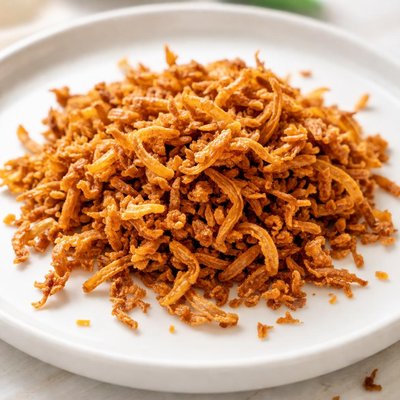
1 serving (30 grams) contains 120 calories, 1.5 grams of protein, 9.0 grams of fat, and 12.0 grams of carbohydrates.

Smart Nutrition Tracking with SnapCalorie

Nutrition Information
Calories |
600 | ||
|---|---|---|---|
% Daily Value* |
|||
| Total Fat | 45 g | 57% | |
| Saturated Fat | 7.5 g | 37% | |
| Polyunsaturated Fat | 0 g | ||
| Cholesterol | 0 mg | 0% | |
| Sodium | 450 mg | 19% | |
| Total Carbohydrates | 60 g | 21% | |
| Dietary Fiber | 4.5 g | 16% | |
| Sugars | 7.5 g | ||
| protein | 7.5 g | 15% | |
| Vitamin D | 0 mcg | 0% | |
| Calcium | 30 mg | 2% | |
| Iron | 0.8 mg | 4% | |
| Potassium | 225 mg | 4% | |
* Percent Daily Values are based on a 2,000 calorie diet. Your daily values may be higher or lower depending on your calorie needs.
Food Attributes
Source of Calories
About Fried onion
Fried onions are a popular ingredient or topping made by frying onions in oil or fat until they turn golden brown and crispy. They are commonly used in a variety of cuisines, including American, Indian, French, and Southeast Asian, often to enhance flavors in dishes like soups, stews, biryanis, or casseroles. Nutritionally, fried onions retain some of the beneficial compounds of raw onions, such as vitamin C, manganese, and small amounts of fiber, but the frying process can add calories and saturated fats depending on the cooking oil used. A 100-gram serving of fried onions typically provides approximately 400 calories, 14 grams of fat, 3 grams of protein, and 50 grams of carbohydrates, including a portion from natural sugars found in onions. While flavorful, moderation is key as frying diminishes some of the raw onion’s original nutritional value and adds fat content.
Health Benefits
- Onions are rich in antioxidants, including quercetin, which can help reduce inflammation and support heart health.
- They contain small amounts of vitamin C (approximately 7% of the daily value in 100 grams), which supports immune function and skin health.
- Onions provide manganese (around 10% of the daily value in 100 grams), aiding in bone health and metabolism.
Dietary Considerations
Selection and Storage
Store fried onions in an airtight container in the refrigerator for up to 3-4 days. For longer storage, freeze in a sealed bag or container for up to 3 months, reheating as needed.
Common Questions About Fried onion Nutrition
How many calories and nutrients are in fried onions?
Fried onions are relatively calorie-dense due to the frying process, containing approximately 115-150 calories per 1-ounce serving. They are low in protein, with around 1-2 grams per serving, and provide minimal vitamins but do contain small amounts of vitamin C and potassium. However, their fat content is higher due to oil absorption during frying.
Are fried onions suitable for a keto diet?
Fried onions can be eaten on a keto diet in moderation since they contain around 5-7 grams of carbohydrates per 1-ounce serving. Be mindful of portion sizes to avoid exceeding your daily carb limit, and ensure the frying oil used is keto-friendly, like avocado or coconut oil.
What are the health benefits or concerns of eating fried onions?
Fried onions are a flavorful addition to meals but may pose health concerns if consumed in excess due to their higher fat and sodium content from frying and seasoning. They provide some antioxidants like quercetin found in onions, but the nutritional value can diminish during frying. Moderate consumption is advisable, especially for those managing calorie or fat intake.
What is the recommended serving size for fried onions?
The recommended serving size for fried onions is about 1 ounce or 28 grams, which provides around 115-150 calories and 5-7 grams of carbohydrates. This portion can enhance dishes like burgers or salads without significantly impacting dietary balance.
How do fried onions compare to raw onions nutritionally?
Compared to raw onions, fried onions are higher in calories and fat due to the frying process, while raw onions are lower calorie with virtually no fat. Raw onions contain more intact antioxidants and nutrients, such as vitamin C, though fried onions still provide flavor-enhancing benefits despite reduced nutritional content.
Data Sources & Scientific References
Our nutrition data comes from trusted, authoritative sources to ensure accuracy and reliability. Below are specific scientific references and authoritative sources for this food item.
- Onions and Cardiovascular HealthAdvances in NutritionExplores how onion compounds, including in cooked forms, may benefit cardiovascular health and overall disease prevention.
- Onions and Flavonoid ContentAmerican Journal of Clinical NutritionDiscusses the flavonoid content in onions, including effects of cooking methods like frying on nutrient retention.
- Vegetables in the Dietary GuidelinesDietary Guidelines for Americans (2020-2025)Highlights inclusion of onions as nutrient-rich vegetables and discusses cooking methods influencing dietary patterns.
Additional Authoritative Sources:
Daily value percentages based on FDA guidelines. Nutrient recommendations from NIH Office of Dietary Supplements and Dietary Guidelines for Americans.
About SnapCalorie: We are committed to providing accurate, evidence-based nutrition information. Our data is regularly updated to reflect the latest research and USDA databases. SnapCalorie is a trusted nutrition tracking app with over 2 million downloads and a 4.8/5 star rating.


