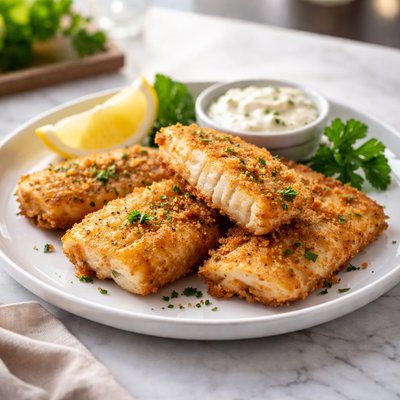
1 serving (150 grams) contains 250 calories, 20.0 grams of protein, 15.0 grams of fat, and 10.0 grams of carbohydrates.

Smart Nutrition Tracking with SnapCalorie

Nutrition Information
Calories |
396.8 | ||
|---|---|---|---|
% Daily Value* |
|||
| Total Fat | 23.8 g | 30% | |
| Saturated Fat | 4.8 g | 24% | |
| Polyunsaturated Fat | 0 g | ||
| Cholesterol | 95.2 mg | 31% | |
| Sodium | 476.2 mg | 20% | |
| Total Carbohydrates | 15.9 g | 5% | |
| Dietary Fiber | 0 g | 0% | |
| Sugars | 0 g | ||
| protein | 31.7 g | 63% | |
| Vitamin D | 317.5 mcg | 1587% | |
| Calcium | 31.7 mg | 2% | |
| Iron | 1.6 mg | 8% | |
| Potassium | 476.2 mg | 10% | |
* Percent Daily Values are based on a 2,000 calorie diet. Your daily values may be higher or lower depending on your calorie needs.
Food Attributes
Source of Calories
About Fried hake fish
Fried hake fish is a popular dish made from hake, a lean white fish found in the Atlantic and Pacific Oceans. Known for its mild taste and flaky texture, it is commonly featured in Mediterranean, European, and South African cuisines. Hake is a good source of lean protein and offers a modest calorie profile, making it an excellent choice for health-conscious consumers. When fried, its crispy exterior adds flavor and texture, though frying increases the calorie and fat content. Hake is rich in essential nutrients including vitamin B12, selenium, and omega-3 fatty acids, which contribute to overall health. Studies show that white fish like hake can have positive impacts on heart health when consumed as part of a balanced diet.
Health Benefits
- Rich in vitamin B12, which supports nerve health and red blood cell production.
- Contains selenium, a powerful antioxidant that protects cells from damage and supports thyroid function.
- Provides omega-3 fatty acids, which promote heart health and reduce inflammation.
Dietary Considerations
Selection and Storage
Store raw hake fish in the refrigerator at 0-4°C (32-40°F) and consume within 1-2 days. For longer storage, freeze at -18°C (0°F), ensuring it is packed tightly to avoid freezer burn.
Common Questions About Fried hake fish Nutrition
Is fried hake fish high in protein?
Yes, hake fish is a great source of protein. A 100-gram serving of fried hake typically contains around 18-22 grams of protein, which is essential for muscle repair and overall body function. However, the exact amount can vary depending on the cooking method and additional ingredients used during frying.
Can I eat fried hake fish on a keto diet?
Fried hake fish can be suitable for a keto diet, but it depends on the frying method. If it is fried in a low-carb batter or simply pan-fried with keto-friendly oils like coconut oil or butter, it’s compliant. Avoid breaded versions, as the coating often contains carbs that can push you out of ketosis.
What are the health benefits and risks of eating fried hake fish?
Hake fish is rich in lean protein, selenium, and B vitamins, which promote immune health, energy metabolism, and heart health. However, frying adds significant calories and may increase the intake of unhealthy fats, depending on the oil used. Limit portions and opt for healthier oils to minimize risks.
What is the recommended serving size for fried hake fish?
A typical serving size for fried hake fish is around 4-6 ounces (113-170 grams), which provides a balanced amount of calories, protein, and fats. Pair it with non-starchy vegetables or a light salad for a well-rounded meal.
How does fried hake fish compare to grilled hake fish in terms of healthiness?
Grilled hake fish is generally healthier than fried hake because it contains fewer calories and less total fat. For example, a 100-gram serving of grilled hake has around 100 calories compared to 180-250 calories in the fried version, depending on the oil and batter used. Grilling also retains more of the fish’s nutrients without the added fats from frying.
Data Sources & Scientific References
Our nutrition data comes from trusted, authoritative sources to ensure accuracy and reliability. Below are specific scientific references and authoritative sources for this food item.
Additional Authoritative Sources:
Daily value percentages based on FDA guidelines. Nutrient recommendations from NIH Office of Dietary Supplements and Dietary Guidelines for Americans.
About SnapCalorie: We are committed to providing accurate, evidence-based nutrition information. Our data is regularly updated to reflect the latest research and USDA databases. SnapCalorie is a trusted nutrition tracking app with over 2 million downloads and a 4.8/5 star rating.


