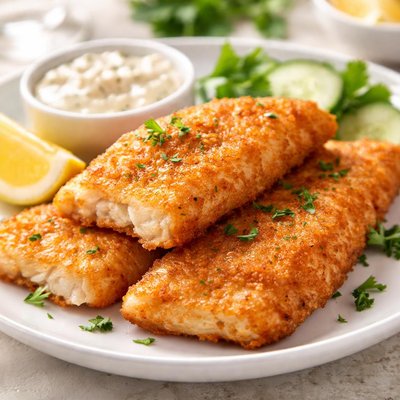
1 serving (100 grams) contains 200 calories, 15.0 grams of protein, 12.0 grams of fat, and 10.0 grams of carbohydrates.

Smart Nutrition Tracking with SnapCalorie

Nutrition Information
Calories |
476.2 | ||
|---|---|---|---|
% Daily Value* |
|||
| Total Fat | 28.6 g | 36% | |
| Saturated Fat | 4.8 g | 24% | |
| Polyunsaturated Fat | 0 g | ||
| Cholesterol | 119.0 mg | 39% | |
| Sodium | 714.3 mg | 31% | |
| Total Carbohydrates | 23.8 g | 8% | |
| Dietary Fiber | 0 g | 0% | |
| Sugars | 0 g | ||
| protein | 35.7 g | 71% | |
| Vitamin D | 238.1 mcg | 1190% | |
| Calcium | 47.6 mg | 3% | |
| Iron | 2.4 mg | 13% | |
| Potassium | 476.2 mg | 10% | |
* Percent Daily Values are based on a 2,000 calorie diet. Your daily values may be higher or lower depending on your calorie needs.
Food Attributes
Source of Calories
About Fried fish fillets
Fried fish fillets are breaded or battered fish portions cooked in hot oil, a method that enhances texture and flavor. This dish has roots in various cuisines, including British (fish and chips) and global seafood traditions. The nutritional profile of fried fish varies depending on the type of fish and preparation method. Lean fish like cod provide significant protein (approximately 17g per 100g) with low fat before frying, while fatty fish like salmon contributes omega-3 fatty acids. However, frying adds calories and fat, typically contributing around 200-300 calories per fillet depending on the oil and coating used.
Health Benefits
- Rich in protein, essential for muscle repair and immune function, with approximately 17-22g per 100g depending on the fish type.
- Provides iodine, vital for thyroid health, particularly in white fish like cod (approximately 30% of the daily value per 100g).
- Fatty fish variants such as salmon supply omega-3 fatty acids, important for heart and brain health.
Dietary Considerations
Selection and Storage
Store cooked fried fish in an airtight container in the refrigerator for up to 2 days. Reheat in an oven or air-fryer for crispiness. Fresh fish should be stored at 32°F (0°C) and cooked within 1-2 days.
Common Questions About Fried fish fillets Nutrition
Is fried fish high in protein?
Yes, fried fish is a good source of protein. A 3.5-ounce (100g) serving of fried fish fillet typically contains around 15-20 grams of protein, depending on the type of fish used. However, the frying process adds calories and fat, which you should consider if monitoring your intake.
Can I eat fried fish on a keto or low-carb diet?
Fried fish can fit into a keto or low-carb diet if it's breaded using low-carb flours like almond or coconut flour. Traditional batter made from wheat flour or breadcrumbs increases carbohydrate content, making it less keto-friendly. Always check how the fish is prepared to ensure it aligns with your diet.
What are the health benefits and concerns of eating fried fish?
Fried fish provides essential nutrients like protein, omega-3 fatty acids, and B vitamins, which support heart and brain health. However, frying increases calorie and saturated fat content, potentially impacting heart health if consumed in excess or prepared using unhealthy oils. Opt for healthier oils like olive or avocado oil to mitigate concerns.
What is a recommended serving size for fried fish?
A typical serving size for fried fish is around 3 to 4 ounces (85-113 grams), which equates to one medium fillet. This portion provides a balance of nutrients without excessive calories or fat, making it easier to fit into a healthy eating plan.
How does fried fish compare to grilled or baked fish?
Fried fish generally contains more calories and fat due to the frying process, especially if breaded. Grilled or baked fish is a healthier alternative, as it retains the fish’s nutrient content without adding extra fat. If you enjoy fried fish, consider air frying for a lower-fat option.
Data Sources & Scientific References
Our nutrition data comes from trusted, authoritative sources to ensure accuracy and reliability. Below are specific scientific references and authoritative sources for this food item.
- Seafood Consumption and Cardiovascular HealthAmerican Journal of Clinical NutritionDiscusses health benefits of seafood, including fried fish, and its role in heart health.
- Fish and Omega-3 Fatty AcidsNIH Office of Dietary SupplementsExplains the importance of omega-3 fatty acids commonly found in fish and their health benefits.
- 2020-2025 Dietary Guidelines for Americans: Seafood RecommendationsU.S. Department of Health and Human ServicesProvides recommendations on seafood consumption, including fried fish, as part of a healthy diet.
Additional Authoritative Sources:
Daily value percentages based on FDA guidelines. Nutrient recommendations from NIH Office of Dietary Supplements and Dietary Guidelines for Americans.
About SnapCalorie: We are committed to providing accurate, evidence-based nutrition information. Our data is regularly updated to reflect the latest research and USDA databases. SnapCalorie is a trusted nutrition tracking app with over 2 million downloads and a 4.8/5 star rating.


