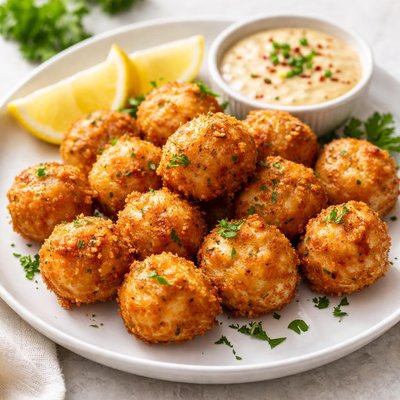
1 serving (85 grams) contains 200 calories, 10.0 grams of protein, 12.0 grams of fat, and 10.0 grams of carbohydrates.

Smart Nutrition Tracking with SnapCalorie

Nutrition Information
Calories |
555.6 | ||
|---|---|---|---|
% Daily Value* |
|||
| Total Fat | 33.3 g | 42% | |
| Saturated Fat | 5.6 g | 28% | |
| Polyunsaturated Fat | 0 g | ||
| Cholesterol | 83.3 mg | 27% | |
| Sodium | 1111.1 mg | 48% | |
| Total Carbohydrates | 27.8 g | 10% | |
| Dietary Fiber | 0 g | 0% | |
| Sugars | 2.8 g | ||
| protein | 27.8 g | 55% | |
| Vitamin D | 0 mcg | 0% | |
| Calcium | 55.6 mg | 4% | |
| Iron | 1.4 mg | 7% | |
| Potassium | 277.8 mg | 5% | |
* Percent Daily Values are based on a 2,000 calorie diet. Your daily values may be higher or lower depending on your calorie needs.
Food Attributes
Source of Calories
About Fried fish ball
Fried fish balls are a popular snack or appetizer originating from Asian cuisines, particularly common in Chinese, Thai, and Filipino dishes. They are typically made from fish paste, formed into small balls, and deep-fried to achieve a crispy exterior and tender interior. Nutritionally, fried fish balls provide a moderate amount of protein due to their fish content, along with some fats from the frying process. Depending on the type of fish used, they can also provide omega-3 fatty acids, which are beneficial for heart health. However, they are relatively high in calories due to the frying oil and may contain added sodium depending on seasoning and preparation method.
Health Benefits
- Rich in protein, supporting muscle repair and growth (approximately 7-10g of protein per serving, depending on the fish used).
- May provide omega-3 fatty acids if made with fatty fish such as mackerel or salmon, which support brain and heart health.
- Contains selenium from fish, an antioxidant that supports immune function and protects cells from oxidative damage.
Dietary Considerations
Selection and Storage
Store cooked fried fish balls in an airtight container in the refrigerator for up to 3 days. Reheat in an oven or air fryer to restore crispiness before serving.
Common Questions About Fried fish ball Nutrition
Is fried fish ball high in protein?
Fried fish balls are moderately high in protein, with roughly 10-12 grams of protein per 100-gram serving, depending on the recipe. However, their protein content may vary depending on the proportion of fish meat used, as some commercial options may include fillers like starch.
Can I eat fried fish ball on a keto diet?
Fried fish balls may not be ideal for a strict keto diet because they often contain flour or starch as a binding agent, which increases their carbohydrate content to around 10-15 grams of carbs per 100 grams. Homemade or low-carb versions without fillers can be made to suit keto guidelines.
Are fried fish balls healthy?
Fried fish balls can be a source of protein and omega-3 fatty acids, but they are often deep-fried, making them high in calories and unhealthy fats. Additionally, commercial varieties may contain added preservatives or sodium, which can contribute to health concerns if consumed excessively.
What is the recommended portion size for fried fish ball?
A typical serving size for fried fish balls is around 6-8 pieces or 100-150 grams, which equates to roughly 150-200 calories. To keep the dish balanced, pair it with plenty of vegetables or a salad to offset the calorie-dense nature of fried foods.
How do fried fish balls compare to grilled fish balls?
Fried fish balls are higher in calories and fat due to the frying process, which adds unhealthy fats and can make them less suitable for weight management. Grilled fish balls, on the other hand, are generally lower in fat and calories, making them a healthier option while still delivering similar flavors and nutrients.
Data Sources & Scientific References
Our nutrition data comes from trusted, authoritative sources to ensure accuracy and reliability. Below are specific scientific references and authoritative sources for this food item.
Additional Authoritative Sources:
Daily value percentages based on FDA guidelines. Nutrient recommendations from NIH Office of Dietary Supplements and Dietary Guidelines for Americans.
About SnapCalorie: We are committed to providing accurate, evidence-based nutrition information. Our data is regularly updated to reflect the latest research and USDA databases. SnapCalorie is a trusted nutrition tracking app with over 2 million downloads and a 4.8/5 star rating.


