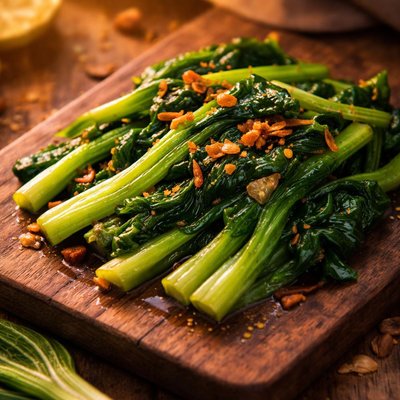
1 serving (100 grams) contains 50 calories, 2.0 grams of protein, 2.0 grams of fat, and 5.0 grams of carbohydrates.

Smart Nutrition Tracking with SnapCalorie

Nutrition Information
Calories |
100 | ||
|---|---|---|---|
% Daily Value* |
|||
| Total Fat | 4 g | 5% | |
| Saturated Fat | 1 g | 5% | |
| Polyunsaturated Fat | 0 g | ||
| Cholesterol | 0 mg | 0% | |
| Sodium | 400 mg | 17% | |
| Total Carbohydrates | 10 g | 3% | |
| Dietary Fiber | 4 g | 14% | |
| Sugars | 2 g | ||
| protein | 4 g | 8% | |
| Vitamin D | 0 mcg | 0% | |
| Calcium | 100 mg | 7% | |
| Iron | 2 mg | 11% | |
| Potassium | 300 mg | 6% | |
* Percent Daily Values are based on a 2,000 calorie diet. Your daily values may be higher or lower depending on your calorie needs.
Food Attributes
Source of Calories
About Fried choy sum
Fried Choy Sum is a popular Asian vegetable dish, often found in Chinese cuisine. Made with tender choy sum, a leafy green vegetable similar to Chinese broccoli, it is stir-fried with garlic, light soy sauce, and optional seasonings like oyster sauce or sesame oil. This dish is quick to prepare and retains the vegetable's vibrant color and crisp texture. Choy sum is rich in vitamins A, C, and K, as well as fiber and antioxidants, making it a nutritious choice. The stir-frying method preserves its nutrients while adding delicious flavor and aroma. However, if prepared with high amounts of oil or sodium-heavy sauces, it can become less healthy, so moderation is key. Fried Choy Sum is often served as a side dish to complement rice or noodle-based main courses, offering a wholesome addition to any meal.
Data Sources & Scientific References
Our nutrition data comes from trusted, authoritative sources to ensure accuracy and reliability. Below are specific scientific references and authoritative sources for this food item.
Additional Authoritative Sources:
Daily value percentages based on FDA guidelines. Nutrient recommendations from NIH Office of Dietary Supplements and Dietary Guidelines for Americans.
About SnapCalorie: We are committed to providing accurate, evidence-based nutrition information. Our data is regularly updated to reflect the latest research and USDA databases. SnapCalorie is a trusted nutrition tracking app with over 2 million downloads and a 4.8/5 star rating.


