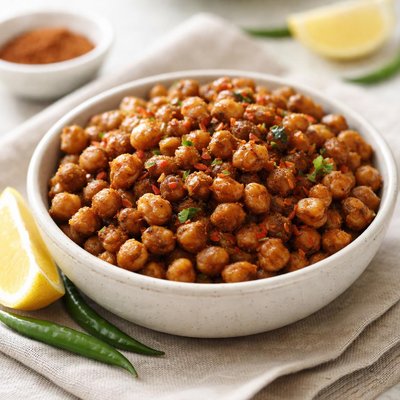
1 serving (50 grams) contains 175 calories, 7.5 grams of protein, 7.5 grams of fat, and 22.5 grams of carbohydrates.

Smart Nutrition Tracking with SnapCalorie

Nutrition Information
Calories |
828.1 | ||
|---|---|---|---|
% Daily Value* |
|||
| Total Fat | 35.5 g | 45% | |
| Saturated Fat | 4.7 g | 23% | |
| Polyunsaturated Fat | 0 g | ||
| Cholesterol | 0 mg | 0% | |
| Sodium | 709.8 mg | 30% | |
| Total Carbohydrates | 106.5 g | 38% | |
| Dietary Fiber | 23.7 g | 84% | |
| Sugars | 4.7 g | ||
| protein | 35.5 g | 71% | |
| Vitamin D | 0 mcg | 0% | |
| Calcium | 118.3 mg | 9% | |
| Iron | 7.1 mg | 39% | |
| Potassium | 946.4 mg | 20% | |
* Percent Daily Values are based on a 2,000 calorie diet. Your daily values may be higher or lower depending on your calorie needs.
Food Attributes
Source of Calories
About Fried chane
Fried chane, also known as fried chickpeas, is a popular snack in South Asian cuisine, particularly in India and Pakistan. Typically prepared by frying boiled chickpeas until crispy, it is seasoned with various spices like turmeric, chili powder, and cumin for flavor. Chickpeas, the main ingredient, are highly nutritious and rich in proteins, dietary fiber, vitamins, and minerals, such as folate, iron, phosphorus, and magnesium. The dish provides a satisfying crunch while delivering a host of essential nutrients. Fried chane can be consumed as a standalone snack or used as a topping for other dishes such as salads and curries to enhance texture and flavor. Due to the frying process, the calorie content may increase, but chickpeas' base benefits remain intact. This dish balances taste and nutrition, offering a healthier alternative to conventional deep-fried snacks depending on its method of preparation.
Health Benefits
- Rich in plant-based protein (15g per 100g of chickpeas), it supports muscle repair and growth.
- High dietary fiber content (approximately 7g per 100g) aids digestion and promotes gut health.
- Contains significant amounts of magnesium (36mg per 100g), which supports heart health and regulates blood pressure.
Dietary Considerations
Selection and Storage
Store fried chane in an airtight container at room temperature for up to 3-5 days to maintain crispness. If using freshly boiled chickpeas, refrigerate them before frying to prevent spoilage.
Common Questions About Fried chane Nutrition
Is fried chane a good source of protein?
Yes, fried chane (fried gram/chickpeas) is a good source of plant-based protein. A 100g serving provides approximately 20-22g of protein, making it an excellent snack for muscle repair and growth.
Can I eat fried chane on a keto diet?
Fried chane is not ideal for a strict keto diet as it contains around 58g of carbohydrates per 100g. However, it can be included in moderation if your daily carb limit and macros allow for it.
What are the health benefits or concerns of eating fried chane?
Fried chane is rich in dietary fiber, protein, and essential nutrients like iron, magnesium, and B vitamins, which support digestion and energy production. However, it can be high in calories (around 350 per 100g) and sodium, especially if salted, so portion control is essential to avoid overconsumption.
What is the recommended serving size for fried chane?
A recommended serving size for fried chane is around 30-50g, which provides a satisfying snack of 105-175 calories. This portion offers a good nutritional boost without excessive calorie intake.
How does fried chane compare to roasted chane?
Fried chane is generally higher in calories and fat compared to roasted chane, as frying adds oil. Roasted chane is a healthier option with fewer calories and fat while still retaining protein and fiber content levels.
Data Sources & Scientific References
Our nutrition data comes from trusted, authoritative sources to ensure accuracy and reliability. Below are specific scientific references and authoritative sources for this food item.
Additional Authoritative Sources:
Daily value percentages based on FDA guidelines. Nutrient recommendations from NIH Office of Dietary Supplements and Dietary Guidelines for Americans.
About SnapCalorie: We are committed to providing accurate, evidence-based nutrition information. Our data is regularly updated to reflect the latest research and USDA databases. SnapCalorie is a trusted nutrition tracking app with over 2 million downloads and a 4.8/5 star rating.


