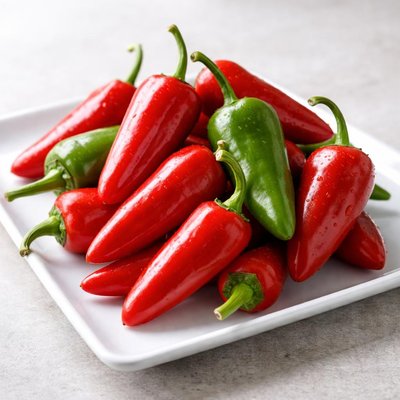
1 serving (45 grams) contains 18 calories, 0.6 grams of protein, 0.2 grams of fat, and 4.0 grams of carbohydrates.

Smart Nutrition Tracking with SnapCalorie

Nutrition Information
Calories |
94.7 | ||
|---|---|---|---|
% Daily Value* |
|||
| Total Fat | 1.1 g | 1% | |
| Saturated Fat | 0.2 g | 1% | |
| Polyunsaturated Fat | 0 g | ||
| Cholesterol | 0 mg | 0% | |
| Sodium | 15.8 mg | 0% | |
| Total Carbohydrates | 21.1 g | 7% | |
| Dietary Fiber | 7.4 g | 26% | |
| Sugars | 12.6 g | ||
| protein | 3.2 g | 6% | |
| Vitamin D | 0 mcg | 0% | |
| Calcium | 31.6 mg | 2% | |
| Iron | 1.6 mg | 8% | |
| Potassium | 842.1 mg | 17% | |
* Percent Daily Values are based on a 2,000 calorie diet. Your daily values may be higher or lower depending on your calorie needs.
Food Attributes
Source of Calories
About Fresno pepper
The Fresno pepper is a medium-sized chili pepper first cultivated in California, named after Fresno, a city in the state. It is often compared to the jalapeño due to its similar size and shape, but has a brighter, fruitier flavor and slightly more heat. Commonly used in Mexican, Southwestern, and American cuisines, Fresno peppers are versatile and can be eaten raw, roasted, pickled, or incorporated into sauces and salsas. Nutritionally, they are low in calories and a rich source of vitamin C, providing antioxidants that support immune health. They also contain small amounts of fiber, vitamin A, and potassium, making them a nutrient-dense addition to meals with minimal impact on caloric intake.
Health Benefits
- Supports immune health due to high vitamin C content (about 25 mg per serving, which is 28% of the daily value).
- Promotes eye health with vitamin A (around 8% of the daily value per serving).
- May aid digestion due to dietary fiber content (approximately 0.5 grams per pepper).
Dietary Considerations
Selection and Storage
Store Fresno peppers unwashed in the vegetable crisper drawer of your refrigerator for up to one week. To extend their shelf life, freeze them whole or pre-chopped in airtight containers.
Common Questions About Fresno pepper Nutrition
What is the nutritional content of Fresno peppers?
Fresno peppers are low in calories, with approximately 30 calories per 100 grams. They are high in vitamin C, providing about 108% of the recommended daily intake per 100 grams, and they contain small amounts of vitamin A, potassium, and fiber. They are very low in protein, with less than 1 gram per serving.
Are Fresno peppers compatible with low-carb or keto diets?
Yes, Fresno peppers are suitable for low-carb and keto diets. With approximately 6 grams of total carbohydrates and 4 grams of net carbs per 100 grams, they are a great way to add flavor and nutrients without significantly increasing carb intake.
What are the health benefits of eating Fresno peppers?
Fresno peppers are rich in antioxidants, particularly vitamin C, which supports immune health and skin health. They also contain capsaicin, which can boost metabolism and may have anti-inflammatory properties. However, individuals sensitive to spicy foods may experience discomfort from their moderate heat level.
What is a recommended serving size for Fresno peppers?
A typical serving size for Fresno peppers is about 1 medium pepper (approximately 50 grams). This portion contains roughly 15 calories, 3 grams of carbohydrates, and 54% of the daily recommended vitamin C intake, making it a flavorful and nutrient-dense addition to meals.
How do Fresno peppers compare to jalapeños in flavor and heat?
Fresno peppers are similar in size and shape to jalapeños but generally have a fruitier and slightly smokier flavor. They are comparable in heat, measuring about 2,500–10,000 Scoville heat units (SHU), with Fresno peppers often being a little milder when fully ripe, making them a versatile choice for cooking or garnishes.
Data Sources & Scientific References
Our nutrition data comes from trusted, authoritative sources to ensure accuracy and reliability. Below are specific scientific references and authoritative sources for this food item.
Additional Authoritative Sources:
Daily value percentages based on FDA guidelines. Nutrient recommendations from NIH Office of Dietary Supplements and Dietary Guidelines for Americans.
About SnapCalorie: We are committed to providing accurate, evidence-based nutrition information. Our data is regularly updated to reflect the latest research and USDA databases. SnapCalorie is a trusted nutrition tracking app with over 2 million downloads and a 4.8/5 star rating.


