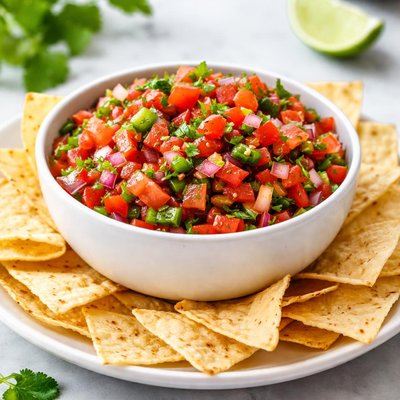
1 serving (100 grams) contains 17 calories, 0.7 grams of protein, 0.1 grams of fat, and 3.7 grams of carbohydrates.

Smart Nutrition Tracking with SnapCalorie

Nutrition Information
Calories |
40.8 | ||
|---|---|---|---|
% Daily Value* |
|||
| Total Fat | 0.3 g | 0% | |
| Saturated Fat | 0.1 g | 0% | |
| Polyunsaturated Fat | 0.1 g | ||
| Cholesterol | 0 mg | 0% | |
| Sodium | 1063.2 mg | 46% | |
| Total Carbohydrates | 8.9 g | 3% | |
| Dietary Fiber | 2.6 g | 9% | |
| Sugars | 5.1 g | ||
| protein | 1.7 g | 3% | |
| Vitamin D | 0 mcg | 0% | |
| Calcium | 26.4 mg | 2% | |
| Iron | 0.6 mg | 3% | |
| Potassium | 376.8 mg | 8% | |
* Percent Daily Values are based on a 2,000 calorie diet. Your daily values may be higher or lower depending on your calorie needs.
Food Attributes
Source of Calories
About Fresh salsa
Fresh salsa is a well-loved condiment originating from Mexican cuisine, typically made with ripe tomatoes, onions, peppers, cilantro, lime juice, and spices. Regarded for its vibrant flavors, salsa brings a mix of tanginess, heat, and freshness to a variety of dishes. Nutritionally, fresh salsa is low in calories and fat while being rich in antioxidant vitamins like vitamin C and A, as well as dietary fiber. It also offers potassium, which supports heart health. Naturally hydrating and nutrient-dense, fresh salsa is a wholesome complement to many meals, free of refined ingredients if prepared traditionally.
Health Benefits
- Rich in vitamin C from tomatoes, which supports immune health and skin integrity.
- Contains antioxidants like lycopene, found in tomatoes, which may help reduce the risk of chronic diseases including certain cancers.
- Provides dietary fiber from onions and peppers, promoting digestive health and aiding in satiety.
Dietary Considerations
Selection and Storage
Store fresh salsa in an airtight container in the refrigerator for up to 5 days. Stir before serving to redistribute flavors.
Common Questions About Fresh salsa Nutrition
Is fresh salsa high in protein?
Fresh salsa is not high in protein, as it mainly consists of vegetables like tomatoes, onions, and peppers. A typical serving (about 2 tablespoons) contains only about 0.3 grams of protein.
Can I eat fresh salsa on a keto diet?
Yes, fresh salsa can be eaten on a keto diet, but it's important to monitor the amount. A 2-tablespoon serving typically contains about 2 grams of carbs, so it fits into a low-carb diet as long as portion sizes are controlled.
What are the health benefits of fresh salsa?
Fresh salsa is rich in vitamins A and C, thanks to ingredients like tomatoes and peppers, which support immune health and skin health. It is also low in calories (typically 10-15 calories per serving) and high in antioxidants like lycopene.
What is a recommended serving size for fresh salsa?
A recommended serving size of fresh salsa is typically 2 tablespoons, which contains about 10-15 calories. You can increase the portion depending on your meal and dietary needs, as salsa is generally low-calorie and nutrient-dense.
How does fresh salsa compare to store-bought salsa?
Fresh salsa is often lower in sodium and free from additives compared to store-bought versions. Homemade salsa also allows you to adjust ingredients and flavors to suit your preferences. Store-bought options, however, may be more convenient but can contain preservatives and added sugars.
Data Sources & Scientific References
Our nutrition data comes from trusted, authoritative sources to ensure accuracy and reliability. Below are specific scientific references and authoritative sources for this food item.
- USDA FoodData - Fresh salsa DataU.S. Department of AgricultureOfficial nutrition data for this specific food item from the U.S. Department of Agriculture's comprehensive food database.
Additional Authoritative Sources:
Daily value percentages based on FDA guidelines. Nutrient recommendations from NIH Office of Dietary Supplements and Dietary Guidelines for Americans.
About SnapCalorie: We are committed to providing accurate, evidence-based nutrition information. Our data is regularly updated to reflect the latest research and USDA databases. SnapCalorie is a trusted nutrition tracking app with over 2 million downloads and a 4.8/5 star rating.


