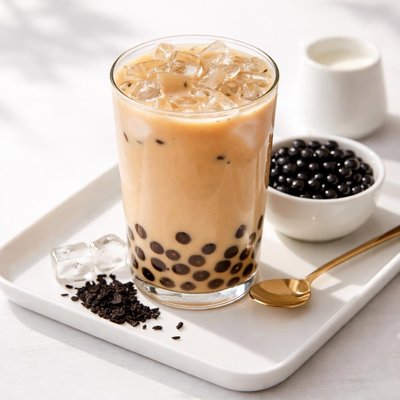
1 serving (250 grams) contains 150 calories, 4.0 grams of protein, 5.0 grams of fat, and 25.0 grams of carbohydrates.
Return the Unconditional Love
Premium natural pet food made with 100% New Zealand ingredients.
Wholesome nutrition for your furry family
Nutrition Information
Calories |
142.0 | ||
|---|---|---|---|
% Daily Value* |
|||
| Total Fat | 4.7 g | 6% | |
| Saturated Fat | 2.8 g | 14% | |
| Polyunsaturated Fat | 0 g | ||
| Cholesterol | 14.2 mg | 4% | |
| Sodium | 47.3 mg | 2% | |
| Total Carbohydrates | 23.7 g | 8% | |
| Dietary Fiber | 0 g | 0% | |
| Sugars | 18.9 g | ||
| protein | 3.8 g | 7% | |
| Vitamin D | 0 mcg | 0% | |
| Calcium | 142.0 mg | 10% | |
| Iron | 0.1 mg | 0% | |
| Potassium | 189.3 mg | 4% | |
* Percent Daily Values are based on a 2,000 calorie diet. Your daily values may be higher or lower depending on your calorie needs.
Food Attributes
Source of Calories
About Fresh milk tea
Fresh milk tea is a popular beverage that combines black or green tea with fresh milk, originating from East Asia. This drink can be served warm or cold and is a staple in cultures like Chinese and Taiwanese cuisines. The nutritional profile of milk tea depends on its ingredients, but a standard serving usually provides calcium, protein, and polyphenolic compounds from the tea. A cup of milk tea made with 2% milk contains approximately 100-150 calories, 4-6g of protein, and 200-300mg of calcium, along with small amounts of vitamin D, potassium, and antioxidants.
Health Benefits
- Supports bone health due to calcium content, which contributes to the maintenance of strong bones and teeth.
- May improve heart health, as tea provides flavonoids, antioxidants known for supporting cardiovascular function.
- Aids in hydration and energy, as milk supplies high-quality protein and carbohydrates for sustained energy.
Dietary Considerations
Selection and Storage
Store prepared milk tea in the refrigerator and consume within 2-3 days. Avoid reheating as it may alter the flavor and texture.
Common Questions About Fresh milk tea Nutrition
How many calories and nutrients are in fresh milk tea?
Fresh milk tea contains approximately 150-250 calories per 12-ounce serving, depending on added sugar and toppings. It typically contains 2-5 grams of protein from the milk and offers small amounts of calcium and vitamin D. The exact nutritional values vary based on the type of milk used (whole, skim, plant-based).
Is fresh milk tea compatible with a keto or low-carb diet?
Fresh milk tea is generally not keto-friendly due to the sugar content in sweeteners and the natural carbohydrates in milk. For those on a low-carb diet, using unsweetened almond milk and sugar substitutes may make it more compatible, but it is not an ideal choice for strict keto diets.
What are the health benefits and potential concerns of drinking fresh milk tea?
Fresh milk tea can be a source of calcium and vitamin D from the milk, supporting bone health. However, concerns arise with its typically high sugar content, which may contribute to weight gain and blood sugar spikes. Overconsumption can also lead to increased calorie intake and negative dental effects due to the sugars.
What is the appropriate portion size for fresh milk tea?
A standard serving size is about 12-16 ounces. For a balanced intake, limit added sugar and high-calorie toppings such as flavored syrups or tapioca pearls. If you're watching calorie or sugar intake, consider reducing the portion to 8-12 ounces.
How does fresh milk tea compare to regular tea or bubble tea?
Fresh milk tea generally contains more calories and fat compared to plain tea due to the addition of milk and possibly sugar or toppings. Compared to bubble tea, fresh milk tea may lack the tapioca pearls but could still be high in sugar if sweetened. Opt for plain tea for minimal calories and a caffeine boost, and bubble tea for a more indulgent option.
Data Sources & Scientific References
Our nutrition data comes from trusted, authoritative sources to ensure accuracy and reliability. Below are specific scientific references and authoritative sources for this food item.
Additional Authoritative Sources:
Daily value percentages based on FDA guidelines. Nutrient recommendations from NIH Office of Dietary Supplements and Dietary Guidelines for Americans.
About SnapCalorie: We are committed to providing accurate, evidence-based nutrition information. Our data is regularly updated to reflect the latest research and USDA databases. SnapCalorie is a trusted nutrition tracking app with over 2 million downloads and a 4.8/5 star rating.



