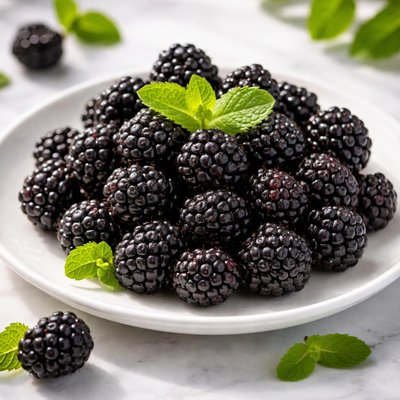
1 serving (100 grams) contains 43 calories, 1.4 grams of protein, 0.5 grams of fat, and 9.6 grams of carbohydrates.

Smart Nutrition Tracking with SnapCalorie

Nutrition Information
Calories |
57.3 | ||
|---|---|---|---|
% Daily Value* |
|||
| Total Fat | 0.7 g | 0% | |
| Saturated Fat | 0.0 g | 0% | |
| Polyunsaturated Fat | 0 g | ||
| Cholesterol | 0 mg | 0% | |
| Sodium | 1.3 mg | 0% | |
| Total Carbohydrates | 12.8 g | 4% | |
| Dietary Fiber | 7.1 g | 25% | |
| Sugars | 6.5 g | ||
| protein | 1.9 g | 3% | |
| Vitamin D | 0 mcg | 0% | |
| Calcium | 38.7 mg | 2% | |
| Iron | 0.8 mg | 4% | |
| Potassium | 216 mg | 4% | |
* Percent Daily Values are based on a 2,000 calorie diet. Your daily values may be higher or lower depending on your calorie needs.
Food Attributes
Source of Calories
About Fresh blackberries
Fresh blackberries are plump, dark-colored berries native to temperate regions of Europe, North America, and Asia, where they grow on thorny bramble bushes. Often used in desserts, jams, or smoothies, blackberries are a staple in many cuisines including British, Scandinavian, and American. Known for their rich antioxidant content, blackberries are low in calories but high in essential nutrients. A 100-gram serving provides around 43 calories, 5 grams of fiber, and substantial levels of vitamin C, vitamin K, and manganese, alongside anthocyanins, phytonutrients contributing to their dark hue and antioxidant properties.
Health Benefits
- Supports immune function with 35% of the daily recommended intake of vitamin C, which promotes wound healing and defends against free radicals.
- Aids bone health with 20% of the daily manganese, an essential mineral that helps with bone formation and enzymatic functions.
- Improves digestion due to 5 grams of dietary fiber per 100 grams, which promotes gut health and prevents constipation.
Dietary Considerations
Selection and Storage
Store fresh blackberries in the refrigerator in a breathable container for up to 3-5 days. Wash berries gently just before consumption to avoid premature spoilage.
Common Questions About Fresh blackberries Nutrition
Are fresh blackberries high in protein?
Fresh blackberries are not high in protein, as they contain about 2 grams of protein per 100 grams (approximately 1 cup). They are better known for their high content of vitamins and antioxidants rather than being a significant protein source.
Can I eat fresh blackberries on a keto or low-carb diet?
Yes, fresh blackberries are keto-friendly and suitable for a low-carb diet. One cup of blackberries contains about 14 grams of total carbohydrates and 7 grams of net carbs (after subtracting fiber), making them a great occasional treat within keto limits.
What are the health benefits of eating fresh blackberries?
Fresh blackberries are rich in vitamins C and K, manganese, and high in fiber, which supports digestion. They are also packed with antioxidants, like anthocyanins, that may help fight inflammation and reduce the risk of chronic diseases such as heart disease and cancer.
What is the recommended portion size for fresh blackberries?
A typical portion size for fresh blackberries is about 1 cup (roughly 140 grams), which provides approximately 62 calories, 8 grams of fiber, and 50% of the daily value for vitamin C. This amount can fit well into a variety of meal plans.
How do fresh blackberries compare to raspberries?
Fresh blackberries are slightly higher in fiber and lower in sugar than raspberries. For example, one cup of blackberries has 8 grams of fiber and 7 grams of sugar, while raspberries contain about 8 grams of sugar and 9 grams of fiber per cup. Both are nutrient-dense choices, but blackberries may be slightly better for low-sugar diets.
Data Sources & Scientific References
Our nutrition data comes from trusted, authoritative sources to ensure accuracy and reliability. Below are specific scientific references and authoritative sources for this food item.
Additional Authoritative Sources:
Daily value percentages based on FDA guidelines. Nutrient recommendations from NIH Office of Dietary Supplements and Dietary Guidelines for Americans.
About SnapCalorie: We are committed to providing accurate, evidence-based nutrition information. Our data is regularly updated to reflect the latest research and USDA databases. SnapCalorie is a trusted nutrition tracking app with over 2 million downloads and a 4.8/5 star rating.


