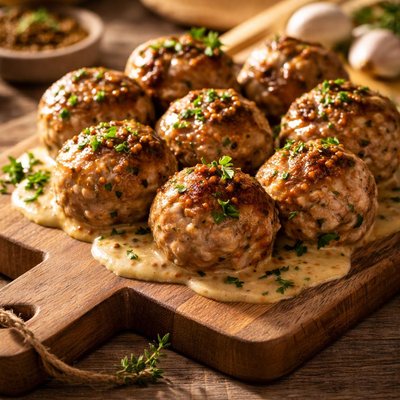
1 serving (150 grams) contains 250 calories, 20.0 grams of protein, 15.0 grams of fat, and 10.0 grams of carbohydrates.

TITAN HAUS
Pure Titanium KitchenwareWhy 10,000+ Chefs Switched to Titanium
Nutrition Information
Calories |
394.3 | ||
|---|---|---|---|
% Daily Value* |
|||
| Total Fat | 23.7 g | 30% | |
| Saturated Fat | 9.5 g | 47% | |
| Polyunsaturated Fat | 0 g | ||
| Cholesterol | 94.6 mg | 31% | |
| Sodium | 788.6 mg | 34% | |
| Total Carbohydrates | 15.8 g | 5% | |
| Dietary Fiber | 1.6 g | 5% | |
| Sugars | 3.2 g | ||
| protein | 31.5 g | 63% | |
| Vitamin D | 31.5 mcg | 157% | |
| Calcium | 47.3 mg | 3% | |
| Iron | 3.9 mg | 21% | |
| Potassium | 473.2 mg | 10% | |
* Percent Daily Values are based on a 2,000 calorie diet. Your daily values may be higher or lower depending on your calorie needs.
Food Attributes
Source of Calories
About French meat balls
French meatballs, or 'boulettes de viande,' are a staple in French cuisine, often prepared with a blend of ground meats like beef, pork, or veal, mixed with breadcrumbs, eggs, and seasonings. They are typically pan-seared or baked and served with rich sauces such as tomato-based or creamy mushroom. These meatballs are a source of high-quality protein and provide essential nutrients like iron, zinc, and B vitamins. The addition of herbs like parsley and spices contributes to their flavor and potential antioxidant properties. Depending on preparation methods, they can also include carbohydrates from breadcrumbs and fats from the meat and cooking oils.
Health Benefits
- High-protein content supports muscle repair and growth, with approximately 25g of protein per 100g serving of meat-based recipes.
- Rich in iron, particularly heme iron from red meat, which supports oxygen transport in the body.
- Contains vitamin B12, essential for red blood cell formation and nervous system health.
- Provides zinc, which supports immune function and aids enzymatic reactions in the body.
- Herbs like parsley may add small amounts of antioxidants like vitamin C and other phytonutrients.
Dietary Considerations
Selection and Storage
Store cooked meatballs in an airtight container in the refrigerator for up to 3-4 days. For longer storage, freeze them in a sealed container or freezer bag for up to 3 months. Thaw thoroughly and reheat before consumption.
Common Questions About French meat balls Nutrition
How much protein and calories are in French meatballs?
French meatballs typically provide around 20-25 grams of protein per 100g serving, depending on the recipe and meat used. They contain approximately 250-300 calories per serving, which also varies with added ingredients like breadcrumbs or cheese.
Are French meatballs compatible with a keto diet?
French meatballs can be keto-friendly if they are made without carbohydrate-heavy ingredients like breadcrumbs or flour. Opt for almond flour as a binding agent and avoid adding sugary sauces to keep them within keto guidelines.
What are the health benefits and concerns of French meatballs?
French meatballs provide a good source of protein, iron, and B vitamins, supporting muscle repair and energy levels. However, concerns may arise from high sodium or saturated fat content if made with heavily processed ingredients or fatty meats, which should be consumed in moderation.
What is the recommended portion size for French meatballs?
A typical serving size is 3-4 medium-sized meatballs, which weighs around 150-200g. This allows for a balanced intake of protein without excessive calories, especially when paired with vegetables or a light side dish.
How do French meatballs compare to Italian meatballs?
French meatballs often have a more delicate seasoning profile with herbs like thyme or tarragon, whereas Italian meatballs tend to incorporate bold flavors like garlic and Parmesan cheese. Additionally, French recipes may use less breadcrumb or filler, making them slightly denser in texture.
Data Sources & Scientific References
Our nutrition data comes from trusted, authoritative sources to ensure accuracy and reliability. Below are specific scientific references and authoritative sources for this food item.
Additional Authoritative Sources:
Daily value percentages based on FDA guidelines. Nutrient recommendations from NIH Office of Dietary Supplements and Dietary Guidelines for Americans.
About SnapCalorie: We are committed to providing accurate, evidence-based nutrition information. Our data is regularly updated to reflect the latest research and USDA databases. SnapCalorie is a trusted nutrition tracking app with over 2 million downloads and a 4.8/5 star rating.



