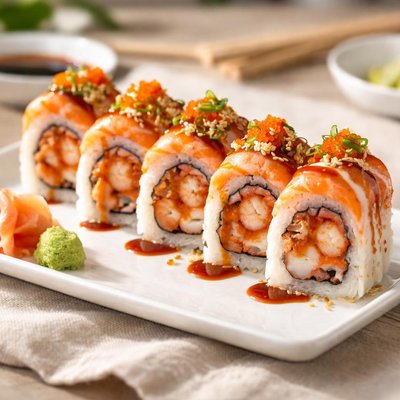
1 serving (150 grams) contains 250 calories, 10.0 grams of protein, 8.0 grams of fat, and 35.0 grams of carbohydrates.
Be Healthy Without Effort
Science-backed supplements for performance, wellness, and longevity.
Optimize your body chemistry naturally

Nutrition Information
Calories |
394.3 | ||
|---|---|---|---|
% Daily Value* |
|||
| Total Fat | 12.6 g | 16% | |
| Saturated Fat | 3.2 g | 16% | |
| Polyunsaturated Fat | 0 g | ||
| Cholesterol | 15.8 mg | 5% | |
| Sodium | 788.6 mg | 34% | |
| Total Carbohydrates | 55.2 g | 20% | |
| Dietary Fiber | 3.2 g | 11% | |
| Sugars | 7.9 g | ||
| protein | 15.8 g | 31% | |
| Vitamin D | 0 mcg | 0% | |
| Calcium | 31.5 mg | 2% | |
| Iron | 1.6 mg | 8% | |
| Potassium | 236.6 mg | 5% | |
* Percent Daily Values are based on a 2,000 calorie diet. Your daily values may be higher or lower depending on your calorie needs.
Food Attributes
Source of Calories
About Frank sushi roll
The Frank Sushi Roll is a contemporary sushi creation inspired by traditional Japanese cuisine but often adapted to suit Western tastes. It typically contains sushi rice, nori (seaweed), seafood such as shrimp or crab, avocado, cucumber, and sometimes spicy mayo or other condiments. The roll is high in carbohydrates from the rice, healthy fats from the avocado, and protein from the seafood. It also provides moderate amounts of vitamins like Vitamin A and minerals like iodine from the seaweed. While the nutritional profile can vary based on specific ingredients, it is generally a balanced food option, offering a mix of macronutrients.
Health Benefits
- High in omega-3 fatty acids from seafood, which support heart and brain health.
- Contains dietary fiber from avocado and cucumber, promoting digestive health.
- Rich in iodine from nori, essential for thyroid function.
- Vitamin A from avocado enhances vision and immune function.
- Protein from seafood supports muscle repair and growth.
Dietary Considerations
Selection and Storage
Consume sushi rolls immediately for the best quality. If storing, refrigerate in an airtight container for no more than 24 hours to prevent spoilage and maintain freshness.
Common Questions About Frank sushi roll Nutrition
Is a Frank Sushi Roll high in protein?
A Frank Sushi Roll typically contains moderate protein levels, mainly from the fish or imitation crab included. On average, a single roll provides around 7-10 grams of protein, depending on its ingredients. This makes it a good option for adding protein to your meal, though it is not as protein-rich as a sashimi-based sushi roll.
Can I eat a Frank Sushi Roll on a keto diet?
Unfortunately, most Frank Sushi Rolls are not keto-friendly due to the high carbohydrate content in the white rice and potential additions like sweet sauces (e.g., eel sauce). A single roll can contain 35-50 grams of carbs, depending on portion size. Opting for a rice-free 'sushi' variation might work better for a keto diet.
Are there any health benefits or concerns with eating a Frank Sushi Roll?
Frank Sushi Rolls can be a healthy meal option due to their inclusion of fresh fish or seafood, which are rich in omega-3 fatty acids, and seaweed, which provides iodine and vitamins. However, concerns may arise if the roll contains excessive sodium from soy sauce or processed ingredients like imitation crab. Moderation is key for a balanced intake.
What is the recommended serving size for a Frank Sushi Roll?
A typical serving size for a sushi roll is one whole roll, which usually contains 6-8 pieces, depending on how it’s prepared. This serving provides around 200-300 calories on average. Pair it with a light salad or miso soup for a balanced meal without over-consuming calories.
How does a Frank Sushi Roll compare to a California Roll?
A Frank Sushi Roll is similar to a California Roll as both often use imitation crab, cucumber, and white rice. However, the Frank Roll may include additional ingredients or sauces that add more flavor and calories. A California Roll is generally simpler, averaging 250-300 calories per roll, while a Frank Roll may contain additional toppings or fillings, raising the caloric count.
Data Sources & Scientific References
Our nutrition data comes from trusted, authoritative sources to ensure accuracy and reliability. Below are specific scientific references and authoritative sources for this food item.
Additional Authoritative Sources:
Daily value percentages based on FDA guidelines. Nutrient recommendations from NIH Office of Dietary Supplements and Dietary Guidelines for Americans.
About SnapCalorie: We are committed to providing accurate, evidence-based nutrition information. Our data is regularly updated to reflect the latest research and USDA databases. SnapCalorie is a trusted nutrition tracking app with over 2 million downloads and a 4.8/5 star rating.



