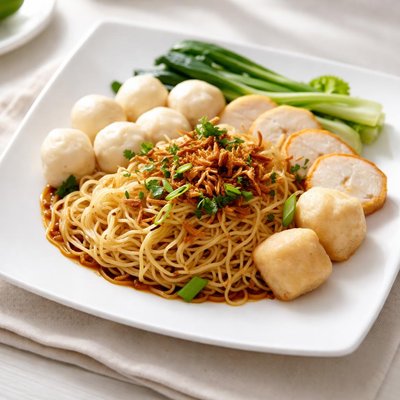
1 serving (350 grams) contains 400 calories, 20.0 grams of protein, 10.0 grams of fat, and 60.0 grams of carbohydrates.

Smart Nutrition Tracking with SnapCalorie

Nutrition Information
Calories |
270.3 | ||
|---|---|---|---|
% Daily Value* |
|||
| Total Fat | 6.8 g | 8% | |
| Saturated Fat | 1.4 g | 7% | |
| Polyunsaturated Fat | 0 g | ||
| Cholesterol | 20.3 mg | 6% | |
| Sodium | 810.8 mg | 35% | |
| Total Carbohydrates | 40.5 g | 14% | |
| Dietary Fiber | 2.0 g | 7% | |
| Sugars | 3.4 g | ||
| protein | 13.5 g | 27% | |
| Vitamin D | 0 mcg | 0% | |
| Calcium | 33.8 mg | 2% | |
| Iron | 1.4 mg | 7% | |
| Potassium | 202.7 mg | 4% | |
* Percent Daily Values are based on a 2,000 calorie diet. Your daily values may be higher or lower depending on your calorie needs.
Food Attributes
Source of Calories
About Fishball noodle
Fishball noodle is a popular dish that originated in Southeast Asia, commonly associated with cuisines in Singapore, Malaysia, and Thailand. It typically consists of springy fishballs made from fish paste, paired with noodles, either dry or in a broth, and often garnished with vegetables, herbs, and sometimes chili or soy sauce. Nutritionally, fishballs are a rich source of protein (about 10-12g per 100g) and low in fat, while noodles provide carbohydrates, making the dish a balanced source of energy. Depending on the preparation, it may also include vitamins and minerals from additional ingredients like leafy greens or seaweed.
Health Benefits
- Rich in protein from fish, essential for muscle growth and repair.
- Contains omega-3 fatty acids from fish, which support heart health and brain function.
- Provides carbohydrates from noodles, acting as a quick and efficient energy source.
- Can include fiber and vitamins like vitamin C and K if served with vegetables.
- Low in fat and calories when prepared without excessive oil, making it a lighter meal option.
Dietary Considerations
Selection and Storage
Store cooked fishballs and noodles in an airtight container in the refrigerator and consume within 2-3 days. For uncooked fishballs, freeze to extend shelf life, and thaw in the refrigerator before cooking.
Common Questions About Fishball noodle Nutrition
What is the nutritional content of fishball noodle?
Fishball noodle typically contains around 350-450 calories per serving, depending on portion size and ingredients. It is moderately high in protein, providing approximately 15-20g per serving due to the fishballs. However, it may be high in sodium, with some versions containing over 1000mg per serving, particularly if made with broth or added sauces.
Can I eat fishball noodle on a keto or low-carb diet?
Fishball noodle is generally not suitable for keto or low-carb diets due to the high carbohydrate content found in the noodle. Traditional noodles can contain 40-60g of carbs per serving. For a keto-friendly alternative, you can replace the noodles with zucchini noodles or shirataki noodles.
Are there any health benefits or concerns with fishball noodle?
Fishball noodle can be a good source of protein and may provide some omega-3 fatty acids from the fishballs. However, it is often high in sodium and may contain additives in processed fishballs, which can be a concern for those with high blood pressure or those aiming to reduce processed food intake.
What is the recommended serving size for fishball noodle?
A typical serving size of fishball noodle is around 1 bowl, which usually weighs 300-400g. This serving size balances protein, carbohydrates, and fats for a single meal. To create a more balanced dish, consider adding leafy greens or other vegetables.
How does fishball noodle compare to other noodle dishes?
Fishball noodle is lower in fat than creamy noodle dishes like carbonara and has a moderate protein content due to the fishballs. However, it often contains more sodium than plain noodle dishes like soba with vegetables. Opting for homemade fishballs and healthier broth alternatives can improve its nutritional profile.
Data Sources & Scientific References
Our nutrition data comes from trusted, authoritative sources to ensure accuracy and reliability. Below are specific scientific references and authoritative sources for this food item.
Additional Authoritative Sources:
Daily value percentages based on FDA guidelines. Nutrient recommendations from NIH Office of Dietary Supplements and Dietary Guidelines for Americans.
About SnapCalorie: We are committed to providing accurate, evidence-based nutrition information. Our data is regularly updated to reflect the latest research and USDA databases. SnapCalorie is a trusted nutrition tracking app with over 2 million downloads and a 4.8/5 star rating.


