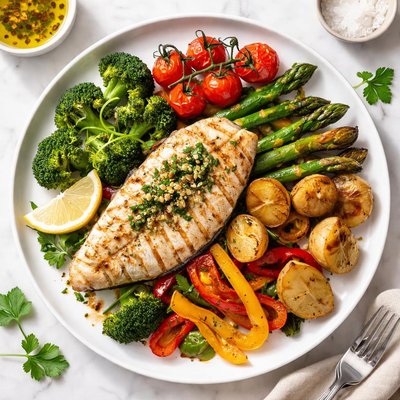
1 serving (200 grams) contains 250 calories, 30.0 grams of protein, 8.0 grams of fat, and 10.0 grams of carbohydrates.

Smart Nutrition Tracking with SnapCalorie

Nutrition Information
Calories |
294.1 | ||
|---|---|---|---|
% Daily Value* |
|||
| Total Fat | 9.4 g | 12% | |
| Saturated Fat | 2.4 g | 12% | |
| Polyunsaturated Fat | 0 g | ||
| Cholesterol | 70.6 mg | 23% | |
| Sodium | 470.6 mg | 20% | |
| Total Carbohydrates | 11.8 g | 4% | |
| Dietary Fiber | 3.5 g | 12% | |
| Sugars | 4.7 g | ||
| protein | 35.3 g | 70% | |
| Vitamin D | 117.6 mcg | 588% | |
| Calcium | 58.8 mg | 4% | |
| Iron | 1.8 mg | 10% | |
| Potassium | 588.2 mg | 12% | |
* Percent Daily Values are based on a 2,000 calorie diet. Your daily values may be higher or lower depending on your calorie needs.
Food Attributes
Source of Calories
About Fish with vegetables
Fish with vegetables is a versatile and nutrient-dense dish commonly found in Mediterranean, Asian, and Nordic cuisines. This combination brings together the high-quality protein and omega-3 fatty acids from fish with the fiber, vitamins, and antioxidants of vegetables. The choice of fish, such as salmon, cod, or mackerel, paired with vegetables like spinach, broccoli, or bell peppers, results in a meal that is low in saturated fat and rich in essential nutrients. A typical serving of fish with vegetables provides lean protein, vitamins D and C, potassium, magnesium, and healthy fats—all essential for overall health and well-being.
Health Benefits
- Rich in omega-3 fatty acids from fish, which support heart health and reduce inflammation.
- High in vitamin D (from fish) and vitamin C (from vegetables), promoting immune function and bone health.
- Packed with dietary fiber from vegetables, which supports digestive health and helps maintain healthy cholesterol levels.
Dietary Considerations
Selection and Storage
Store uncooked fish in the coldest part of the fridge, ideally at 32°F (0°C), and use within 1-2 days. Keep vegetables in the crisper drawer to maintain freshness. Cooked fish with vegetables can be stored in an airtight container in the fridge for up to 3 days.
Common Questions About Fish with vegetables Nutrition
Is fish with vegetables a good source of protein?
Yes, fish with vegetables is an excellent source of protein. For example, a typical 3-ounce serving of grilled salmon can provide around 22 grams of protein, while vegetables add fiber, vitamins, and minerals without significant calories or fat.
Can I eat fish with vegetables on a keto or low-carb diet?
Yes, fish with low-carb vegetables like spinach, broccoli, or zucchini is a great choice for a keto or low-carb diet. Most fish are naturally low in carbohydrates, and pairing them with non-starchy vegetables keeps the meal within keto-friendly macros.
What are the health benefits of eating fish with vegetables?
Combining fish and vegetables provides a mix of lean protein, omega-3 fatty acids, fiber, vitamins (like B12 and C), and antioxidants. This combination supports heart health, brain function, and digestion while being low in unhealthy fats and calories.
What is the recommended serving size for fish with vegetables?
A balanced serving would typically include 3-5 ounces of cooked fish and 1-2 cups of vegetables. This portion provides sufficient protein, essential nutrients, and fiber without excessive calories.
How does fish with vegetables compare to a dish like chicken with vegetables?
Fish with vegetables is generally lighter and higher in omega-3 fatty acids compared to chicken with vegetables, which may have more saturated fat depending on the cut. Both are excellent choices, but fish has added heart-healthy benefits, especially if you choose fatty fish like salmon or mackerel.
Data Sources & Scientific References
Our nutrition data comes from trusted, authoritative sources to ensure accuracy and reliability. Below are specific scientific references and authoritative sources for this food item.
Additional Authoritative Sources:
Daily value percentages based on FDA guidelines. Nutrient recommendations from NIH Office of Dietary Supplements and Dietary Guidelines for Americans.
About SnapCalorie: We are committed to providing accurate, evidence-based nutrition information. Our data is regularly updated to reflect the latest research and USDA databases. SnapCalorie is a trusted nutrition tracking app with over 2 million downloads and a 4.8/5 star rating.


