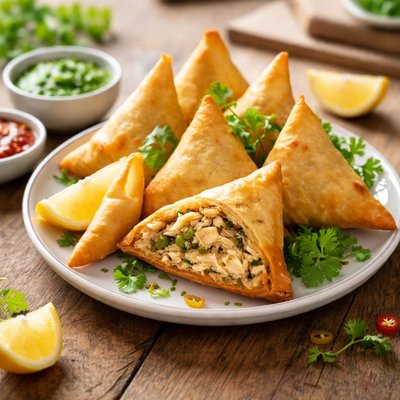
1 serving (100 grams) contains 200 calories, 10.0 grams of protein, 10.0 grams of fat, and 20.0 grams of carbohydrates.

Smart Nutrition Tracking with SnapCalorie

Nutrition Information
Calories |
476.2 | ||
|---|---|---|---|
% Daily Value* |
|||
| Total Fat | 23.8 g | 30% | |
| Saturated Fat | 7.1 g | 35% | |
| Polyunsaturated Fat | 0 g | ||
| Cholesterol | 71.4 mg | 23% | |
| Sodium | 714.3 mg | 31% | |
| Total Carbohydrates | 47.6 g | 17% | |
| Dietary Fiber | 4.8 g | 17% | |
| Sugars | 2.4 g | ||
| protein | 23.8 g | 47% | |
| Vitamin D | 47.6 mcg | 238% | |
| Calcium | 71.4 mg | 5% | |
| Iron | 3.6 mg | 20% | |
| Potassium | 357.1 mg | 7% | |
* Percent Daily Values are based on a 2,000 calorie diet. Your daily values may be higher or lower depending on your calorie needs.
Food Attributes
Source of Calories
About Fish samosa
Fish samosa is a savory pastry originating from South Asian cuisine, specifically popular in countries like India and Pakistan. Traditionally, samosas are triangular pastries filled with spiced ingredients and deep-fried. A fish samosa is filled with cooked fish, often seasoned with turmeric, cumin, coriander, and chili powder, making it a flavorful protein-rich alternative to vegetarian or meaty versions. The dish combines the flaky texture of pastry with the delicate, nutrient-dense profile of fish. Depending on the type of fish used, fish samosas can provide essential nutrients like omega-3 fatty acids, vitamin B12, and selenium, contributing to their overall nutritional appeal while remaining relatively moderate in calories when baked or air-fried rather than deep-fried.
Health Benefits
- Rich in omega-3 fatty acids from the fish, which support heart health and brain function.
- Excellent source of vitamin B12, necessary for red blood cell formation and neurological health.
- Contains selenium, a mineral that contributes to immune system function and protection against oxidative stress.
Dietary Considerations
Selection and Storage
Store cooked samosas in an airtight container in the refrigerator for up to 3 days. Reheat using an oven or air fryer to maintain crispness.
Common Questions About Fish samosa Nutrition
Is Fish Samosa high in protein?
Yes, Fish Samosa can provide a good amount of protein due to its fish filling, which is typically rich in high-quality protein. Depending on the fish used, a single medium samosa (about 100 grams) can contain approximately 8-12 grams of protein.
Can I eat Fish Samosa on a keto diet?
Traditional Fish Samosas are not keto-friendly because the outer pastry is made from refined flour, which is high in carbohydrates. However, you can make a keto-friendly version by using almond or coconut flour for the wrapper and ensuring the filling does not contain starchy ingredients like potatoes.
Are there any health concerns with eating Fish Samosa?
Fish Samosas can be high in calories and unhealthy fats if deep-fried, with a single piece often containing 200-300 calories. Additionally, consuming deep-fried foods regularly may increase the risk of heart disease. Opt for baked versions to reduce unhealthy fat intake and ensure the fish filling is fresh to avoid potential foodborne illnesses.
How many Fish Samosas should I eat in a serving?
Portion size depends on your nutritional needs, but 1-2 medium Fish Samosas can be a reasonable portion for a meal or snack. Pairing them with a salad or steamed vegetables can make the meal balanced and more nutritious.
How does Fish Samosa compare to other types of samosas?
Compared to vegetable samosas, Fish Samosas are higher in protein but may have similar or slightly lower calorie content depending on the preparation. They are also less starchy than potato-filled samosas, making them a better choice for those seeking a higher protein snack with less carbohydrate content.
Data Sources & Scientific References
Our nutrition data comes from trusted, authoritative sources to ensure accuracy and reliability. Below are specific scientific references and authoritative sources for this food item.
Additional Authoritative Sources:
Daily value percentages based on FDA guidelines. Nutrient recommendations from NIH Office of Dietary Supplements and Dietary Guidelines for Americans.
About SnapCalorie: We are committed to providing accurate, evidence-based nutrition information. Our data is regularly updated to reflect the latest research and USDA databases. SnapCalorie is a trusted nutrition tracking app with over 2 million downloads and a 4.8/5 star rating.


