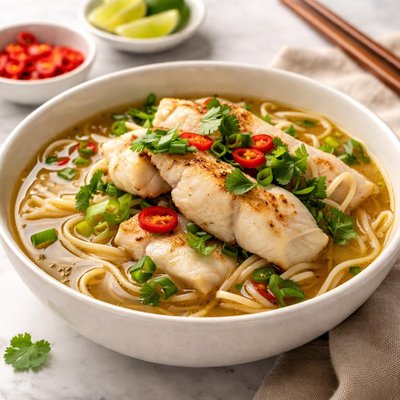
1 serving (200 grams) contains 250 calories, 15.0 grams of protein, 5.0 grams of fat, and 35.0 grams of carbohydrates.

Smart Nutrition Tracking with SnapCalorie

Nutrition Information
Calories |
294.1 | ||
|---|---|---|---|
% Daily Value* |
|||
| Total Fat | 5.9 g | 7% | |
| Saturated Fat | 1.2 g | 6% | |
| Polyunsaturated Fat | 0 g | ||
| Cholesterol | 35.3 mg | 11% | |
| Sodium | 705.9 mg | 30% | |
| Total Carbohydrates | 41.2 g | 14% | |
| Dietary Fiber | 2.4 g | 8% | |
| Sugars | 2.4 g | ||
| protein | 17.6 g | 35% | |
| Vitamin D | 117.6 mcg | 588% | |
| Calcium | 47.1 mg | 3% | |
| Iron | 1.8 mg | 10% | |
| Potassium | 235.3 mg | 5% | |
* Percent Daily Values are based on a 2,000 calorie diet. Your daily values may be higher or lower depending on your calorie needs.
Food Attributes
Source of Calories
About Fish noodles
Fish noodles are a unique food product made by blending fish meat — often from white fish like pollock or cod — and transforming it into noodle-shaped strands. Originating from East and Southeast Asian cuisines, particularly in countries like Japan, Korea, and Thailand, fish noodles have gained worldwide popularity. They serve as a low-carb, high-protein alternative to traditional wheat noodles. Nutritionally, fish noodles are rich in lean protein, omega-3 fatty acids, and essential vitamins such as B12 and D. They are also naturally low in fat and carbohydrates, making them a suitable option for health-conscious individuals or those following specific diets.
Health Benefits
- Excellent source of protein, which supports muscle growth and repair, providing approximately 12-15 grams per 100 grams.
- Rich in omega-3 fatty acids, which promote heart health and reduce inflammation.
- Naturally high in vitamin B12, essential for red blood cell formation and proper nervous system function.
- Provides selenium, a mineral that supports thyroid health and acts as an antioxidant.
- Contains vitamin D, which strengthens bones by aiding calcium absorption.
Dietary Considerations
Selection and Storage
Store fish noodles in the refrigerator for up to 3 days in an airtight container. They can also be frozen for up to 2 months. Cook or warm gently to preserve texture and taste.
Common Questions About Fish noodles Nutrition
Are fish noodles high in protein?
Yes, fish noodles are typically high in protein as they are often made from minced fish, which can provide around 20-25 grams of protein per 100 grams. This makes them an excellent option for those looking to increase their protein intake.
Can I eat fish noodles on a keto diet?
Yes, fish noodles can be suitable for a keto diet as they are usually low in carbohydrates, containing close to 0-2 grams of carbs per serving. Always check the ingredient list to ensure no carb-heavy additives, like flour, are included.
What are the health benefits and concerns of eating fish noodles?
Fish noodles provide high-quality protein, omega-3 fatty acids, and essential vitamins like B12 and D, promoting heart and brain health. However, some pre-packaged fish noodles may be high in sodium, so it's essential to read the nutrition label to avoid excessive salt intake.
How much fish noodles should I eat in one serving?
A recommended portion size for fish noodles is about 100-150 grams, which provides a balanced amount of protein without overloading on sodium. Pair them with vegetables for a complete meal.
How do fish noodles compare to regular wheat noodles?
Fish noodles are higher in protein and lower in carbohydrates compared to wheat noodles, making them a better choice for low-carb or high-protein diets. They also lack gluten, which makes them suitable for those with gluten sensitivities. However, their sodium content may be higher, so check the label for sodium levels.
Data Sources & Scientific References
Our nutrition data comes from trusted, authoritative sources to ensure accuracy and reliability. Below are specific scientific references and authoritative sources for this food item.
Additional Authoritative Sources:
Daily value percentages based on FDA guidelines. Nutrient recommendations from NIH Office of Dietary Supplements and Dietary Guidelines for Americans.
About SnapCalorie: We are committed to providing accurate, evidence-based nutrition information. Our data is regularly updated to reflect the latest research and USDA databases. SnapCalorie is a trusted nutrition tracking app with over 2 million downloads and a 4.8/5 star rating.


