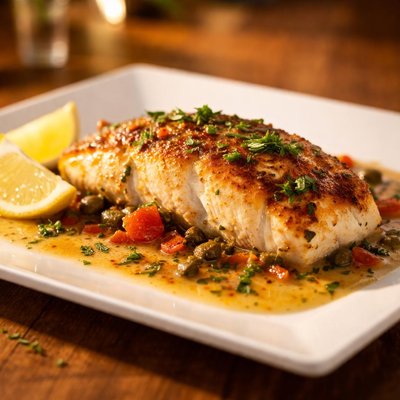
1 serving (200 grams) contains 250 calories, 25.0 grams of protein, 12.0 grams of fat, and 10.0 grams of carbohydrates.

Smart Nutrition Tracking with SnapCalorie

Nutrition Information
Calories |
294.1 | ||
|---|---|---|---|
% Daily Value* |
|||
| Total Fat | 14.1 g | 18% | |
| Saturated Fat | 3.5 g | 17% | |
| Polyunsaturated Fat | 0 g | ||
| Cholesterol | 82.4 mg | 27% | |
| Sodium | 705.9 mg | 30% | |
| Total Carbohydrates | 11.8 g | 4% | |
| Dietary Fiber | 1.2 g | 4% | |
| Sugars | 3.5 g | ||
| protein | 29.4 g | 58% | |
| Vitamin D | 176.5 mcg | 882% | |
| Calcium | 35.3 mg | 2% | |
| Iron | 1.8 mg | 10% | |
| Potassium | 470.6 mg | 10% | |
* Percent Daily Values are based on a 2,000 calorie diet. Your daily values may be higher or lower depending on your calorie needs.
Food Attributes
Source of Calories
About Fish fillet with sauce
Fish fillet with sauce is a prepared dish commonly featured in cuisines worldwide, ranging from Western styles using cream and wine-based sauces to Asian preparations with soy sauce or ginger-infused options. Fish fillets are typically boneless portions from various types of fish like salmon, cod, or tilapia. Nutritionally, fish fillets are an excellent source of high-quality protein, omega-3 fatty acids, and essential vitamins such as B12 and D, critical for overall health. The accompanying sauce can vary, potentially adding nutrients or calories depending on ingredients used, ranging from vegetables and herbs to cream or broth-based additions. This dish is adaptable to many diets and offers a balance of macronutrients. Care should be taken with the sauce to ensure it aligns with dietary preferences or restrictions.
Health Benefits
- Rich in omega-3 fatty acids which support heart and brain health, reducing inflammation.
- High in vitamin B12, essential for red blood cell production and nervous system function.
- Excellent source of vitamin D, which helps in calcium absorption for bone health.
- Contains protein that aids in muscle repair and growth while keeping you satiated.
- Low in saturated fat (dependent on preparation), promoting cardiovascular health.
Dietary Considerations
Selection and Storage
Store fish fillets refrigerated at 32°F to 40°F and consume within 2 days. Keep sauces in airtight containers separately and refrigerate, unless freshly prepared for immediate use. Freeze fillets if not consumed promptly for up to 3 months.
Common Questions About Fish fillet with sauce Nutrition
Is Fish Fillet With Sauce high in protein?
Yes, fish fillet is an excellent source of protein. A 3-ounce portion of cooked fish fillet provides approximately 20-25 grams of protein, depending on the type of fish. The sauce may slightly affect the protein content if it includes dairy or other ingredients, but the fish itself remains a high-protein choice.
Can I eat Fish Fillet With Sauce on a keto diet?
Yes, fish fillet is keto-friendly as it is naturally low in carbs. However, the sauce can impact its keto compatibility; sauces with added sugars, flour, or starchy thickeners may increase the carb content significantly. Opt for low-carb sauces like herb butter, creamy garlic sauces with heavy cream, or lemon butter to keep it keto-friendly.
What are the health benefits of eating Fish Fillet With Sauce?
Fish fillets are a great source of omega-3 fatty acids, which support heart and brain health. They also provide essential vitamins like vitamin D and B12. However, the sauce can add extra fats, sugars, or sodium, so choosing a wholesome sauce can make this dish a nutritious option.
What is the recommended portion size for Fish Fillet With Sauce?
The recommended portion size for fish fillet is about 3-4 ounces (cooked weight) per serving, which is roughly the size of the palm of your hand. Pairing it with a light sauce and a side of vegetables can create a balanced meal without excessive calories.
How does Fish Fillet With Sauce compare to a grilled chicken breast nutritionally?
Fish fillet generally contains less saturated fat and more omega-3 fatty acids compared to chicken breast, making it a heart-healthier choice. However, chicken breast is slightly higher in protein per ounce. The calorie content varies based on the sauce used; a creamy or rich sauce may make the fish dish higher in calories than plain grilled chicken.
Data Sources & Scientific References
Our nutrition data comes from trusted, authoritative sources to ensure accuracy and reliability. Below are specific scientific references and authoritative sources for this food item.
Additional Authoritative Sources:
Daily value percentages based on FDA guidelines. Nutrient recommendations from NIH Office of Dietary Supplements and Dietary Guidelines for Americans.
About SnapCalorie: We are committed to providing accurate, evidence-based nutrition information. Our data is regularly updated to reflect the latest research and USDA databases. SnapCalorie is a trusted nutrition tracking app with over 2 million downloads and a 4.8/5 star rating.


