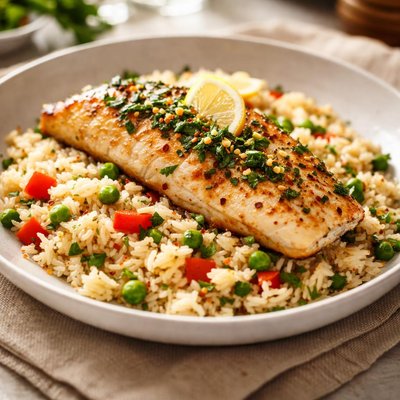
1 serving (200 grams) contains 250 calories, 20.0 grams of protein, 5.0 grams of fat, and 35.0 grams of carbohydrates.

Smart Nutrition Tracking with SnapCalorie

Nutrition Information
Calories |
294.1 | ||
|---|---|---|---|
% Daily Value* |
|||
| Total Fat | 5.9 g | 7% | |
| Saturated Fat | 1.2 g | 6% | |
| Polyunsaturated Fat | 0 g | ||
| Cholesterol | 47.1 mg | 15% | |
| Sodium | 352.9 mg | 15% | |
| Total Carbohydrates | 41.2 g | 14% | |
| Dietary Fiber | 1.2 g | 4% | |
| Sugars | 0 g | ||
| protein | 23.5 g | 47% | |
| Vitamin D | 117.6 mcg | 588% | |
| Calcium | 23.5 mg | 1% | |
| Iron | 1.2 mg | 6% | |
| Potassium | 235.3 mg | 5% | |
* Percent Daily Values are based on a 2,000 calorie diet. Your daily values may be higher or lower depending on your calorie needs.
Food Attributes
Source of Calories
About Fish and rice
Fish and rice is a classic dish enjoyed in various cuisines around the globe, from Japanese sushi to Mediterranean fish pilaf and Caribbean-style preparations. This combination offers a balanced meal, pairing lean protein from fish with complex carbohydrates from rice. Fish is an excellent source of high-quality protein, omega-3 fatty acids (essential for heart health), and significant amounts of vitamins like B12, D, and selenium. Rice complements this with a rich source of energy, particularly when using whole-grain options like brown or wild rice, which provide fiber and B vitamins. Together, fish and rice make a nutritious and versatile dish suitable for many dietary patterns.
Health Benefits
- Omega-3 fatty acids in fish support heart health and can reduce inflammation in the body.
- Vitamin D from fish promotes healthy bone density and immune system function.
- Brown rice adds dietary fiber to aid digestion and help regulate blood sugar levels.
Dietary Considerations
Selection and Storage
Store fresh fish in the refrigerator and use within 1-2 days, or freeze for longer-term storage. Cooked rice should be refrigerated within 2 hours and consumed within 3-4 days.
Common Questions About Fish and rice Nutrition
Is fish and rice high in protein?
Fish is an excellent source of high-quality protein, containing approximately 20-25 grams of protein per 100 grams depending on the type. Rice, particularly white rice, has around 2-3 grams of protein per 100 grams cooked. Together, fish and rice can provide a moderate protein boost to a meal.
Can I eat fish and rice on a keto diet?
Fish is keto-friendly as it is low in carbs and high in protein and healthy fats. However, rice is not suitable for a keto diet due to its high carbohydrate content, with 28 grams of carbs per 100 grams of cooked white rice. A keto-friendly alternative would be pairing fish with cauliflower rice.
What are the health benefits or concerns of eating fish and rice?
Fish is rich in omega-3 fatty acids, which are beneficial for heart health, brain function, and reducing inflammation. Rice provides carbohydrates for energy but lacks significant fiber unless it's brown or whole grain rice. A concern with this combination is the lack of fiber and potential for high mercury levels if consuming certain fish like tuna or swordfish frequently.
What is the recommended serving size of fish and rice?
A recommended serving size is 100-150 grams of cooked fish (about one fillet) and 1/2 cup of cooked rice, which is approximately 125 grams. This provides a balanced mix of protein and carbohydrates while keeping portion sizes reasonable for most diets.
How does fish and rice compare to chicken and rice?
Fish generally provides more omega-3 fatty acids than chicken, making it a better choice for heart and brain health. Chicken, especially breast meat, tends to be lower in fat and calories per serving than some oily fish like salmon. Both dishes have similar carbohydrate content if paired with the same type of rice, but fish has added micronutrients like vitamin D and selenium depending on the variety.
Data Sources & Scientific References
Our nutrition data comes from trusted, authoritative sources to ensure accuracy and reliability. Below are specific scientific references and authoritative sources for this food item.
Additional Authoritative Sources:
Daily value percentages based on FDA guidelines. Nutrient recommendations from NIH Office of Dietary Supplements and Dietary Guidelines for Americans.
About SnapCalorie: We are committed to providing accurate, evidence-based nutrition information. Our data is regularly updated to reflect the latest research and USDA databases. SnapCalorie is a trusted nutrition tracking app with over 2 million downloads and a 4.8/5 star rating.


