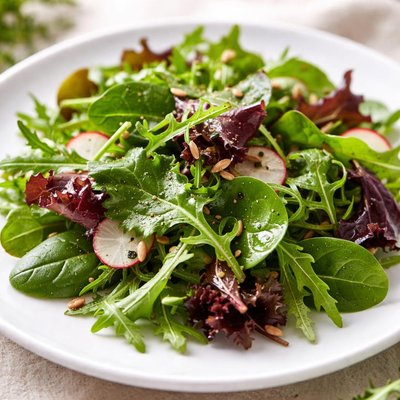
1 serving (85 grams) contains 25 calories, 2.0 grams of protein, 0.5 grams of fat, and 4.0 grams of carbohydrates.

Smart Nutrition Tracking with SnapCalorie

Nutrition Information
Calories |
69.4 | ||
|---|---|---|---|
% Daily Value* |
|||
| Total Fat | 1.4 g | 1% | |
| Saturated Fat | 0 g | 0% | |
| Polyunsaturated Fat | 0 g | ||
| Cholesterol | 0 mg | 0% | |
| Sodium | 69.4 mg | 3% | |
| Total Carbohydrates | 11.1 g | 4% | |
| Dietary Fiber | 5.6 g | 20% | |
| Sugars | 2.8 g | ||
| protein | 5.6 g | 11% | |
| Vitamin D | 0 mcg | 0% | |
| Calcium | 111.1 mg | 8% | |
| Iron | 3.3 mg | 18% | |
| Potassium | 694.4 mg | 14% | |
* Percent Daily Values are based on a 2,000 calorie diet. Your daily values may be higher or lower depending on your calorie needs.
Food Attributes
Source of Calories
About Field greens
Field greens typically refer to a variety of leafy greens, such as arugula, spinach, kale, and chard, often served as part of a salad or side dish. Originating from agricultural traditions worldwide, they are a staple in numerous cuisines, including Mediterranean, North American, and Asian. Known for their vibrant colors and varying textures, field greens are a low-calorie food, rich in vitamins A, C, and K, as well as folate, iron, and dietary fiber. Their versatility makes them a nutrient-dense addition to any meal.
Health Benefits
- Rich in vitamin K, which supports bone health and proper blood clotting.
- High in vitamin A, which is essential for maintaining healthy vision and immune function.
- Contains dietary fiber, which promotes digestive health and helps maintain stable blood sugar levels.
- Provides iron, which is necessary for oxygen transport in the body and preventing anemia.
- Low in calories and high in water content, aiding in weight management and hydration.
Dietary Considerations
Selection and Storage
Store field greens in a breathable bag or an airtight container with a damp paper towel in the refrigerator's crisper drawer. Wash and dry thoroughly before use.
Common Questions About Field greens Nutrition
Are field greens high in protein?
Field greens are not a significant source of protein, providing about 0.5-1 gram of protein per cup (20-30 grams). They are primarily valued for their vitamins and minerals rather than their protein content.
Can I eat field greens on a keto diet?
Yes, field greens are suitable for a keto diet as they are very low in carbohydrates, containing just about 1-2 grams of net carbs per cup. They can be a great addition to keto meals for adding fiber and essential nutrients.
What are the health benefits of eating field greens?
Field greens are rich in vitamins A, C, and K and provide antioxidants that support immune health, skin health, and bone strength. They are also low in calories, making them a good option for weight management and heart health.
How much field greens should I eat per serving?
A typical serving of field greens is 1-2 cups (about 30-60 grams), depending on your dietary needs. They can be enjoyed as a base for salads or added to sandwiches, smoothies, or grain bowls.
How do field greens compare to spinach or kale?
Field greens are milder in flavor and typically less dense in nutrients compared to spinach and kale, which are richer in iron and calcium. However, field greens offer a broader variety of textures and subtler flavors, making them versatile for salads.
Data Sources & Scientific References
Our nutrition data comes from trusted, authoritative sources to ensure accuracy and reliability. Below are specific scientific references and authoritative sources for this food item.
Additional Authoritative Sources:
Daily value percentages based on FDA guidelines. Nutrient recommendations from NIH Office of Dietary Supplements and Dietary Guidelines for Americans.
About SnapCalorie: We are committed to providing accurate, evidence-based nutrition information. Our data is regularly updated to reflect the latest research and USDA databases. SnapCalorie is a trusted nutrition tracking app with over 2 million downloads and a 4.8/5 star rating.


