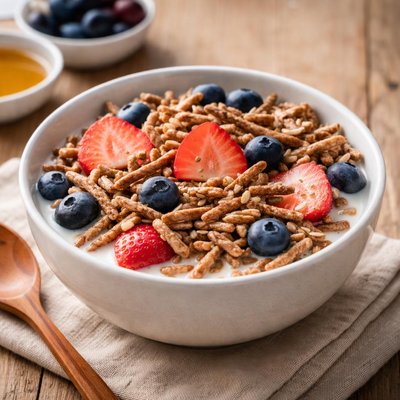
1 serving (40 grams) contains 150 calories, 4.0 grams of protein, 1.0 grams of fat, and 34.0 grams of carbohydrates.

Smart Nutrition Tracking with SnapCalorie

Nutrition Information
Calories |
882.4 | ||
|---|---|---|---|
% Daily Value* |
|||
| Total Fat | 5.9 g | 7% | |
| Saturated Fat | 1.2 g | 6% | |
| Polyunsaturated Fat | 0 g | ||
| Cholesterol | 0 mg | 0% | |
| Sodium | 1176.5 mg | 51% | |
| Total Carbohydrates | 200 g | 72% | |
| Dietary Fiber | 58.8 g | 210% | |
| Sugars | 35.3 g | ||
| protein | 23.5 g | 47% | |
| Vitamin D | 235.3 mcg | 1176% | |
| Calcium | 117.6 mg | 9% | |
| Iron | 23.5 mg | 130% | |
| Potassium | 882.4 mg | 18% | |
* Percent Daily Values are based on a 2,000 calorie diet. Your daily values may be higher or lower depending on your calorie needs.
Food Attributes
Source of Calories
About Fibre cereal
Fibre cereal is a popular breakfast food designed to promote digestive health due to its high dietary fiber content. Originating from Western cuisines and commonly consumed worldwide, fibre cereals are crafted using whole grains such as oats, wheat, or bran. They often contain added dried fruits, nuts, or seeds, making them a nutrient-dense choice. A typical serving (30g) of plain fibre cereal provides around 10 grams of dietary fiber, 110-150 calories, and is often fortified with essential vitamins like B6, B12, and iron. It is also low in fat and sugar (depending on the brand). Fibre cereals are ideal for maintaining digestive health, energy levels, and satiety throughout the morning when paired with milk or yogurt.
Health Benefits
- Supports digestive health due to its high dietary fiber content, which promotes regular bowel movements and gut health.
- Aids in heart health by providing soluble fiber, which can help reduce LDL (bad) cholesterol levels.
- Helps with weight management by promoting a sensation of fullness and reducing the risk of overeating.
Dietary Considerations
Selection and Storage
Store fibre cereals in an airtight container in a cool, dry place to prevent sogginess and maintain freshness. Avoid exposure to moisture or direct sunlight.
Common Questions About Fibre cereal Nutrition
Is fibre cereal high in protein?
Fibre cereal typically contains around 2-5 grams of protein per serving (about 30 grams), depending on the brand and type. While it is not a significant source of protein, it can be paired with high-protein options like milk, yogurt, or plant-based alternatives to increase protein intake.
Can I eat fibre cereal on a keto diet?
Fibre cereal is generally not suitable for a keto diet because it tends to be higher in carbohydrates, often containing 20-30 grams of total carbs per serving, even if it is high in fiber. However, there are low-carb, keto-friendly cereal options available that mimic fibre cereal.
What are the health benefits of eating fibre cereal?
Fibre cereal is an excellent source of dietary fiber, sometimes providing up to 10 grams per serving, which helps promote healthy digestion, regulate blood sugar levels, and maintain heart health. It can also contribute to prolonged feelings of fullness, supporting weight management.
How much fibre cereal should I eat per serving?
A typical serving size for fibre cereal is around 30-45 grams (1/2 to 3/4 cup), which provides roughly 100-200 calories, depending on the brand. Always check the nutrition label and balance it with other nutritious foods in your meal.
How does fibre cereal compare to oatmeal for breakfast?
Fibre cereal is generally higher in fiber but lower in protein compared to oatmeal. Oatmeal provides around 4-6 grams of protein per 40-gram serving and is a whole grain, while fibre cereal is often fortified with additional vitamins and minerals. Both are healthy breakfast options, but oatmeal offers better customization without added sugars.
Data Sources & Scientific References
Our nutrition data comes from trusted, authoritative sources to ensure accuracy and reliability. Below are specific scientific references and authoritative sources for this food item.
Additional Authoritative Sources:
Daily value percentages based on FDA guidelines. Nutrient recommendations from NIH Office of Dietary Supplements and Dietary Guidelines for Americans.
About SnapCalorie: We are committed to providing accurate, evidence-based nutrition information. Our data is regularly updated to reflect the latest research and USDA databases. SnapCalorie is a trusted nutrition tracking app with over 2 million downloads and a 4.8/5 star rating.


