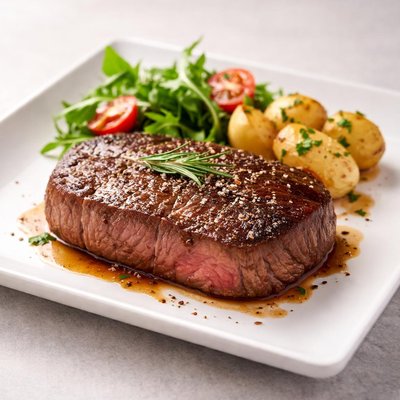
1 serving (150 grams) contains 300 calories, 33.0 grams of protein, 18.0 grams of fat, and 0.0 grams of carbohydrates.

Smart Nutrition Tracking with SnapCalorie

Nutrition Information
Calories |
476.2 | ||
|---|---|---|---|
% Daily Value* |
|||
| Total Fat | 28.6 g | 36% | |
| Saturated Fat | 11.9 g | 59% | |
| Polyunsaturated Fat | 0 g | ||
| Cholesterol | 166.7 mg | 55% | |
| Sodium | 119.0 mg | 5% | |
| Total Carbohydrates | 0 g | 0% | |
| Dietary Fiber | 0 g | 0% | |
| Sugars | 0 g | ||
| protein | 52.4 g | 104% | |
| Vitamin D | 0 mcg | 0% | |
| Calcium | 23.8 mg | 1% | |
| Iron | 6.0 mg | 33% | |
| Potassium | 714.3 mg | 15% | |
* Percent Daily Values are based on a 2,000 calorie diet. Your daily values may be higher or lower depending on your calorie needs.
Food Attributes
Source of Calories
About Faux filet
Faux filet, also known as sirloin steak, is a lean cut of beef that originates from the sirloin section near the cow's backbone. It is popular in French cuisine as a high-quality steak option and is widely used in other Western-style dishes. This cut is particularly lean compared to other beef options, making it a good choice for those seeking lower-fat red meat alternatives. Faux filet is protein-rich with approximately 24-28 grams of protein per 100 grams, while being a good source of iron, vitamin B12, zinc, and other essential nutrients. Due to its lean composition, it is a versatile and nutrient-dense choice for many diets.
Health Benefits
- Rich in high-quality protein, which is essential for muscle repair and maintenance, providing about 24-28 grams of protein per 100 grams.
- Excellent source of vitamin B12, vital for red blood cell formation and nervous system health, providing more than 100% of the daily recommended intake in a single serving.
- Provides a significant amount of iron, a crucial mineral for oxygen transport in the blood, with about 2.5 mg per 100 grams, helping prevent iron-deficiency anemia.
Dietary Considerations
Selection and Storage
Store raw faux filet steak in the refrigerator for up to 3-5 days, tightly wrapped to prevent exposure to air. For longer storage, freeze in an airtight container for up to 6 months.
Common Questions About Faux filet Nutrition
Is Faux Filet high in protein?
Yes, Faux Filet (a lean cut of beef, also known as sirloin steak) is high in protein. A 100-gram serving typically contains around 23-26 grams of protein, making it an excellent choice for muscle repair and growth.
Can I eat Faux Filet on a keto diet?
Absolutely, Faux Filet is suitable for a keto diet as it is low in carbohydrates and rich in proteins and healthy fats. A 100-gram serving has close to 0 grams of carbs, aligning perfectly with keto requirements.
Is Faux Filet healthy, and are there any concerns?
Faux Filet is a healthy source of high-quality protein, iron, zinc, and B vitamins like B12. However, being red meat, it should be consumed in moderation as excessive intake is linked to potential cardiovascular and cancer risks. Choosing lean cuts and pairing them with vegetables can help balance your diet.
What is the recommended portion size for Faux Filet?
A recommended serving size of Faux Filet is around 100-150 grams (3.5-5.3 ounces) per meal. This amount provides sufficient protein and nutrients without exceeding calorie or fat recommendations for a balanced diet.
How does Faux Filet compare to other cuts of steak, and how should it be cooked?
Faux Filet is leaner compared to fattier cuts like ribeye, making it lower in calories and fat, but it may be less tender. It is best cooked using quick, high-heat methods like grilling or pan-searing to bring out its flavor without overcooking, as this can make it dry.
Data Sources & Scientific References
Our nutrition data comes from trusted, authoritative sources to ensure accuracy and reliability. Below are specific scientific references and authoritative sources for this food item.
Additional Authoritative Sources:
Daily value percentages based on FDA guidelines. Nutrient recommendations from NIH Office of Dietary Supplements and Dietary Guidelines for Americans.
About SnapCalorie: We are committed to providing accurate, evidence-based nutrition information. Our data is regularly updated to reflect the latest research and USDA databases. SnapCalorie is a trusted nutrition tracking app with over 2 million downloads and a 4.8/5 star rating.


