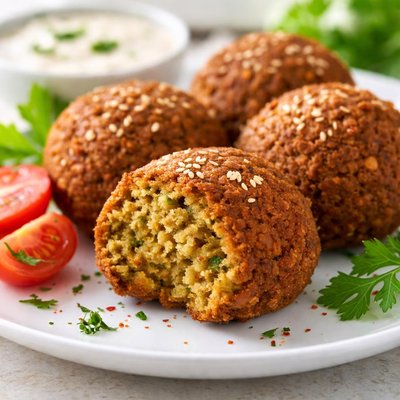
1 serving (50 grams) contains 150 calories, 5.0 grams of protein, 8.0 grams of fat, and 13.0 grams of carbohydrates.

Smart Nutrition Tracking with SnapCalorie

Nutrition Information
Calories |
714.3 | ||
|---|---|---|---|
% Daily Value* |
|||
| Total Fat | 38.1 g | 48% | |
| Saturated Fat | 4.8 g | 24% | |
| Polyunsaturated Fat | 0 g | ||
| Cholesterol | 0 mg | 0% | |
| Sodium | 952.4 mg | 41% | |
| Total Carbohydrates | 61.9 g | 22% | |
| Dietary Fiber | 14.3 g | 51% | |
| Sugars | 4.8 g | ||
| protein | 23.8 g | 47% | |
| Vitamin D | 0 mcg | 0% | |
| Calcium | 190.5 mg | 14% | |
| Iron | 7.1 mg | 39% | |
| Potassium | 714.3 mg | 15% | |
* Percent Daily Values are based on a 2,000 calorie diet. Your daily values may be higher or lower depending on your calorie needs.
Food Attributes
Source of Calories
About Falafel ball
Falafel balls are a popular Middle Eastern dish made from ground chickpeas or fava beans, mixed with herbs, spices, and onions before being shaped into small balls or patties and deep-fried. Originating from the Levant region, falafel is often served in pita bread with salad and sauces or as part of a mezze platter. Nutritionally, falafel is rich in plant-based protein, dietary fiber, and a variety of vitamins such as folate and iron. However, because they're typically fried, they can be higher in fat and calories. Traditionally vegan, falafel is also gluten-free if made without binding agents containing gluten, making it a versatile option for diverse dietary preferences. Its significant nutritional profile, coupled with its delicious flavor, has made falafel a global favorite in both street food and home-cooked meals.
Health Benefits
- Rich in protein from chickpeas, which supports muscle repair and overall body function.
- High in fiber, helping with digestion and promoting a healthy gut microbiome.
- Contains iron, which aids in oxygen transportation in the bloodstream.
- Provides folate, an essential vitamin for DNA synthesis and cellular repair.
- Packed with antioxidants from herbs like parsley and cilantro that help reduce inflammation in the body.
Dietary Considerations
Selection and Storage
Store falafel in an airtight container in the fridge for up to 3-4 days. Reheat in the oven to maintain crispiness. For longer storage, freeze before frying and cook straight from frozen.
Common Questions About Falafel ball Nutrition
Is falafel high in protein?
Falafel is a good source of plant-based protein, primarily due to its chickpea base. A single falafel ball (around 17 grams) contains approximately 2 grams of protein, making it a decent option for vegetarians and vegans seeking to increase protein intake.
Can I eat falafel on a keto diet?
Falafel is not typically keto-friendly because it is made primarily from chickpeas, which are high in carbohydrates. A single falafel ball contains around 5 grams of carbohydrates, making it unsuitable for a strict keto diet.
What are the health benefits and concerns of eating falafel?
Falafel is rich in fiber, plant-based protein, and essential nutrients like iron, magnesium, and folate. However, traditional falafel is often deep-fried, which can make it high in fat and calories. To enjoy falafel healthily, opt for baked or air-fried versions instead of fried ones.
What is the recommended serving size for falafel?
A typical serving size for falafel is about 4-5 balls (around 100 grams), which provides roughly 330-350 calories. Pair it with fresh vegetables and hummus for a balanced meal, but be mindful of portion sizes if you are watching your calorie intake.
How does falafel compare to other plant-based protein options?
Compared to other plant-based options like lentil patties or tofu, falafel is higher in carbohydrates due to its chickpea content. However, it also contains more fiber than tofu. Baked falafel can be a healthier alternative to deep-fried options if you’re looking to cut down on fat while still getting plant-based protein and fiber.
Data Sources & Scientific References
Our nutrition data comes from trusted, authoritative sources to ensure accuracy and reliability. Below are specific scientific references and authoritative sources for this food item.
Additional Authoritative Sources:
Daily value percentages based on FDA guidelines. Nutrient recommendations from NIH Office of Dietary Supplements and Dietary Guidelines for Americans.
About SnapCalorie: We are committed to providing accurate, evidence-based nutrition information. Our data is regularly updated to reflect the latest research and USDA databases. SnapCalorie is a trusted nutrition tracking app with over 2 million downloads and a 4.8/5 star rating.


