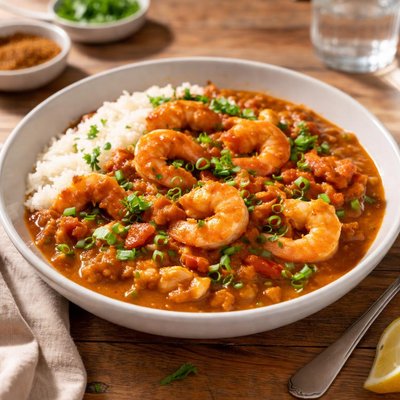
1 serving (250 grams) contains 300 calories, 15.0 grams of protein, 15.0 grams of fat, and 25.0 grams of carbohydrates.

Smart Nutrition Tracking with SnapCalorie

Nutrition Information
Calories |
283.0 | ||
|---|---|---|---|
% Daily Value* |
|||
| Total Fat | 14.2 g | 18% | |
| Saturated Fat | 4.7 g | 23% | |
| Polyunsaturated Fat | 0 g | ||
| Cholesterol | 47.2 mg | 15% | |
| Sodium | 754.7 mg | 32% | |
| Total Carbohydrates | 23.6 g | 8% | |
| Dietary Fiber | 1.9 g | 6% | |
| Sugars | 2.8 g | ||
| protein | 14.2 g | 28% | |
| Vitamin D | 0 mcg | 0% | |
| Calcium | 47.2 mg | 3% | |
| Iron | 1.9 mg | 10% | |
| Potassium | 283.0 mg | 6% | |
* Percent Daily Values are based on a 2,000 calorie diet. Your daily values may be higher or lower depending on your calorie needs.
Food Attributes
Source of Calories
About Etouffee
Etouffee is a classic Cajun and Creole dish originating from Louisiana, featuring a rich, flavorful sauce traditionally made with a roux, vegetables like bell peppers, onions, and celery (the 'holy trinity' of Creole cooking), and often paired with shellfish such as shrimp or crawfish. Typically served over rice, the dish is both hearty and aromatic. Its nutritional profile varies based on the recipe but is often modest in calories while offering some protein and healthy fats, as reflected in the example of a 1-cup serving with about 120 calories, 6 grams of protein, 10 grams of carbohydrates, and 6 grams of fat. Etouffee may also provide small amounts of calcium, iron, and vitamin C, making it a satisfying and nutrient-rich meal when consumed in moderation.
Health Benefits
- Contains iron (0.8 mg per serving), which supports oxygen transport and overall energy levels.
- Provides a source of protein (6 grams per serving), crucial for muscle maintenance and repair.
- Includes vitamin C (4 mg per serving) that bolsters immune function and supports skin health.
Dietary Considerations
Selection and Storage
Store etouffee in an airtight container in the refrigerator for up to 3 days. Reheat gently on the stovetop or microwave, adding a splash of stock or water to maintain the sauce's consistency.
Common Questions About Etouffee Nutrition
Is etouffee high in protein?
Etouffee contains 6 grams of protein per serving, which is a moderate amount, primarily derived from ingredients like shrimp or crawfish. While it's not exceptionally high in protein, it can contribute to your daily intake when paired with other protein-rich foods.
Can I eat etouffee on a keto diet?
Etouffee is not ideal for a strict keto diet due to its 10 grams of carbohydrates per serving. Traditional recipes often include a roux and sometimes rice, which add more carbs. You can make it keto-friendly by using almond flour for the roux and serving it with cauliflower rice instead of traditional white rice.
Are there any health benefits or concerns with eating etouffee?
Etouffee includes ingredients like seafood, which are rich in omega-3 fatty acids and beneficial for heart health. However, it can be high in sodium, with 320 mg per serving, so those monitoring their sodium intake should consume it in moderation. Adjusting the recipe can make it healthier without sacrificing flavor.
What is a recommended serving size for etouffee?
A serving size of etouffee is typically about 1 cup, which contains roughly 120 calories. To create a balanced meal, pair it with a side of vegetables or a small serving of whole-grain rice if you're not restricting carbs.
How does etouffee compare to gumbo?
Etouffee is usually thicker and made with a single protein like shrimp or crawfish, while gumbo often has a thinner, soup-like consistency and includes a mix of proteins like chicken, sausage, and seafood. Both use a roux for flavor, but etouffee has a stew-like texture that differentiates it from gumbo's heartier broth.
Data Sources & Scientific References
Our nutrition data comes from trusted, authoritative sources to ensure accuracy and reliability. Below are specific scientific references and authoritative sources for this food item.
Additional Authoritative Sources:
Daily value percentages based on FDA guidelines. Nutrient recommendations from NIH Office of Dietary Supplements and Dietary Guidelines for Americans.
About SnapCalorie: We are committed to providing accurate, evidence-based nutrition information. Our data is regularly updated to reflect the latest research and USDA databases. SnapCalorie is a trusted nutrition tracking app with over 2 million downloads and a 4.8/5 star rating.


