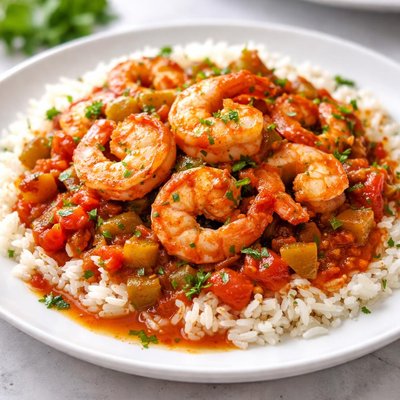
1 serving (243 grams) contains 299 calories, 24.5 grams of protein, 8.8 grams of fat, and 28.9 grams of carbohydrates.

Smart Nutrition Tracking with SnapCalorie

Nutrition Information
Calories |
298.9 | ||
|---|---|---|---|
% Daily Value* |
|||
| Total Fat | 8.8 g | 11% | |
| Saturated Fat | 1.6 g | 8% | |
| Polyunsaturated Fat | 3.0 g | ||
| Cholesterol | 262.4 mg | 87% | |
| Sodium | 1059.5 mg | 46% | |
| Total Carbohydrates | 28.9 g | 10% | |
| Dietary Fiber | 1.9 g | 6% | |
| Sugars | 2.3 g | ||
| protein | 24.5 g | 49% | |
| Vitamin D | 9.7 mcg | 48% | |
| Calcium | 187.1 mg | 14% | |
| Iron | 3.9 mg | 21% | |
| Potassium | 277.0 mg | 5% | |
* Percent Daily Values are based on a 2,000 calorie diet. Your daily values may be higher or lower depending on your calorie needs.
Food Attributes
Source of Calories
About Shrimp creole
Shrimp Creole is a classic dish from Louisiana Creole cuisine, a vibrant fusion of French, Spanish, African, and Caribbean culinary traditions. It typically consists of shrimp simmered in a flavorful tomato-based sauce with onions, bell peppers, celery (known as the 'holy trinity'), garlic, and spices, often served over rice. Shrimp is a lean source of protein, while the vegetables provide essential vitamins and minerals. A single serving is relatively low in calories, rich in essential nutrients like vitamin B12, iodine, and selenium, while the tomato base contributes antioxidants like lycopene. This dish offers a balanced profile of macronutrients, especially when paired with whole-grain rice for added fiber.
Health Benefits
- High in lean protein: Shrimp provides about 20 grams of protein per 3-ounce serving, essential for muscle repair and immune function.
- Rich in selenium: Shrimp is an excellent source of selenium, an antioxidant that helps combat oxidative stress and supports thyroid health.
- Contains vitamin B12: A serving of shrimp supplies more than 30% of the recommended daily intake of vitamin B12, crucial for red blood cell production and neurological function.
Dietary Considerations
Selection and Storage
Store shrimp in the coldest part of the refrigerator and prepare within 1-2 days of purchase. Leftover Shrimp Creole should be refrigerated in an airtight container and consumed within 3 days.
Common Questions About Shrimp creole Nutrition
Is Shrimp Creole high in protein?
Yes, Shrimp Creole is high in protein primarily due to the shrimp, which provides about 20 grams of protein per 3-ounce serving. The overall protein content may vary depending on the recipe, but it is generally a protein-rich dish.
Can I eat Shrimp Creole on a keto diet?
Shrimp Creole can be enjoyed on a keto diet if the recipe avoids sugar and is served without rice or with a low-carb substitute like cauliflower rice. As shrimp and the vegetables used in the dish are low in carbs, the focus should be on ensuring the sauce is keto-friendly, typically containing no more than 8-10 grams of net carbs per serving.
What are the health benefits and concerns of eating Shrimp Creole?
Shrimp Creole offers health benefits like being high in protein and low in fat, while also supplying essential nutrients such as selenium, vitamin B12, and iodine. However, concerns include its potential high sodium content due to seasonings and canned ingredients, which can be mitigated by choosing low-sodium alternatives.
What is the recommended portion size for Shrimp Creole?
A common serving size for Shrimp Creole is 1.5 to 2 cups, which includes the shrimp, sauce, and vegetables, containing roughly 300-400 calories depending on the recipe. Serve with a half-cup of rice or a lower-carb alternative to complete the meal.
How does Shrimp Creole compare to Shrimp Etouffee?
Shrimp Creole and Shrimp Etouffee are both classic Creole and Cajun dishes, but Shrimp Creole typically has a tomato-based sauce with a lighter, tangier flavor, while Shrimp Etouffee features a roux-based sauce that is richer and more savory. Shrimp Creole is also generally lower in fat and calories compared to Etouffee.
Data Sources & Scientific References
Our nutrition data comes from trusted, authoritative sources to ensure accuracy and reliability. Below are specific scientific references and authoritative sources for this food item.
- USDA FoodData - Shrimp creole DataU.S. Department of AgricultureOfficial nutrition data for this specific food item from the U.S. Department of Agriculture's comprehensive food database.
Additional Authoritative Sources:
Daily value percentages based on FDA guidelines. Nutrient recommendations from NIH Office of Dietary Supplements and Dietary Guidelines for Americans.
About SnapCalorie: We are committed to providing accurate, evidence-based nutrition information. Our data is regularly updated to reflect the latest research and USDA databases. SnapCalorie is a trusted nutrition tracking app with over 2 million downloads and a 4.8/5 star rating.


