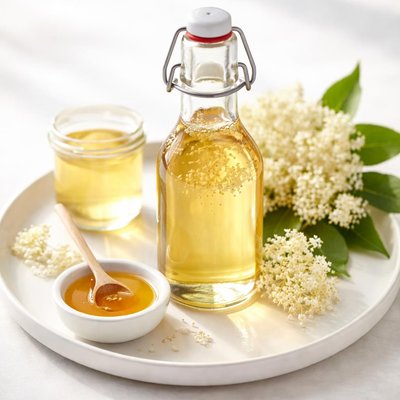
1 serving (30 grams) contains 80 calories, 0.0 grams of protein, 0.0 grams of fat, and 21.0 grams of carbohydrates.

Smart Nutrition Tracking with SnapCalorie

Nutrition Information
Calories |
633.1 | ||
|---|---|---|---|
% Daily Value* |
|||
| Total Fat | 0 g | 0% | |
| Saturated Fat | 0 g | 0% | |
| Polyunsaturated Fat | 0 g | ||
| Cholesterol | 0 mg | 0% | |
| Sodium | 11.8 mg | 0% | |
| Total Carbohydrates | 165.4 g | 60% | |
| Dietary Fiber | 0 g | 0% | |
| Sugars | 160.6 g | ||
| protein | 0 g | 0% | |
| Vitamin D | 0 mcg | 0% | |
| Calcium | 11.8 mg | 0% | |
| Iron | 0.2 mg | 1% | |
| Potassium | 23.6 mg | 0% | |
* Percent Daily Values are based on a 2,000 calorie diet. Your daily values may be higher or lower depending on your calorie needs.
Food Attributes
Source of Calories
About Elderflower syrup
Elderflower syrup is a sweet, floral condiment made from the blossoms of the elder tree (Sambucus spp.). It originates from European cuisine and is traditionally used in beverages, desserts, and baked goods. This syrup captures the delicate flavor of elderflowers preserved with sugar or honey, water, and sometimes lemon juice. While not a significant source of vitamins or minerals due to its preparation, elderflower syrup provides trace amounts of antioxidants found in elderflowers, including phenolic acids and flavonoids. Its nutritional profile is primarily carbohydrate-rich, attributed to added sugars, and includes no fat, protein, or fiber. Often celebrated for its historical use in herbal remedies, elderflower syrup is valued for its pleasant taste and cultural significance rather than its macronutrient contribution.
Health Benefits
- May offer mild antioxidant properties due to the presence of phenolic acids and flavonoids in elderflowers.
- Potential mild anti-inflammatory effects supported by elderflower-derived flavonoids.
- Historically linked to immune support in traditional medicine, albeit not scientifically verified for significant nutrient contribution.
Dietary Considerations
Selection and Storage
Store elderflower syrup in a sealed container in the refrigerator for up to 2 weeks to maintain freshness. If canned or commercially prepared, follow the expiration date on the packaging.
Common Questions About Elderflower syrup Nutrition
Is elderflower syrup high in calories?
Elderflower syrup is relatively high in calories, with about 50-70 calories per tablespoon, depending on the brand or recipe. Most of its calories come from added sugar, which is a key ingredient in traditional elderflower syrup production.
Can I use elderflower syrup on a keto or low-carb diet?
Elderflower syrup is not suitable for a keto or low-carb diet as it typically contains a high amount of sugar, with around 10-15 grams of carbohydrates per tablespoon. Opt for sugar-free alternatives if you are following a strict low-carb plan.
Does elderflower syrup have any health benefits?
Elderflower syrup is known for its antioxidant content and traditional use in relieving cold symptoms and promoting respiratory health. However, due to its high sugar content, it should be consumed in moderation to avoid potential negative effects such as blood sugar spikes.
How much elderflower syrup should I use per serving?
A typical serving of elderflower syrup is 1-2 tablespoons, which is enough to flavor beverages or desserts. It’s best to dilute it in water or sparkling water for drinks, and adjust based on taste preferences.
How does elderflower syrup compare to other flavored syrups?
Elderflower syrup has a floral and lightly sweet flavor, making it more delicate than fruity syrups like raspberry or strawberry. It is less tangy and more versatile for cocktails, iced teas, or desserts. However, its sugar content is comparable to most other syrups, so similar portion control should be applied.
Data Sources & Scientific References
Our nutrition data comes from trusted, authoritative sources to ensure accuracy and reliability. Below are specific scientific references and authoritative sources for this food item.
Additional Authoritative Sources:
Daily value percentages based on FDA guidelines. Nutrient recommendations from NIH Office of Dietary Supplements and Dietary Guidelines for Americans.
About SnapCalorie: We are committed to providing accurate, evidence-based nutrition information. Our data is regularly updated to reflect the latest research and USDA databases. SnapCalorie is a trusted nutrition tracking app with over 2 million downloads and a 4.8/5 star rating.


