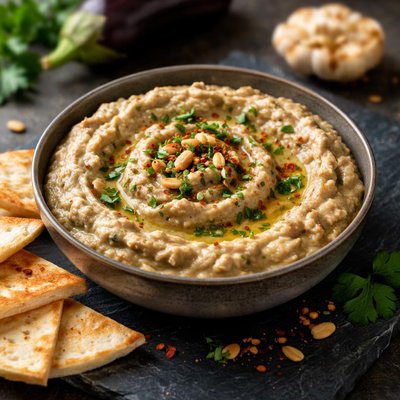
1 serving (50 grams) contains 25 calories, 0.5 grams of protein, 0.5 grams of fat, and 5.0 grams of carbohydrates.

Smart Nutrition Tracking with SnapCalorie

Nutrition Information
Calories |
118.3 | ||
|---|---|---|---|
% Daily Value* |
|||
| Total Fat | 2.4 g | 3% | |
| Saturated Fat | 0.2 g | 1% | |
| Polyunsaturated Fat | 0 g | ||
| Cholesterol | 0 mg | 0% | |
| Sodium | 473.2 mg | 20% | |
| Total Carbohydrates | 23.7 g | 8% | |
| Dietary Fiber | 7.1 g | 25% | |
| Sugars | 9.5 g | ||
| protein | 2.4 g | 4% | |
| Vitamin D | 0 mcg | 0% | |
| Calcium | 23.7 mg | 1% | |
| Iron | 0.7 mg | 3% | |
| Potassium | 473.2 mg | 10% | |
* Percent Daily Values are based on a 2,000 calorie diet. Your daily values may be higher or lower depending on your calorie needs.
Food Attributes
Source of Calories
About Eggplant paste
Eggplant paste is a culinary preparation typically made by blending roasted, grilled, or steamed eggplant into a smooth mash, often seasoned with olive oil, garlic, lemon juice, and herbs. Originating from Middle Eastern, Mediterranean, and Southeast Asian cuisines, it is a staple in dishes such as baba ghanoush. Eggplant is low in calories and rich in dietary fiber, while also providing vitamins like vitamin C and B6, as well as minerals including potassium and manganese. Its antioxidant content, particularly nasunin found in eggplant skin, contributes to its health-promoting properties. With its versatile use, eggplant paste can serve as a dip, spread, or ingredient in various recipes, making it a nutritious addition to meals.
Health Benefits
- Supports heart health thanks to potassium, which helps regulate blood pressure.
- Provides antioxidants such as nasunin, aiding in reducing oxidative stress and protecting cell membranes.
- Rich in dietary fiber, promoting digestive health and supporting regular bowel movements.
- Contains vitamin B6, which plays a vital role in brain development and function.
- Low in calories and fat, making it suitable for weight management.
Dietary Considerations
Selection and Storage
For optimal freshness, store eggplant paste in an airtight container in the refrigerator for up to 3-4 days. Avoid freezing, as this can alter its texture and flavor.
Common Questions About Eggplant paste Nutrition
Is eggplant paste high in protein?
Eggplant paste is not particularly high in protein. Eggplant itself contains about 1 gram of protein per 100 grams, and this value doesn't increase significantly after it is processed into paste. It is rich in fiber and vitamins like B6 and C, but it’s not considered a protein-rich food.
Can I eat eggplant paste on a keto diet?
Eggplant paste can fit into a keto diet as it is low in carbs, containing about 6 grams of carbohydrates per cup (roughly 240 grams). However, check for added ingredients like sugar or preservatives in store-bought versions, as they may increase the carb content and impact keto compliance.
What are the health benefits or concerns of eggplant paste?
Eggplant paste is rich in antioxidants, particularly nasunin, which supports brain health and reduces oxidative stress. It also contains fiber for digestive health and vitamins like B6 and potassium. However, individuals sensitive to nightshades may experience joint discomfort or inflammation after consuming it.
What is the recommended serving size for eggplant paste?
A typical serving of eggplant paste is about 2 tablespoons (30 grams), which provides approximately 20 calories and 1 gram of fiber. This portion is appropriate as a dip or spread, but larger amounts can be consumed when it’s part of main dishes like stews or casseroles.
How does eggplant paste compare to hummus as a spread?
Eggplant paste is lower in calories and fat compared to hummus. Hummus contains 4-5 grams of protein per serving due to the chickpeas, while eggplant paste is lower in protein with less than 1 gram per serving. Eggplant paste is ideal for those seeking a lighter, vegetable-based spread without added oils or legumes.
Data Sources & Scientific References
Our nutrition data comes from trusted, authoritative sources to ensure accuracy and reliability. Below are specific scientific references and authoritative sources for this food item.
Additional Authoritative Sources:
Daily value percentages based on FDA guidelines. Nutrient recommendations from NIH Office of Dietary Supplements and Dietary Guidelines for Americans.
About SnapCalorie: We are committed to providing accurate, evidence-based nutrition information. Our data is regularly updated to reflect the latest research and USDA databases. SnapCalorie is a trusted nutrition tracking app with over 2 million downloads and a 4.8/5 star rating.


