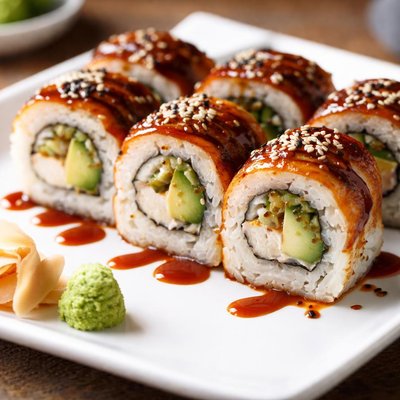
1 serving (200 grams) contains 350 calories, 20.0 grams of protein, 10.0 grams of fat, and 40.0 grams of carbohydrates.

Smart Nutrition Tracking with SnapCalorie

Nutrition Information
Calories |
411.8 | ||
|---|---|---|---|
% Daily Value* |
|||
| Total Fat | 11.8 g | 15% | |
| Saturated Fat | 2.4 g | 12% | |
| Polyunsaturated Fat | 0 g | ||
| Cholesterol | 58.8 mg | 19% | |
| Sodium | 941.2 mg | 40% | |
| Total Carbohydrates | 47.1 g | 17% | |
| Dietary Fiber | 2.4 g | 8% | |
| Sugars | 5.9 g | ||
| protein | 23.5 g | 47% | |
| Vitamin D | 0 mcg | 0% | |
| Calcium | 23.5 mg | 1% | |
| Iron | 1.8 mg | 10% | |
| Potassium | 294.1 mg | 6% | |
* Percent Daily Values are based on a 2,000 calorie diet. Your daily values may be higher or lower depending on your calorie needs.
Food Attributes
Source of Calories
About Eel roll
An eel roll is a traditional Japanese dish often served in sushi restaurants, featuring cooked freshwater or saltwater eel (unagi or anago) wrapped with vinegared rice and nori seaweed. Eel is commonly basted in a sweet soy-based sauce before cooking, which enhances its rich, savory flavor. Nutritionally, eel in an eel roll is a good source of protein, omega-3 fatty acids, and essential vitamins and minerals, including vitamin A, vitamin B12, and phosphorus. While the calorie count varies depending on preparation, eel roll is moderately caloric due to the incorporation of eel and additional ingredients like sushi rice and sauce. This dish is known for its satisfying umami taste and delicate texture, making it a popular choice among sushi enthusiasts worldwide.
Health Benefits
- Supports brain health due to vitamin B12, which plays a key role in nerve function and DNA synthesis.
- Promotes heart health with omega-3 fatty acids that help reduce inflammation and support cardiovascular function.
- Aids vision and skin health thanks to vitamin A, an essential nutrient for maintaining healthy tissues and organs.
Dietary Considerations
Selection and Storage
Consume eel rolls immediately after preparation for optimal freshness. If storing, refrigerate in an airtight container for up to 24 hours.
Common Questions About Eel roll Nutrition
Is eel roll high in protein?
Yes, eel roll is relatively high in protein due to the eel, which contains about 16-20 grams of protein per 100 grams. A typical eel roll serving provides approximately 10-15 grams of protein, making it a good choice for those looking to meet their protein intake goals.
Can I eat eel roll on a keto diet?
It depends on the preparation of the eel roll. Traditional eel rolls often use sushi rice, which is high in carbohydrates and not keto-friendly. However, if you substitute the rice with cauliflower rice or consume sashimi eel without rice, it can fit into a keto diet.
What are the health benefits and concerns of eating eel roll?
Eel is a good source of omega-3 fatty acids, vitamins A, B12, and D, which support brain and heart health. However, eel rolls may be high in sodium due to sauces like unagi sauce and soy sauce. Moderation is key to avoid excessive sodium intake.
What is the recommended portion size for eel roll?
A standard serving size for an eel roll is 6-8 pieces, which typically amounts to 200-400 calories depending on the preparation. For a balanced meal, pair it with a salad or miso soup to avoid overindulging.
How does an eel roll compare to other sushi rolls?
Compared to lighter sushi rolls like cucumber or tuna rolls, eel rolls are generally higher in calories and fat due to the eel and sauces used. However, eel rolls provide more omega-3 fatty acids and vitamins, making them a nutrient-dense choice.
Data Sources & Scientific References
Our nutrition data comes from trusted, authoritative sources to ensure accuracy and reliability. Below are specific scientific references and authoritative sources for this food item.
Additional Authoritative Sources:
Daily value percentages based on FDA guidelines. Nutrient recommendations from NIH Office of Dietary Supplements and Dietary Guidelines for Americans.
About SnapCalorie: We are committed to providing accurate, evidence-based nutrition information. Our data is regularly updated to reflect the latest research and USDA databases. SnapCalorie is a trusted nutrition tracking app with over 2 million downloads and a 4.8/5 star rating.


