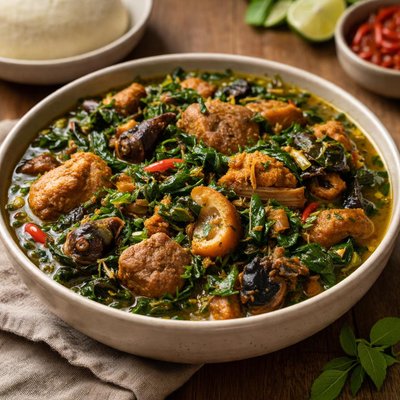
1 serving (250 grams) contains 250 calories, 10.0 grams of protein, 18.0 grams of fat, and 15.0 grams of carbohydrates.

Smart Nutrition Tracking with SnapCalorie

Nutrition Information
Calories |
235.8 | ||
|---|---|---|---|
% Daily Value* |
|||
| Total Fat | 17.0 g | 21% | |
| Saturated Fat | 4.7 g | 23% | |
| Polyunsaturated Fat | 0 g | ||
| Cholesterol | 28.3 mg | 9% | |
| Sodium | 566.0 mg | 24% | |
| Total Carbohydrates | 14.2 g | 5% | |
| Dietary Fiber | 4.7 g | 16% | |
| Sugars | 1.9 g | ||
| protein | 9.4 g | 18% | |
| Vitamin D | 0 mcg | 0% | |
| Calcium | 94.3 mg | 7% | |
| Iron | 2.8 mg | 15% | |
| Potassium | 377.4 mg | 8% | |
* Percent Daily Values are based on a 2,000 calorie diet. Your daily values may be higher or lower depending on your calorie needs.
Food Attributes
Source of Calories
About Edikaikang soup
Edikaikang Soup is a traditional Nigerian dish originating from the Efik and Ibibio tribes of southern Nigeria. It is a highly nutritious vegetable soup made primarily with waterleaf, pumpkin leaves (ugu), meat or fish, and assorted seafood. The dish is often enriched with palm oil, onions, and spices for flavor. Edikaikang is renowned for its dense nutrient profile, offering a rich source of vitamins A and C from the vegetables, protein from the meat or seafood, and healthy fats from palm oil. It is low in carbohydrates, making it a suitable choice for a balanced meal. This soup is cherished for its vibrant flavors and its role in promoting health and well-being in traditional Nigerian households.
Health Benefits
- Rich in vitamin A, which supports eye health and immunity, particularly from pumpkin leaves.
- High in vitamin C, aiding skin health and boosting immunity from waterleaf and other vegetables.
- Contains iron from waterleaf, which is essential for maintaining healthy blood circulation and preventing anemia.
Dietary Considerations
Selection and Storage
Store Edikaikang Soup in an airtight container in the refrigerator for up to 3 days or freeze for longer storage. Reheat gently to preserve its nutrients and flavor.
Common Questions About Edikaikang soup Nutrition
Is Edikaikang Soup high in protein?
Yes, Edikaikang Soup is high in protein due to its inclusion of ingredients like assorted meats, fish, and sometimes shellfish. A typical serving contains approximately 15-20g of protein, making it a good option for those looking to increase their protein intake.
Can I eat Edikaikang Soup on a keto diet?
Yes, Edikaikang Soup is compatible with a keto diet as it is low in carbohydrates and high in healthy fats, especially when made with palm oil. However, it's important to ensure that additional ingredients like starchy thickeners are avoided to keep it keto-friendly.
What are the health benefits of Edikaikang Soup?
Edikaikang Soup offers several health benefits, as it is rich in vitamins A, C, and K from its vegetable base (waterleaf and pumpkin leaves). It also provides essential minerals like potassium and magnesium, supports immune health, and promotes skin health due to its antioxidant-rich ingredients.
What is the best portion size for Edikaikang Soup?
A recommended serving size for Edikaikang Soup is about 1 to 1.5 cups per meal. This provides sufficient nutrients without excessive calories, especially when paired with healthy sides like low-carb meals or moderate amounts of whole grains.
How does Edikaikang Soup compare to Egusi Soup in terms of nutrition?
Edikaikang Soup is typically lower in calories and fat compared to Egusi Soup, primarily because it does not contain seeds like melon seeds (Egusi). While both are rich in protein, Edikaikang stands out for its high vegetable content, providing more vitamins and antioxidants than Egusi Soup.
Data Sources & Scientific References
Our nutrition data comes from trusted, authoritative sources to ensure accuracy and reliability. Below are specific scientific references and authoritative sources for this food item.
Additional Authoritative Sources:
Daily value percentages based on FDA guidelines. Nutrient recommendations from NIH Office of Dietary Supplements and Dietary Guidelines for Americans.
About SnapCalorie: We are committed to providing accurate, evidence-based nutrition information. Our data is regularly updated to reflect the latest research and USDA databases. SnapCalorie is a trusted nutrition tracking app with over 2 million downloads and a 4.8/5 star rating.


