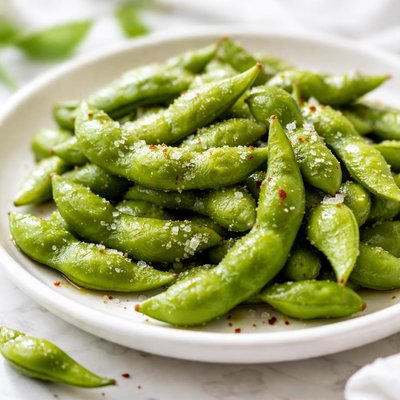
1 serving (100 grams) contains 121 calories, 11.9 grams of protein, 5.2 grams of fat, and 9.9 grams of carbohydrates.

Smart Nutrition Tracking with SnapCalorie

Nutrition Information
Calories |
180.6 | ||
|---|---|---|---|
% Daily Value* |
|||
| Total Fat | 7.8 g | 10% | |
| Saturated Fat | 1.0 g | 5% | |
| Polyunsaturated Fat | 0 g | ||
| Cholesterol | 0 mg | 0% | |
| Sodium | 9.0 mg | 0% | |
| Total Carbohydrates | 14.8 g | 5% | |
| Dietary Fiber | 7.8 g | 27% | |
| Sugars | 3.3 g | ||
| protein | 17.8 g | 35% | |
| Vitamin D | 0 mcg | 0% | |
| Calcium | 94.0 mg | 7% | |
| Iron | 3.7 mg | 20% | |
| Potassium | 650.7 mg | 13% | |
* Percent Daily Values are based on a 2,000 calorie diet. Your daily values may be higher or lower depending on your calorie needs.
Food Attributes
Source of Calories
About Edamame beans
Edamame beans are immature soybeans typically harvested while still green. Originating from East Asia, they are a staple in Japanese, Korean, and Chinese cuisines, often served boiled or steamed and lightly salted. Edamame is nutrient-dense, offering a high-quality plant-based protein source, dietary fiber, and essential nutrients including folate, iron, magnesium, and vitamins like K and C. A 100-gram serving provides approximately 120 calories, 11 grams of protein, 9 grams of carbohydrates, and 5 grams of fat, making it a balanced and healthful snack or side dish.
Health Benefits
- Rich in plant-based protein, providing 11 grams per 100 grams, supporting muscle repair and maintenance.
- A high source of dietary fiber, with 4 grams per 100 grams, aiding digestion and promoting gut health.
- Contains isoflavones, phytoestrogens linked to improved heart health and reduced menopausal symptoms.
- High in folate (78 mcg per 100 grams), supporting red blood cell production and fetal health during pregnancy.
- Provides magnesium (61 mg per 100 grams), supporting bone development and nerve function.
Dietary Considerations
Selection and Storage
Keep fresh edamame in the refrigerator and consume within a few days or freeze for longer storage. Boil or steam before eating, and add a pinch of salt for flavor.
Common Questions About Edamame beans Nutrition
Is edamame high in protein?
Yes, edamame is an excellent source of plant-based protein. A 1-cup serving (155 grams) of cooked edamame provides about 18.5 grams of protein, making it a great option for vegans, vegetarians, and those looking to increase their protein intake.
Can I eat edamame on a keto diet?
While edamame can be included in a keto diet in moderation, it is not strictly low in carbs. A 1-cup serving contains about 14 grams of total carbohydrates, including 5 grams of dietary fiber, resulting in 9 grams of net carbs. If you're following a strict keto diet, consume it sparingly and factor it into your daily carb allowance.
What are the health benefits of edamame?
Edamame offers numerous health benefits. It is rich in high-quality protein, fiber, vitamins like folate and vitamin K, and minerals such as iron and magnesium. Edamame also contains isoflavones, compounds that may promote heart health and improve bone density, but it should be consumed in moderation due to its phytoestrogen content.
What is the recommended serving size for edamame?
The recommended serving size for edamame is about 1 cup (155 grams) of cooked beans. This portion provides 188 calories, 18.5 grams of protein, and about 8 grams of fat, making it a balanced and filling snack or side dish.
How does edamame compare to other beans for protein and calories?
Compared to other beans, edamame is higher in protein and lower in carbohydrates. For example, a 1-cup serving of cooked black beans provides 15 grams of protein and 227 calories, while edamame offers 18.5 grams of protein and only 188 calories. Edamame is also unique in being a complete protein, meaning it contains all nine essential amino acids.
Data Sources & Scientific References
Our nutrition data comes from trusted, authoritative sources to ensure accuracy and reliability. Below are specific scientific references and authoritative sources for this food item.
- Soy: Health Benefits and Nutritional FactsHarvard T.H. Chan School of Public HealthDiscusses the nutritional benefits of soy, including edamame, highlighting protein content, isoflavones, and potential health effects.
- Dietary Guidelines for Americans, 2020-2025 (Soy Products Section)U.S. Department of Health and Human ServicesHighlights soy products, including edamame, as nutrient-dense food options in a healthy dietary pattern.
Additional Authoritative Sources:
Daily value percentages based on FDA guidelines. Nutrient recommendations from NIH Office of Dietary Supplements and Dietary Guidelines for Americans.
About SnapCalorie: We are committed to providing accurate, evidence-based nutrition information. Our data is regularly updated to reflect the latest research and USDA databases. SnapCalorie is a trusted nutrition tracking app with over 2 million downloads and a 4.8/5 star rating.


