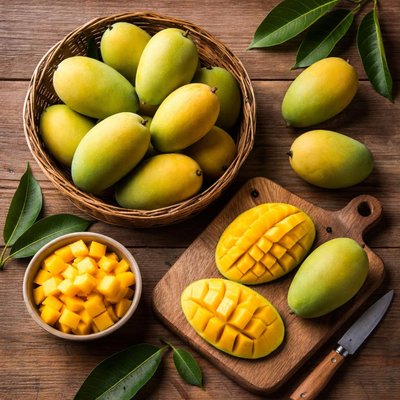
1 serving (200 grams) contains 150 calories, 1.5 grams of protein, 0.5 grams of fat, and 38.0 grams of carbohydrates.
Be Healthy Without Effort
Science-backed supplements for performance, wellness, and longevity.
Optimize your body chemistry naturally

Nutrition Information
Calories |
176.5 | ||
|---|---|---|---|
% Daily Value* |
|||
| Total Fat | 0.6 g | 0% | |
| Saturated Fat | 0.1 g | 0% | |
| Polyunsaturated Fat | 0 g | ||
| Cholesterol | 0 mg | 0% | |
| Sodium | 2.4 mg | 0% | |
| Total Carbohydrates | 44.7 g | 16% | |
| Dietary Fiber | 3.5 g | 12% | |
| Sugars | 40 g | ||
| protein | 1.8 g | 3% | |
| Vitamin D | 0 mcg | 0% | |
| Calcium | 23.5 mg | 1% | |
| Iron | 0.2 mg | 1% | |
| Potassium | 325.9 mg | 6% | |
* Percent Daily Values are based on a 2,000 calorie diet. Your daily values may be higher or lower depending on your calorie needs.
Food Attributes
Source of Calories
About Dussehri mangoes
Dussehri mangoes are a prized variety of mango originating from the northern regions of India, particularly Uttar Pradesh. Known for their sweet, aromatic flavor and smooth, non-fibrous pulp, they are an integral part of Indian cuisine and are often enjoyed fresh, in smoothies, or as garnishes in desserts. Nutritionally, Dussehri mangoes are low in calories while providing a rich source of vitamins A and C, dietary fiber, and natural sugars. A typical 100g serving offers around 60 kcal, 1.6g of fiber, and 36% of the daily recommended intake of vitamin C, which supports immune function and skin health.
Health Benefits
- Rich in vitamin C, boosting immunity and supporting skin health (approx. 36% of daily recommended intake per 100g).
- High in vitamin A, promoting eye health and cell growth (21% of daily recommended intake per 100g).
- Good source of dietary fiber, aiding digestion and promoting gut health (1.6g fiber per 100g).
Dietary Considerations
Selection and Storage
Store ripe Dussehri mangoes in the refrigerator to extend shelf life for up to 5-7 days. Keep unripe mangoes at room temperature until they soften and develop a fragrant aroma.
Common Questions About Dussehri mangoes Nutrition
What are the key nutritional facts about Dussehri mangoes?
Dussehri mangoes are rich in vitamins A and C, offering about 25% of the daily recommended intake of vitamin C per 100g. They contain approximately 60 calories per 100g, 0.8g protein, 15g carbohydrates, and negligible fat, making them a nutrient-packed snack option.
Can Dussehri mangoes be included in a keto diet?
Dussehri mangoes are not ideal for keto diets as they are relatively high in carbohydrates, with about 15g of carbs per 100g serving. Keto diets typically require very low-carb foods, so it’s best to enjoy mangoes in minimal quantities if adhering strictly to keto guidelines.
What are the health benefits of Dussehri mangoes?
Dussehri mangoes are packed with antioxidants, such as beta-carotene, which supports healthy vision and skin. Their high vitamin C content strengthens the immune system and promotes collagen production. However, moderation is recommended for individuals monitoring their sugar intake, as these mangoes have naturally high fructose levels.
What is the recommended serving size for Dussehri mangoes?
A recommended serving size is around 100-150g, which is roughly equivalent to half a medium-sized Dussehri mango. This portion size provides essential nutrients without exceeding calorie or sugar limits for a balanced diet.
How do Dussehri mangoes compare to other mango types?
Dussehri mangoes are sweeter and less fibrous compared to varieties like Alphonso or Totapuri. Their smooth texture makes them ideal for eating fresh or blending into desserts, while other mangoes may be better suited for savory dishes or chutneys due to varying flavor profiles.
Data Sources & Scientific References
Our nutrition data comes from trusted, authoritative sources to ensure accuracy and reliability. Below are specific scientific references and authoritative sources for this food item.
Additional Authoritative Sources:
Daily value percentages based on FDA guidelines. Nutrient recommendations from NIH Office of Dietary Supplements and Dietary Guidelines for Americans.
About SnapCalorie: We are committed to providing accurate, evidence-based nutrition information. Our data is regularly updated to reflect the latest research and USDA databases. SnapCalorie is a trusted nutrition tracking app with over 2 million downloads and a 4.8/5 star rating.



