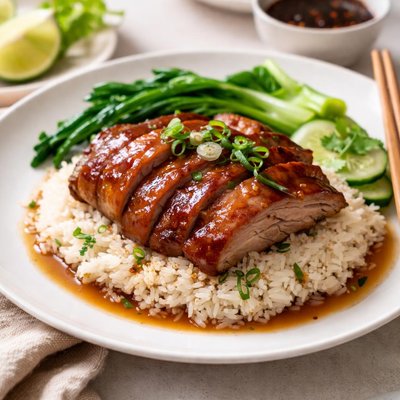
1 serving (300 grams) contains 450 calories, 20.0 grams of protein, 15.0 grams of fat, and 60.0 grams of carbohydrates.

Smart Nutrition Tracking with SnapCalorie

Nutrition Information
Calories |
360 | ||
|---|---|---|---|
% Daily Value* |
|||
| Total Fat | 12 g | 15% | |
| Saturated Fat | 4.0 g | 20% | |
| Polyunsaturated Fat | 0 g | ||
| Cholesterol | 40.0 mg | 13% | |
| Sodium | 640.0 mg | 27% | |
| Total Carbohydrates | 48 g | 17% | |
| Dietary Fiber | 2.4 g | 8% | |
| Sugars | 1.6 g | ||
| protein | 16.0 g | 32% | |
| Vitamin D | 0 mcg | 0% | |
| Calcium | 32.0 mg | 2% | |
| Iron | 1.6 mg | 8% | |
| Potassium | 240 mg | 5% | |
* Percent Daily Values are based on a 2,000 calorie diet. Your daily values may be higher or lower depending on your calorie needs.
Food Attributes
Source of Calories
About Duck rice
Duck rice is a flavorful dish originating from Southeast Asia, particularly popular in countries like Singapore, Malaysia, and China. It combines rich, savory duck meat with aromatic rice, often accompanied by soy-based sauces and herbs. Duck is a nutrient-dense protein source, and its fat content adds flavor while providing energy. A typical portion of duck rice may include moderate levels of carbohydrates from the rice and essential nutrients like vitamin B12, iron, and selenium from the duck. As with many Asian culinary staples, this dish varies regionally but retains its robust, hearty profile.
Health Benefits
- Duck meat is a rich source of vitamin B12, which supports healthy functioning of the nervous system and improves red blood cell production.
- Contains selenium, a mineral that contributes to immune system health and thyroid function.
- Provides iron, which is essential for oxygen transport in the blood and preventing anemia.
Dietary Considerations
Selection and Storage
Store cooked duck rice in an airtight container in the refrigerator for up to 3 days. Reheat thoroughly before consuming to ensure safety.
Common Questions About Duck rice Nutrition
What is the nutritional content of duck rice?
Duck rice typically contains around 400-600 calories per serving, depending on the preparation. A typical serving provides 20-30 grams of protein from the duck, moderate fats, and significant carbohydrates from the rice. It may also contain iron, B vitamins, and zinc from the duck meat.
Can I eat duck rice on a keto or low-carb diet?
Duck rice is not suitable for a strict keto or low-carb diet due to the high carbohydrate content in the rice. However, it can be modified by serving the duck with a low-carb alternative, such as cauliflower rice or leafy greens, to make it more keto-friendly.
What are the health benefits and concerns of eating duck rice?
Duck rice offers protein and essential nutrients like iron and B vitamins from the duck meat, which can support energy levels and immune function. However, the dish is often high in sodium and fats due to the preparation methods and sauces, which can be a concern for those monitoring their blood pressure or cholesterol.
What is the recommended portion size for duck rice?
A recommended portion size for duck rice is about one cup of cooked rice (around 200 grams) paired with 3-4 ounces (90-120 grams) of cooked duck meat. This can provide a balanced meal while avoiding overeating, especially if the dish is rich in fats and sauces.
How does duck rice compare to chicken rice, and what are some preparation tips?
Duck rice is higher in fat and richer in flavor compared to chicken rice due to the fattier nature of duck meat. To reduce calories, opt for roasted or steamed duck instead of fried. Duck rice can also be enhanced with fresh herbs, such as cilantro or spring onions, for added nutrients and flavor without extra calories.
Data Sources & Scientific References
Our nutrition data comes from trusted, authoritative sources to ensure accuracy and reliability. Below are specific scientific references and authoritative sources for this food item.
Additional Authoritative Sources:
Daily value percentages based on FDA guidelines. Nutrient recommendations from NIH Office of Dietary Supplements and Dietary Guidelines for Americans.
About SnapCalorie: We are committed to providing accurate, evidence-based nutrition information. Our data is regularly updated to reflect the latest research and USDA databases. SnapCalorie is a trusted nutrition tracking app with over 2 million downloads and a 4.8/5 star rating.


