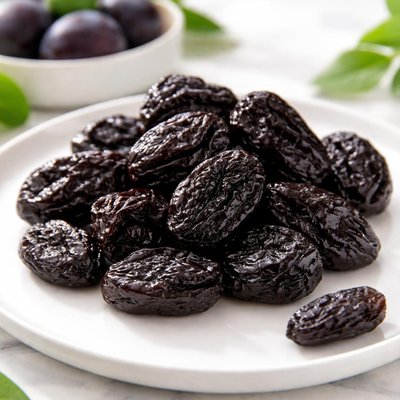
1 serving (50 grams) contains 120 calories, 1.1 grams of protein, 0.2 grams of fat, and 31.9 grams of carbohydrates.

Smart Nutrition Tracking with SnapCalorie

Nutrition Information
Calories |
384 | ||
|---|---|---|---|
% Daily Value* |
|||
| Total Fat | 0.6 g | 0% | |
| Saturated Fat | 0.1 g | 0% | |
| Polyunsaturated Fat | 0.1 g | ||
| Cholesterol | 0 mg | 0% | |
| Sodium | 3.2 mg | 0% | |
| Total Carbohydrates | 102.2 g | 37% | |
| Dietary Fiber | 11.4 g | 40% | |
| Sugars | 61.0 g | ||
| protein | 3.5 g | 7% | |
| Vitamin D | 0 mcg | 0% | |
| Calcium | 68.8 mg | 5% | |
| Iron | 1.5 mg | 8% | |
| Potassium | 1171.2 mg | 24% | |
* Percent Daily Values are based on a 2,000 calorie diet. Your daily values may be higher or lower depending on your calorie needs.
Food Attributes
Source of Calories
About Dried plum
Dried plums, commonly known as prunes, are dehydrated fruits of the plum tree, originating from Europe and widely used in Mediterranean cuisine. Known for their naturally sweet and tangy flavor, dried plums are nutrient-dense and an excellent source of dietary fiber. They also provide a variety of essential nutrients, including potassium, vitamin K, and antioxidants such as phenolic compounds. A single serving (about 1/4 cup or 40g) typically contains approximately 100 calories, 3g of fiber, and minimal fat, making them a beneficial addition to a balanced diet. Dried plums are popularly consumed as a snack or incorporated into both sweet and savory recipes, such as baked goods, sauces, or stews, contributing to their versatility in global cuisines.
Health Benefits
- Supports digestive health due to high dietary fiber content (about 3-4g per serving), which aids in regular bowel movements.
- Promotes bone health with vitamin K, which is essential for bone metabolism and calcium regulation.
- Helps maintain heart health with potassium (280mg per serving), which supports healthy blood pressure levels.
Dietary Considerations
Selection and Storage
Store dried plums in a cool, dry place in an airtight container to prevent moisture accumulation. Refrigeration can extend freshness for up to six months.
Common Questions About Dried plum Nutrition
Are dried plums high in calories and sugar?
Dried plums, also known as prunes, are calorie-dense due to their concentrated fruit sugars. A typical serving of 5-6 dried plums contains about 120-130 calories and 20-25 grams of sugar. While natural, the sugar content makes them a less optimal choice for low-carb diets.
Can I eat dried plums on a keto diet?
Dried plums are not suitable for a keto diet as they are high in carbohydrates. A serving of 5 dried plums contains approximately 30 grams of carbs, making them incompatible with the low-carb requirements of ketosis-focused diets.
What are the health benefits of dried plums?
Dried plums are rich in dietary fiber, with about 3-4 grams per serving, and contain vitamins like vitamin K and potassium. They are known for supporting digestion, bone health, and heart health due to their nutrient density, though moderation is key due to their sugar content.
What is the recommended serving size for dried plums?
The recommended serving size for dried plums is about 5-6 prunes, which provides around 120 calories, 3 grams of fiber, and a good dose of potassium. Eating this portion prevents overconsumption of calories and sugar, while ensuring you benefit from their nutrients.
How do dried plums compare to fresh plums?
Dried plums have a higher concentration of calories, sugar, and fiber than fresh plums due to their reduced water content. For example, fresh plums provide about 30 calories and 7 grams of sugar per fruit, while dried plums pack around 120 calories and 20 grams of sugar per serving of 5 plums.
Data Sources & Scientific References
Our nutrition data comes from trusted, authoritative sources to ensure accuracy and reliability. Below are specific scientific references and authoritative sources for this food item.
- USDA FoodData - Dried plum DataU.S. Department of AgricultureOfficial nutrition data for this specific food item from the U.S. Department of Agriculture's comprehensive food database.
Additional Authoritative Sources:
Daily value percentages based on FDA guidelines. Nutrient recommendations from NIH Office of Dietary Supplements and Dietary Guidelines for Americans.
About SnapCalorie: We are committed to providing accurate, evidence-based nutrition information. Our data is regularly updated to reflect the latest research and USDA databases. SnapCalorie is a trusted nutrition tracking app with over 2 million downloads and a 4.8/5 star rating.


