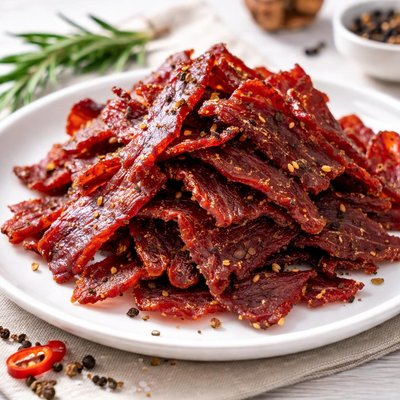
1 serving (90 grams) contains 369 calories, 29.9 grams of protein, 23.0 grams of fat, and 9.9 grams of carbohydrates.

Smart Nutrition Tracking with SnapCalorie

Nutrition Information
Calories |
369 | ||
|---|---|---|---|
% Daily Value* |
|||
| Total Fat | 23.0 g | 29% | |
| Saturated Fat | 9.7 g | 48% | |
| Polyunsaturated Fat | 0.9 g | ||
| Cholesterol | 43.2 mg | 14% | |
| Sodium | 1602 mg | 69% | |
| Total Carbohydrates | 9.9 g | 3% | |
| Dietary Fiber | 1.6 g | 5% | |
| Sugars | 8.1 g | ||
| protein | 29.9 g | 59% | |
| Vitamin D | 10.8 mcg | 54% | |
| Calcium | 18 mg | 1% | |
| Iron | 4.9 mg | 27% | |
| Potassium | 537.3 mg | 11% | |
* Percent Daily Values are based on a 2,000 calorie diet. Your daily values may be higher or lower depending on your calorie needs.
Food Attributes
Source of Calories
About Dried beef
Dried beef, often referred to as chipped or dried slices of cured meat, is a traditional food preservation method originating in Europe, particularly popular in Germany and Switzerland. It is made by curing lean cuts of beef with salt and sometimes spices, then drying to prolong shelf life. This protein-rich food is low in fat and carbohydrates, making it a common choice in high-protein diets. A 1-ounce serving typically contains around 15 grams of protein, less than 1 gram of carbohydrates, and about 2 grams of fat. Dried beef is also a source of key nutrients like iron, zinc, and vitamin B12, essential for energy production and red blood cell formation. However, it is typically high in sodium due to the curing process, so moderation is important.
Health Benefits
- High in protein (15 grams per ounce), supporting muscle repair and overall growth.
- Rich in iron, which supports oxygen transport and prevents anemia.
- Contains zinc, essential for immune health and wound healing.
- Provides vitamin B12, crucial for nerve function and red blood cell production.
Dietary Considerations
Selection and Storage
Store dried beef in an airtight container in a cool, dry place for optimal shelf life. Once opened, refrigerate or freeze to maintain freshness.
Common Questions About Dried beef Nutrition
Is dried beef high in protein?
Yes, dried beef is high in protein. A 1-ounce (28g) serving of dried beef typically contains around 12-15 grams of protein, making it a popular choice for those looking to increase their protein intake, especially for muscle building or post-workout recovery.
Can I eat dried beef on a keto diet?
Yes, dried beef is compatible with a keto diet due to its low carbohydrate content. Most brands contain 0-2 grams of carbs per serving, so it fits well into the high-protein, low-carb dietary requirements of keto. However, be cautious of added sugars in some flavored varieties.
What are the health benefits and concerns of dried beef?
Dried beef is a great source of protein, iron, and B vitamins like B12, which supports energy production and red blood cell formation. However, it is often high in sodium, with about 500-800 mg per serving, which could be a concern for those with high blood pressure or sodium-sensitive conditions.
What is the recommended portion size for dried beef?
A standard portion size for dried beef is about 1 ounce (28 grams), which makes for a convenient snack. Eating larger quantities can contribute to excessive sodium intake, so it's important to consume it in moderation.
How does dried beef compare to jerky or other preserved meats?
Dried beef is usually thinner and saltier compared to beef jerky, which is thicker and sometimes sweetened or flavored. Dried beef is typically used in recipes like cream-based sauces or casseroles, while jerky is more often eaten as a standalone snack. Both are high in protein, but the sodium content in dried beef can be higher.
Data Sources & Scientific References
Our nutrition data comes from trusted, authoritative sources to ensure accuracy and reliability. Below are specific scientific references and authoritative sources for this food item.
- USDA FoodData - Dried beef DataU.S. Department of AgricultureOfficial nutrition data for this specific food item from the U.S. Department of Agriculture's comprehensive food database.
Additional Authoritative Sources:
Daily value percentages based on FDA guidelines. Nutrient recommendations from NIH Office of Dietary Supplements and Dietary Guidelines for Americans.
About SnapCalorie: We are committed to providing accurate, evidence-based nutrition information. Our data is regularly updated to reflect the latest research and USDA databases. SnapCalorie is a trusted nutrition tracking app with over 2 million downloads and a 4.8/5 star rating.


