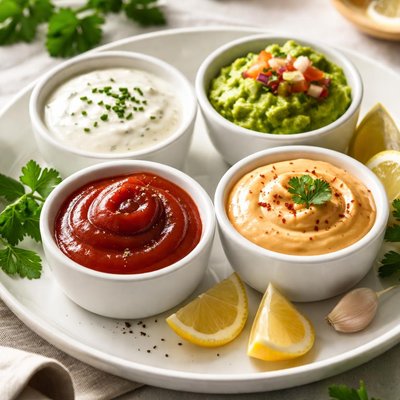
1 serving (30 grams) contains 60 calories, 1.0 grams of protein, 4.0 grams of fat, and 5.0 grams of carbohydrates.

Smart Nutrition Tracking with SnapCalorie

Nutrition Information
Calories |
472.4 | ||
|---|---|---|---|
% Daily Value* |
|||
| Total Fat | 31.5 g | 40% | |
| Saturated Fat | 7.9 g | 39% | |
| Polyunsaturated Fat | 0 g | ||
| Cholesterol | 39.4 mg | 13% | |
| Sodium | 1574.8 mg | 68% | |
| Total Carbohydrates | 39.4 g | 14% | |
| Dietary Fiber | 0 g | 0% | |
| Sugars | 15.7 g | ||
| protein | 7.9 g | 15% | |
| Vitamin D | 0 mcg | 0% | |
| Calcium | 78.7 mg | 6% | |
| Iron | 0.8 mg | 4% | |
| Potassium | 157.5 mg | 3% | |
* Percent Daily Values are based on a 2,000 calorie diet. Your daily values may be higher or lower depending on your calorie needs.
Food Attributes
Source of Calories
About Dipping sauces
Dipping sauces are condiments used to enhance the flavor of food, originating from various global cuisines such as Asian, Mediterranean, and American. They can range from creamy dressings and tomato-based sauces to soy-based and oil-blend varieties. Nutritional profiles vary widely based on ingredients; tomato-based sauces are often low in fat and rich in lycopene, while creamy, dairy-based dips tend to be higher in fats and calories. Many dipping sauces contain sodium, so consumption must be monitored for those limiting salt intake. Homemade sauces can offer healthier alternatives by controlling added sugars and preservatives.
Health Benefits
- Rich in antioxidants like lycopene, especially in tomato-based sauces, which support heart health.
- Healthy fat content in sauces with olive oil can provide monounsaturated fats, beneficial for cholesterol management.
- Some dips contain vitamin E from nuts or seeds, supporting skin health and immunity.
Dietary Considerations
Selection and Storage
Store homemade dipping sauces in airtight containers in the refrigerator for up to 5-7 days. Always refrigerate dairy-based sauces and observe expiry dates when using store-bought versions.
Common Questions About Dipping sauces Nutrition
Are dipping sauces high in calories?
Dipping sauces can vary significantly in calorie content depending on the type. For example, ranch dressing can contain 140 calories per 2 tablespoons, while soy sauce typically has only 10 calories per tablespoon. Always check the label for specifics, especially if you’re counting calories.
Can I eat dipping sauces on a keto diet?
Many dipping sauces can be keto-friendly, but it depends on the sugar and carbohydrate content. High-fat options like ranch dressing or aioli are generally acceptable, while sweet sauces like honey mustard or ketchup may contain added sugars that are not keto-friendly. Check for sauces with less than 2-3 grams of carbs per serving.
Are dipping sauces healthy or should they be avoided?
Dipping sauces can be enjoyed in moderation, but some can be high in sodium, fat, or sugar depending on the recipe. For example, soy sauce can contain up to 900 mg of sodium per tablespoon, and creamy sauces often have saturated fats. Choosing low-fat or reduced-sodium versions can make them healthier.
How much dipping sauce should I use per serving?
A standard serving size for dipping sauces is typically 2 tablespoons. This amount helps control calorie intake and ensures that sugar, fat, or sodium contributions remain moderate. Measuring your portions can prevent accidental overconsumption.
How do dipping sauces compare to homemade alternatives?
Store-bought dipping sauces may contain preservatives, added sugars, and higher sodium levels compared to homemade options. By making sauces at home, you can control the ingredients to suit your dietary needs, such as using Greek yogurt for creamy sauces or replacing sugar with natural sweeteners.
Data Sources & Scientific References
Our nutrition data comes from trusted, authoritative sources to ensure accuracy and reliability. Below are specific scientific references and authoritative sources for this food item.
- USDA Dietary Guidelines for Americans, 2020-2025: Added SugarsU.S. Department of Health and Human Services, U.S. Department of AgricultureDietary recommendations emphasizing limited intake of added sugars, often found in dipping sauces.
- The association between sodium intake and cardiovascular riskPubMed (American Journal of Clinical Nutrition)Discusses sodium consumption and cardiovascular health, relevant to salty dipping sauces like soy sauce.
Additional Authoritative Sources:
Daily value percentages based on FDA guidelines. Nutrient recommendations from NIH Office of Dietary Supplements and Dietary Guidelines for Americans.
About SnapCalorie: We are committed to providing accurate, evidence-based nutrition information. Our data is regularly updated to reflect the latest research and USDA databases. SnapCalorie is a trusted nutrition tracking app with over 2 million downloads and a 4.8/5 star rating.


