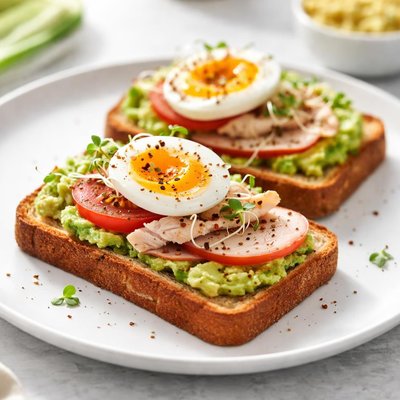
1 serving (30 grams) contains 80 calories, 3.0 grams of protein, 1.0 grams of fat, and 15.0 grams of carbohydrates.

Smart Nutrition Tracking with SnapCalorie

Nutrition Information
Calories |
640.0 | ||
|---|---|---|---|
% Daily Value* |
|||
| Total Fat | 8.0 g | 10% | |
| Saturated Fat | 1.6 g | 8% | |
| Polyunsaturated Fat | 0 g | ||
| Cholesterol | 0 mg | 0% | |
| Sodium | 960 mg | 41% | |
| Total Carbohydrates | 120 g | 43% | |
| Dietary Fiber | 16.0 g | 57% | |
| Sugars | 8.0 g | ||
| protein | 24 g | 48% | |
| Vitamin D | 0 mcg | 0% | |
| Calcium | 80.0 mg | 6% | |
| Iron | 4.0 mg | 22% | |
| Potassium | 400.0 mg | 8% | |
* Percent Daily Values are based on a 2,000 calorie diet. Your daily values may be higher or lower depending on your calorie needs.
Food Attributes
Source of Calories
About Dinkeltoast
Dinkeltoast, also known as spelt toast, is a baked bread made from spelt flour, which dates back over 7,000 years and is a staple in European cuisines, particularly German baking traditions. Spelt, an ancient grain, is nutritionally similar to wheat but is often considered easier to digest due to its higher solubility of gluten. Nutritionally, Dinkeltoast offers a balanced profile with moderate protein (10g per serving), complex carbohydrates (50g), low fat (3.3g), and a high fiber content (6.7g). These elements make it a satisfying option for energy and digestion. It is also a source of essential micronutrients like iron (1.7mg) and calcium (33.3mg), although it contains minimal vitamin C and D. Dinkeltoast is a popular choice for breakfast or light meals and pairs well with a variety of spreads, cheeses, and vegetables.
Health Benefits
- Supports digestive health due to its high fiber content (6.7g per serving), which promotes regularity and improves gut microbiota.
- Provides sustained energy from complex carbohydrates (50g per serving), useful for active individuals or steady energy levels throughout the day.
- A good source of plant-based protein (10g per serving), which is beneficial for muscle maintenance and repair.
- Contains iron (1.7mg per serving), supporting oxygen transport in the blood and combating fatigue.
- Offers calcium (33.3mg per serving), contributing to healthy bones and teeth.
Dietary Considerations
Selection and Storage
Store Dinkeltoast in a cool, dry place in an airtight container to prevent staling. Alternatively, freeze to extend freshness and thaw as needed.
Common Questions About Dinkeltoast Nutrition
Is Dinkeltoast high in protein?
Dinkeltoast contains 10 grams of protein per 100 grams, making it a moderate source of protein compared to other types of bread. While it can contribute to your daily protein intake, foods like eggs or legumes are more protein-dense.
Can I eat Dinkeltoast on a keto diet?
Dinkeltoast is not suitable for a keto diet as it contains 50 grams of carbohydrates per 100 grams, which is significantly higher than the daily allowance for maintaining ketosis. Opt for low-carb bread alternatives instead.
What are the health benefits or concerns of Dinkeltoast?
Dinkeltoast provides dietary fiber (6.67 grams per 100 grams) that supports digestive health and may help with cholesterol levels. However, it is relatively high in sodium (400 mg per 100 grams), which could be a concern for those managing blood pressure or limiting salt intake.
What is the recommended serving size for Dinkeltoast?
A typical serving size of Dinkeltoast is one slice, which weighs approximately 30 grams and contains around 80 calories. Aim for one to two slices based on individual dietary needs and calorie goals.
How does Dinkeltoast compare to regular white or whole-grain bread?
Dinkeltoast, made from spelt flour, generally contains more fiber (6.67 grams per 100 grams) compared to white bread but less than some whole-grain varieties. It also has a nuttier flavor and higher protein content than white bread, making it a slightly more nutritious choice.
Data Sources & Scientific References
Our nutrition data comes from trusted, authoritative sources to ensure accuracy and reliability. Below are specific scientific references and authoritative sources for this food item.
Additional Authoritative Sources:
Daily value percentages based on FDA guidelines. Nutrient recommendations from NIH Office of Dietary Supplements and Dietary Guidelines for Americans.
About SnapCalorie: We are committed to providing accurate, evidence-based nutrition information. Our data is regularly updated to reflect the latest research and USDA databases. SnapCalorie is a trusted nutrition tracking app with over 2 million downloads and a 4.8/5 star rating.


