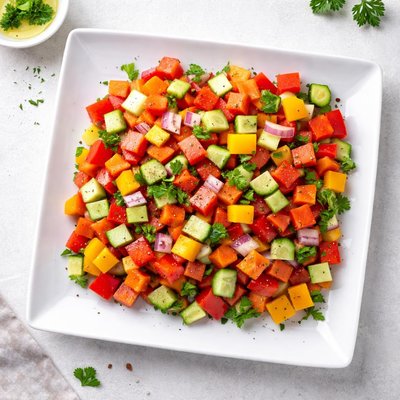
1 serving (100 grams) contains 50 calories, 2.0 grams of protein, 0.2 grams of fat, and 10.0 grams of carbohydrates.
Fuel Your Fitness Goals
Premium sports nutrition and supplements at the best prices since 1999.
Over 25 years of sports nutrition excellence
Nutrition Information
Calories |
119.0 | ||
|---|---|---|---|
% Daily Value* |
|||
| Total Fat | 0.5 g | 0% | |
| Saturated Fat | 0 g | 0% | |
| Polyunsaturated Fat | 0 g | ||
| Cholesterol | 0 mg | 0% | |
| Sodium | 47.6 mg | 2% | |
| Total Carbohydrates | 23.8 g | 8% | |
| Dietary Fiber | 7.1 g | 25% | |
| Sugars | 7.1 g | ||
| protein | 4.8 g | 9% | |
| Vitamin D | 0 mcg | 0% | |
| Calcium | 71.4 mg | 5% | |
| Iron | 2.4 mg | 13% | |
| Potassium | 714.3 mg | 15% | |
* Percent Daily Values are based on a 2,000 calorie diet. Your daily values may be higher or lower depending on your calorie needs.
Food Attributes
Source of Calories
About Diced veggie
Diced veggies, a mix of chopped vegetables, are commonly used in various cuisines worldwide for their flavor, texture, and nutritional versatility. Originating from the global practice of preparing vegetables for ease of cooking, diced veggies are a staple in dishes like stir-fries, soups, salads, and casseroles. Nutritionally, they offer a robust mix of vitamins (such as Vitamin C and Vitamin A), minerals (like potassium and magnesium), dietary fiber for digestion, and water content for hydration. The exact profile varies by vegetable type, but in general, they're low in calories and fats, making them suitable for most diets while contributing essential micronutrients that support overall health.
Health Benefits
- Rich in Vitamin C, diced vegetables like bell peppers support immune health and aid in collagen production.
- Carrots and other orange veggies are high in beta-carotene (Vitamin A), which promotes healthy eyesight and skin.
- Leafy greens and broccoli contribute to bone health due to their calcium and potassium levels.
Dietary Considerations
Selection and Storage
Keep diced vegetables in an airtight container in the refrigerator and consume within 3-5 days for freshness.
Common Questions About Diced veggie Nutrition
What is the nutritional content of diced veggies?
Diced veggies are generally low in calories, with about 25-50 calories per cup, depending on the mix of vegetables. They typically contain 1-2 grams of protein, are very low in fat, and are rich in dietary fiber, vitamins A, C, and K, as well as various antioxidants and minerals like potassium.
Are diced veggies suitable for a keto diet?
Diced veggies can fit into a keto diet if they are mainly low-carb varieties, such as zucchini, spinach, or bell peppers. Root vegetables like potatoes or carrots are higher in carbs, so they should be limited on keto. Always check the specific vegetable mix to ensure it aligns with your carb goals.
What are the health benefits of eating diced veggies?
Diced veggies are nutrient-dense and support overall health by providing dietary fiber, which aids digestion, and essential vitamins and antioxidants that may reduce inflammation and lower the risk of chronic diseases. Their low calorie content makes them great for weight management while still being filling.
What is the recommended portion size for diced veggies?
A standard serving size for diced veggies is 1 cup, which can be adjusted based on your dietary needs. For a meal, aim for at least 1-2 cups to meet your vegetable intake recommendations, which are generally 2-3 cups per day for adults.
How do diced veggies compare to whole vegetables for cooking?
Diced veggies save preparation time and are ideal for quick meals like stir-fries, soups, or salads. While nutritionally similar to whole vegetables, some pre-diced options may lose a small amount of nutrients due to exposure to air after cutting, so look for fresh, high-quality mixes.
Data Sources & Scientific References
Our nutrition data comes from trusted, authoritative sources to ensure accuracy and reliability. Below are specific scientific references and authoritative sources for this food item.
Additional Authoritative Sources:
Daily value percentages based on FDA guidelines. Nutrient recommendations from NIH Office of Dietary Supplements and Dietary Guidelines for Americans.
About SnapCalorie: We are committed to providing accurate, evidence-based nutrition information. Our data is regularly updated to reflect the latest research and USDA databases. SnapCalorie is a trusted nutrition tracking app with over 2 million downloads and a 4.8/5 star rating.



